New research from the Human Cell Atlas offers insights into cell development, disease mechanisms, and genetic influences, enhancing our understanding of human biology and health.
The Human Cell Atlas (HCA) consortium has made significant progress in its mission to better understand the cells of the human body in health and disease, with a recent publication of a Collection of more than 40 peer-reviewed papers in Nature and other Nature Portfolio journals.
The Collection showcases a range of large-scale datasets, artificial intelligence algorithms, and biomedical discoveries from the HCA that are enhancing our understanding of the human body. The studies reveal insights into how the placenta and skeleton form, changes during brain maturation, new gut and vascular cell states, lung responses to COVID-19, and the effects of genetic variation on disease, among others.
Contributed by researchers worldwide, the papers in the Collection serve as essential tools and examples for building cell atlases on a large scale. Collectively, they demonstrate the HCA's commitment to capturing the full spectrum of human diversity, including genetic, geographic, age, and sex differences.

Comprehensive Mapping of Human Cells
The HCA is developing and using experimental and computational approaches in single-cell and spatial genomics to create comprehensive reference maps of all human cells—the fundamental units of life—as a basis for both understanding human health and diagnosing, monitoring, and treating disease. To date, more than 3,600 HCA members from over 100 countries have worked together to profile more than 100 million cells from over 10,000 people. Researchers are currently working to assemble a first draft Human Cell Atlas, which will eventually grow to include up to billions of cells across all organs and tissues.

New Insights from the HCA Collection
This Collection of studies in Nature Portfolio demonstrates major advances in three aspects of HCA's mission: mapping individual adult tissues or organs, mapping developing human tissues, and developing groundbreaking new analytical methods, including artificial intelligence/machine learning-based methods. The researchers involved are members of the 18 Biological Networks of the HCA, each of which is focused on a particular organ, tissue, or system.

Foundational Goals and Achievements of HCA
"The Human Cell Atlas is a global initiative that is already transforming our understanding of human health. By creating a comprehensive reference map of the healthy human body—a kind of 'Google Maps' for cell biology—it establishes a benchmark for detecting and understanding the changes that underlie health and disease. This new level of insight into the specific genes, mechanisms, and cell types within tissues is laying the groundwork for more precise diagnostics, innovative drug discovery and advanced regenerative medicine approaches," said Professor Sarah Teichmann, founding co-chair of the Human Cell Atlas, now at the Cambridge Stem Cell Institute.

Enhancing Our Understanding of Human Biology
Dr. Aviv Regev, founding co-chair of the HCA, now at Genentech, said: "This is a pivotal moment for the HCA community as we move towards achieving the first draft of the Human Cell Atlas. This collection of studies showcases the major advances from biology to AI achieved since the publication of the HCA White Paper in 2017 and that now deliver numerous biological and clinical insights. This large-scale, community-driven, globally representative, and rigorously curated atlas will evolve continuously and remain accessible to all to advance our understanding of the human body in health and treatments for disease."

Detailed Insights into Human Tissues and Disease
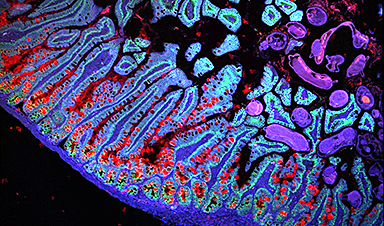
Several studies in the Collection provide a detailed analysis of specific tissues and organs and reveal new biological discoveries important for understanding disease. For example, a cell atlas of the human gut from healthy and diseased tissue identified a gut cell type that may be involved in gut inflammation [Oliver et al.], providing a valuable resource for investigating and ultimately treating conditions such as ulcerative colitis and Crohn's disease.
Developmental Biology and Genetic Insights
The new collection of papers also includes novel maps of human tissues during development. These include the first map of human skeletal development, revealing how the skeleton forms [To et al.], shedding light on the origins of arthritis, and identifying cells involved in skeletal conditions. An additional study describes a multi-omic atlas of the first-trimester placenta, including insight into genetic programs that control how the placenta develops and functions to provide nutrients and protection to the embryo [Shu et al.]. These and other developmental biology studies in the Collection increase our fundamental understanding of healthy development in time and space and provide blueprints and resources for creating therapeutics since many diseases originate in human development.
Promoting Equity and Ethical Research
An accompanying article highlights the importance of including samples from historically underrepresented human populations and describes actions and principles aimed at promoting equitable science
Professor Partha Majumder of the John C Martin Centre for Liver Research and Innovation, India, and a member of the HCA Organizing Committee member and Co-Chair of the HCA Equity Working Group, said: "A key priority for HCA is to ensure a representation of the vast range of human diversity; genetic, cultural and geographical. HCA studies such as the Asian Immune Diversity Atlas and the analysis of distinctive histopathological differences in COVID-19 samples from Malawi demonstrate the remarkable power of large-scale international scientific collaboration."
Another article illustrates HCA's role in developing new ethical guidance on a broad range of issues in genomic science and making this advice available to scientists worldwide [Kirby et al.].
AI Revolutionizing Cellular Biology Research
Just as AI has revolutionized humans' ability to process text quickly, it is also now helping scientists to develop a deeper and more complete understanding of biology at the cellular level and beyond. The Collection introduces new AI methods to better understand and classify cell types and search for cells in this vast map. For example, SCimilarity [Heimberg et al.] enables researchers to compare single-cell datasets to identify similar cell types in different tissues and contexts, analogous to how "reverse image search" can search for photos. Other research teams tackled long-standing challenges, such as classifying cells into hierarchical groups based on their properties, known as cell annotation [e.g., Ergan et al. and Fischer et al.]
Conclusion: Impact of the HCA Collection
Dr. Jeremy Farrar, Chief Scientist, World Health Organization, said: "This landmark collection of papers from the international Human Cell Atlas community underscores the tremendous progress toward mapping every single kind of human cell and how they change as we grow up and age. The insights emerging from these discoveries are already reshaping our understanding of health and disease, paving the way for transformative health benefits that will impact lives worldwide."
Reference: "The Human Cell Atlas: towards a first draft atlas" 20 November 2024, Nature.
The individual studies in the Collection were funded by over one hundred different funding sources worldwide. The HCA also receives organizational support from the Chan Zuckerberg Initiative, Wellcome, the Klarman Family Foundation, the Helmsley Charitable Trust, and others.

News
New $60 Blood Test Detects Lung Cancer Without Costly DNA Sequencing
A simple blood test that detects chemical changes in DNA identified more than 90% of stage 2-4 lung cancers in an early study, without relying on costly DNA sequencing. Researchers at Tel Aviv University and collaborating [...]
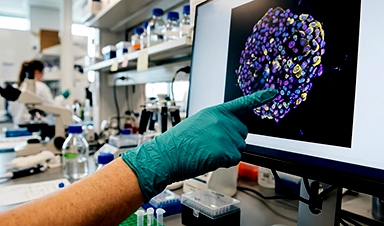
Reducing drug development failures with human-relevant models and AI
Professor Joseph C. Wu of Stanford University explains how stem cells, human-relevant models and AI are helping researchers predict which drug candidates are most likely to succeed before clinical trials. Researchers now have access [...]
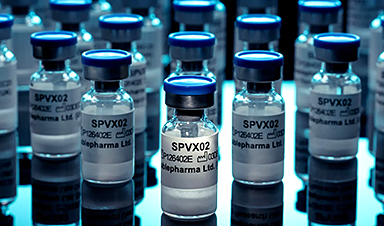
Half of vaccines are binned – ‘fridge-free’ versions could change that
Vaccines that do not need to be kept cool in a fridge have been successfully trialed in patients for the first time, say UK scientists. Currently, most vaccines need to be refrigerated or frozen [...]

Mushroom Mystery: The Fungus That Makes People See Tiny Humans
A mushroom sold in markets and served in restaurants in Southwest China has an unusual warning attached to it: cook it thoroughly, or you may start seeing tiny people. For decades, people have reported [...]

Artificial intelligence used to design brand new viruses
Artificial Intelligence has been used to design brand new viruses that are fully functional and can replicate in the laboratory, say US researchers. It is the first time whole genomes have been successfully designed [...]
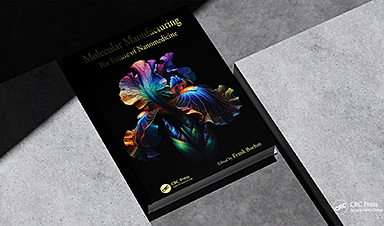
Molecular Manufacturing: The Future of Nanomedicine – New book from NanoappsMedical Inc.
This book explores the revolutionary potential of atomically precise manufacturing technologies to transform global healthcare, as well as practically every other sector across society. This forward-thinking volume examines how envisaged Factory@Home systems might enable the cost-effective [...]
Moderna kicks off Phase I Ebola trial as Africa readies itself for research
If the Phase I trial is successful, Moderna plans to quickly initiate Phase II and Phase III trials of its Ebola vaccine. Moderna has initiated a Phase I trial of its mRNA Ebola vaccine [...]
3D Human Brain Tissue Model Replicates Alzheimer’s Pathology
Summary: Researchers introduced a highly reproducible three-dimensional human brain tissue model capable of replicating complex neurodegenerative processes in Alzheimer’s disease. Developed over nine years using human stem cells, the self-organizing tissue spheroids integrate functional neurons, [...]
A Common Sugar May Loosen Cancer Cells and Help Them Spread
Chemotherapy may kill most ovarian cancer cells, but the few that survive can turn dangerously active. By releasing fructose, they may help nearby tumor cells break free and spread. Researchers at The Wistar Institute [...]
COVID-19 can wake up dormant viruses in the body, large study confirms
Virus reactivations by SARS-CoV-2 could worsen initial symptoms and increase risk of Long Covid. Early in the COVID-19 pandemic, scientists noticed that a SARS-CoV-2 infection can “wake up” other, dormant viruses already present in [...]
Scientists Discover the Brain May Enter a New Biological Phase Between 50 and 75
A single-cell study reveals major changes in immune cells, genome organization, and gene regulation within the aging human hippocampus, offering important insights into brain aging and dementias associated with age. Between roughly ages 50 [...]
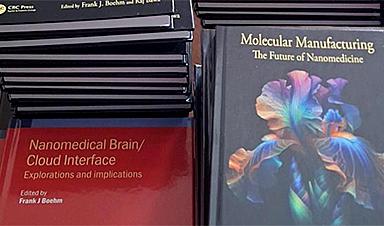
Our books now available worldwide!
Online Sellers other than Amazon, Routledge, and IOPP Indigo Global Health Care Equivalency in the Age of Nanotechnology, Nanomedicine and Artifcial Intelligence Global Health Care Equivalency In The Age Of Nanotechnology, Nanomedicine And Artificial [...]
Unzipping the Code of Life: Scientists Pinpoint Where DNA First Opens
Researchers mapped where DNA first opens and how a helicase gate may release one strand as genome copying begins. Before a cell can divide, it must open its tightly wound DNA and begin copying the entire [...]
Scientists Tested an 8-Hour Eating Window and Found a Surprising Brain Benefit
Limiting the daily eating window may provide brain benefits beyond those associated with weight loss. Eating within a shorter daily window may provide cognitive benefits beyond those associated with weight loss alone, according to [...]
Focused Ultrasound Opens Blood-Brain Barrier to Treat Brain Cancer
Summary: A new study demonstrates that primary brain tumors (gliomas) are particularly receptive to targeted drug delivery using focused ultrasound (FUS) combined with microbubbles. The team developed a high-resolution MRI protocol to track blood-brain barrier [...]
AI’s promise and practical limits in drug discovery
AI tools are becoming increasingly common in early drug discovery, allowing scientists to analyse data and navigate large volumes of research. However, according to Dr Raminderpal Singh, turning that potential into consistent scientific workflows [...]