Scientists have discovered a way to target elusive circular fragments of DNA that drive the survival of some of the most aggressive cancers, paving the way for future treatments.
In three groundbreaking papers published today in Nature, scientists from the Cancer Grand Challenges team eDyNAmiC and their international collaborators at the Francis Crick Institute and University College London (UCL) shed light on the unique behaviour of extrachromosomal DNA (ecDNA), small, circular DNA structures that are common in some of the most difficult to treat cancers.
The papers identify, for the first time, how to specifically target cancer cells containing this malignant DNA, a finding that could make aggressive cancers – such as glioblastoma, triple negative breast cancer or small cell lung cancer – much easier to treat in future.
The research reveals just how commonplace ecDNA is across cancer types and explain how it enables tumors to rapidly alter their genomes to resist treatment.
In one paper, the researchers identified a drug which specifically targets and kills ecDNA-containing cancer cells while sparing normal cells.
Team eDyNAmiC is funded through Cancer Grand Challenges, a research initiative co-founded by Cancer Research UK and the National Cancer Institute in the US and produced by an international team featuring scientists at Stanford Medicine, the Francis Crick Institute and UCL.
The new papers reveal more about the structure of ecDNA and highlight how future cancer drugs may target it to stop the disease in its tracks.
Many of the most aggressive cancers depend on ecDNA for survival, and as these cancers advance, ecDNA drives their resistance to treatment, leaving patients with few options. By targeting ecDNA, we could cut the lifeline of these relentless tumors, turning a terrible prognosis into a treatable one.”
Dr David Scott, Director of Cancer Grand Challenges, Cancer Research UK
eDyNAmiC team lead and Professor of Pathology at Stanford Medicine, Dr Paul Mischel, said:
“We thought we understood the structure of cancer genomes, but in fact, something very important was missing. The discovery of extrachromosomal DNA, just how common it really is, and what it actually does, reveals a new layer of complexity in cancer evolution. It not only facilitates rapid genetic changes but also highlights the cunning strategies cancer cells use to evade treatment, suppress the immune system, and survive. Understanding ecDNA is crucial for developing innovative therapies that can outsmart these relentless adversaries. We hope that these discoveries will yield benefit for patients with the most aggressive forms of cancer.”
Our DNA is usually stored within structures called chromosomes which are found in nearly every cell in the body. They ensure that when cells divide, their DNA is copied accurately into new cells.
However, ecDNA exists outside the chromosomes in tiny circles of rogue genetic material. These runaway particles carry important cancer-driving genes and don’t follow the same rules as chromosomal DNA, allowing cancer cells to adapt quickly, evade treatments, and grow uncontrollably.
The presence of ecDNA is rare in normal human cells, and when it does appear, it is often associated with certain diseases or abnormal cellular processes.
Dr Mischel’s lab at Stanford first discovered the critical role that ecDNA plays in the evolution and treatment resistance of aggressive cancers in a landmark paper published in 2014.
In 2022, the Cancer Grand Challenges (CGC) initiative awarded £20m to Dr Mischel and a team of internationally recognized experts, including co-leads for the papers, Dr Howard Chang and Dr Mariam Jamal-Hanjani, to take our knowledge of ecDNA further.
The papers published today represent some of the most important discoveries to come from the CGC eDyNAmiC team, which is made up of scientists from 13 research institutes across the globe.
The major findings from each paper:
Paper 1: THE UNIQUE BIOLOGY OF ECDNA
ecDNA plays a unique and chaotic role in cancer. Unlike the structured replication of normal DNA, ecDNA replicates in a rapid and unpredictable manner, dramatically changing its genetic makeup over just a few generations. This chaos benefits the tumor, enabling it to grow quickly, spread aggressively, and develop resistance to treatments.
- The open structure of ecDNA gives easy access to the cell machinery which is responsible for turning genes into proteins which carry out functions in the cell. This amplifies the activity of cancer-promoting genes within the tumor.
- Some ecDNAs can be passed down to new cells together, breaking the usual rules of genetic inheritance and allowing cells to inherit multiple benefits at once. In other cases, ecDNAs are distributed unevenly during cell division, creating more variation. Together, these processes help cancer cells adapt and grow faster than normal cells.
- The researchers identified that ecDNA can contain ‘altruistic oncogenes’ that only exist to promote the activity of other cancer genes.
- Overall, ecDNA’s flexibility and rapid structural changes make it a powerful tool for cancer cells to adapt and survive in challenging environments.
Paper 2: ECDNA’S IMPACT IN THE CLINIC
Patients with cancers that contain ecDNA generally have worse outcomes and the amount of ecDNA tends to increase during treatment, suggesting that ecDNA may play a role in treatment resistance.
Using data from Genomics England’s 100,000 Genomes Project housed in the National Genomics Research Library, whole genome sequence data from nearly 15,000 cancer patients across 39 tumor types were analyzed. Researchers from the Francis Crick Institute and eDyNAmiC discovered just how significant ecDNA is in cancer:
- Nearly 17.1% of the tumor samples from this dataset contained ecDNA, with particularly high rates observed in breast cancer.
- Most of the cancers in this dataset were early stage, suggesting that the actual prevalence of ecDNA may be even higher, as it tends to appear more frequently in later-stage cancers.
- Certain mutational signatures found in the tumor DNA, like those associated with tobacco smoking, positively correlated with the presence of ecDNA.
- They found that ecDNAs don’t just carry cancer-promoting genes; they also harbor genes that help the cancer cells evade the immune system. This has significant implications for how well patients with high levels of ecDNA will respond to immunotherapies.
eDyNAmiC investigator at The Francis Crick Institute, Dr Chris Bailey, said:
“This work has shown just how common ecDNAs are in cancer and how their presence is often linked to poorer patient survival. We found that, in addition to driving cancer growth, many ecDNAs carry genes that can supress the immune system, possibly helping tumors evade immune detection. This work paves the way for future research aimed at limiting the replication of ecDNA, with the hope of improving outcomes for cancer patients.”
This work is from the Cancer Evolution and Genome Instability Laboratory under Professor Charles Swanton at the Francis Crick Institute, in collaboration with team eDyNAmiC.
Paper 3: THE FIRST ECDNA-TARGETING DRUG
The unique biology of ecDNA provides significant advantages for the tumors they inhabit – but also paints a target on their backs. In this paper, researchers identified a drug (BBI-2779, developed by biotechnology company, Boundless Bio) which specifically targets and kills ecDNA-containing cancer cells while sparing normal cells.
In tests with mice, BBI-2779 effectively reduced tumor growth and prevented resistance to another cancer drug which was used in the study.
BBI-2779 works by targeting a protein called CHK1 which plays a protective role when ecDNA is copying its DNA.
Two molecular machines run along the ecDNA – one copies it, while the other reads it to make proteins – but like two trains running along one track, they must take turns or risk collision. In cancer cells with ecDNA, this delicate process is constantly at risk of causing severe DNA damage.
To prevent this from happening, cells rely heavily on CHK1, but when CHK1 is inhibited with BBI-2779, they are unable to repair DNA damage, resulting in their death.
CHK1 inhibitors have been in clinical development for some time, due to their potential to interfere with cell growth, but the development of BBI-2779 is especially promising. It’s more potent and highly selective, and could benefit patients with ecDNA, offering a clearer way to identify patients who may respond best. This advancement could pave the way for more targeted treatment options for aggressive cancers.
Building on their work, the team is investigating how ecDNA disables the immune system and exploring ways to reactivate it. They are also uncovering other complex mechanisms related to ecDNA, with the hope that these could be targeted by new treatments.
Boundless Bio is continuing this research to determine whether BBI-2779 will have the same effect in human patients.

News
Antibody recycling, FcRn and the next generation of biologics
FcRn plays a central role in regulating the half-life of IgG antibodies and albumin, making it a critical target in both antibody engineering and autoimmune disease therapy. This article explores the biology of FcRn, [...]
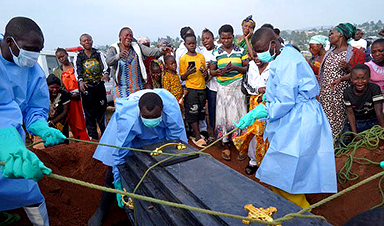
Ebola kills 2,300 in three months with no vaccine available for Congo’s deadliest ever outbreak
It’s Congo’s 17th outbreak, with a toll that has eclipsed that of the country’s 2018-2020 outbreak when 2,299 deaths out of 3,481 cases were recorded. The latest data shows 101 new cases and 33 [...]

Beyond an Agency: How AI, Creativity and Commercialization Are Converging Into a New Growth Model
At a moment when AI is forcing a fundamental rethink of how work gets done, the life sciences industry is grappling with a deeper question: what role should human creativity play in an increasingly [...]
New $60 Blood Test Detects Lung Cancer Without Costly DNA Sequencing
A simple blood test that detects chemical changes in DNA identified more than 90% of stage 2-4 lung cancers in an early study, without relying on costly DNA sequencing. Researchers at Tel Aviv University and collaborating [...]
Reducing drug development failures with human-relevant models and AI
Professor Joseph C. Wu of Stanford University explains how stem cells, human-relevant models and AI are helping researchers predict which drug candidates are most likely to succeed before clinical trials. Researchers now have access [...]
Half of vaccines are binned – ‘fridge-free’ versions could change that
Vaccines that do not need to be kept cool in a fridge have been successfully trialed in patients for the first time, say UK scientists. Currently, most vaccines need to be refrigerated or frozen [...]

Mushroom Mystery: The Fungus That Makes People See Tiny Humans
A mushroom sold in markets and served in restaurants in Southwest China has an unusual warning attached to it: cook it thoroughly, or you may start seeing tiny people. For decades, people have reported [...]
Artificial intelligence used to design brand new viruses
Artificial Intelligence has been used to design brand new viruses that are fully functional and can replicate in the laboratory, say US researchers. It is the first time whole genomes have been successfully designed [...]

Molecular Manufacturing: The Future of Nanomedicine – New book from NanoappsMedical Inc.
This book explores the revolutionary potential of atomically precise manufacturing technologies to transform global healthcare, as well as practically every other sector across society. This forward-thinking volume examines how envisaged Factory@Home systems might enable the cost-effective [...]

Moderna kicks off Phase I Ebola trial as Africa readies itself for research
If the Phase I trial is successful, Moderna plans to quickly initiate Phase II and Phase III trials of its Ebola vaccine. Moderna has initiated a Phase I trial of its mRNA Ebola vaccine [...]
3D Human Brain Tissue Model Replicates Alzheimer’s Pathology
Summary: Researchers introduced a highly reproducible three-dimensional human brain tissue model capable of replicating complex neurodegenerative processes in Alzheimer’s disease. Developed over nine years using human stem cells, the self-organizing tissue spheroids integrate functional neurons, [...]
A Common Sugar May Loosen Cancer Cells and Help Them Spread
Chemotherapy may kill most ovarian cancer cells, but the few that survive can turn dangerously active. By releasing fructose, they may help nearby tumor cells break free and spread. Researchers at The Wistar Institute [...]
COVID-19 can wake up dormant viruses in the body, large study confirms
Virus reactivations by SARS-CoV-2 could worsen initial symptoms and increase risk of Long Covid. Early in the COVID-19 pandemic, scientists noticed that a SARS-CoV-2 infection can “wake up” other, dormant viruses already present in [...]
Scientists Discover the Brain May Enter a New Biological Phase Between 50 and 75
A single-cell study reveals major changes in immune cells, genome organization, and gene regulation within the aging human hippocampus, offering important insights into brain aging and dementias associated with age. Between roughly ages 50 [...]
Our books now available worldwide!
Online Sellers other than Amazon, Routledge, and IOPP Indigo Global Health Care Equivalency in the Age of Nanotechnology, Nanomedicine and Artifcial Intelligence Global Health Care Equivalency In The Age Of Nanotechnology, Nanomedicine And Artificial [...]
Unzipping the Code of Life: Scientists Pinpoint Where DNA First Opens
Researchers mapped where DNA first opens and how a helicase gate may release one strand as genome copying begins. Before a cell can divide, it must open its tightly wound DNA and begin copying the entire [...]