A 2000-year-old practice by Chinese herbalists – examining the human tongue for signs of disease – is now being embraced by computer scientists using machine learning and artificial intelligence.
Tongue diagnostic systems are fast gaining traction due to an increase in remote health monitoring worldwide, and a study by Iraqi and Australian researchers provides more evidence of the increasing accuracy of this technology to detect disease.
Engineers from Middle Technical University (MTU) in Baghdad and the University of South Australia (UniSA) used a USB web camera and computer to capture tongue images from 50 patients with diabetes, renal failure, and anemia, comparing colors with a database of 9000 tongue images.
Achievements in Disease Diagnosis through Tongue Imaging
Using image processing techniques, they correctly diagnosed the diseases in 94 percent of cases, compared to laboratory results. A voicemail specifying the tongue color and disease was also sent via a text message to the patient or nominated health provider.
MTU and UniSA Adjunct Associate Professor Ali Al-Naji and his colleagues have reviewed the worldwide advances in computer-aided disease diagnosis, based on tongue color, in a new paper in AIP Conference Proceedings.
Technological Innovations and Future Potential
"Thousands of years ago, Chinese medicine pioneered the practice of examining the tongue to detect illness," Assoc Prof Al-Naji says.
"Conventional medicine has long endorsed this method, demonstrating that the color, shape, and thickness of the tongue can reveal signs of diabetes, liver issues, circulatory and digestive problems, as well as blood and heart diseases.
"Taking this a step further, new methods for diagnosing disease from the tongue's appearance are now being done remotely using artificial intelligence and a camera – even a smartphone.
"Computerised tongue analysis is highly accurate and could help diagnose diseases remotely in a safe, effective, easy, painless, and cost-effective way. This is especially relevant in the wake of a global pandemic like COVID, where access to health centers can be compromised."
Diabetes patients typically have a yellow tongue, cancer patients a purple tongue with a thick greasy coating, and acute stroke patients present with a red tongue that is often crooked.
A 2022 study in Ukraine analyzing tongue images of 135 COVID patients via a smartphone showed that 64% of patients with a mild infection had a pale pink tongue, 62% of patients with a moderate infection had a red tongue, and 99% of patients with a severe COVID infection had a dark red tongue.
Previous studies using tongue diagnostic systems have accurately diagnosed appendicitis, diabetes, and thyroid disease.
"It is possible to diagnose with 80% accuracy more than 10 diseases that cause a visible change in tongue color. In our study, we achieved a 94% accuracy with three diseases, so the potential is there to fine-tune this research even further," Assoc Prof Al-Naji says.
Reference: "Computer-aided diseases diagnosis system based on tongue color analysis: A review" by Abdulghafor Khudhaer Abdullah, Saleem Lateef Mohammed and Ali Al-Naji, 8 September 2023, AIP Conference Proceedings.
DOI: 10.1063/5.0154231

News

Scientists Have Uncovered Previously Hidden Microbial Activity on Human Skin
The most abundant microbes on your skin may not be the ones doing most of the work. Human skin supports vast communities of bacteria, fungi, and viruses that can influence its protective barrier, immune [...]

Brazilian Tree Compounds Fight COVID-19 on Multiple Fronts
Scientists found compounds in a Brazilian tree that hit SARS-CoV-2 on multiple fronts, revealing a promising new lead in the search for COVID-19 treatments. Researchers have found that galloylquinic acids extracted from the leaves [...]

Cutting Two Amino Acids Slowed Prostate Cancer in Mice
A newly identified link between amino acid metabolism and cholesterol production may help prostate tumors adapt to hormone therapy. Prostate cancer can find ways around treatments designed to deprive tumors of the hormones they [...]

Largest-Ever Physics Survey Raises New Doubts About Our Model of the Universe
Physicists around the world remain deeply divided on key mysteries of the universe, from dark matter to quantum gravity. The standard cosmological model failed to gain majority support, and no leading theory dominated the [...]

Scientists Just Overturned a 100-Year-Old Belief About Bacteria in the Lungs
New findings raise questions about the role of microbes living in the lungs. More than 35 trillion bacteria live throughout the human body, forming microbiomes in the gut, mouth, lungs, skin, and urogenital tract. [...]

GHCE Concept
From the preface of the book Global Health Care Equivalency in the Age of Nanotechnology, Nanomedicine and Artificial Intelligence, Edited by Frank Boehm: Since the publication of my first book (Nanomedical Device and Systems [...]

Novartis, Ionis drug failure spurs questions
Pelacarsen didn’t protect heart health despite lowering levels of a protein particle, “Lp(a),” in a large clinical trial — a result with important implications for cardiovascular drug research. Dive Brief: An RNA drug from [...]
New injectable treatment helps the brain rebuild after stroke
Biomedical engineers at Duke University have created an injectable biomaterial that may help the brain recover from damage left behind by an ischemic stroke. In experiments with mice, the material transformed the cavity created [...]

Scientists Discover a Hidden “Immune Organ” Inside the Skull
Researchers discovered lymph node-like immune hubs inside skull bone marrow that appear to act as rapid-response centers for the brain. For decades, the brain was thought to operate largely apart from the immune system. [...]
Engineered tRNAs and lipid nanoparticles target nonsense mutation cystic fibrosis
Researchers have developed a potential new approach for treating a form of cystic fibrosis caused by so-called nonsense mutations, combining chemically modified transfer RNAs with lipid nanoparticles designed to deliver the therapy directly to [...]
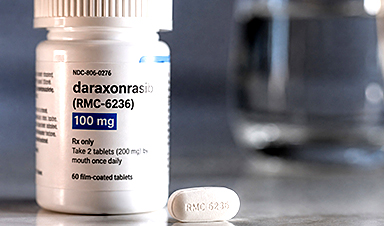
New pancreatic cancer drug carries a $39,800 monthly list price
A groundbreaking treatment for one of the most common forms of pancreatic cancer has been approved in pill form by the FDA. Revolution Medicines’ oral tablet daraxonrasib, branded as Rasonque, reduced the risk of [...]

Researchers Have Discovered a New Way To Reduce Chronic Nerve Pain
A cancer-linked protein called BRAF may help drive chronic nerve pain, and existing cancer drugs targeting it reduced pain sensitivity in preclinical models. Chronic nerve pain can persist long after an injury and often [...]

Our books now available worldwide!
Online Sellers other than Amazon, Routledge, and IOPP Indigo Global Health Care Equivalency in the Age of Nanotechnology, Nanomedicine and Artifcial Intelligence Global Health Care Equivalency In The Age Of Nanotechnology, Nanomedicine And Artificial [...]

Quantum-Enabled Regenerative Health: Reimagining Wellness, Precision Health and Longevity Medicine
Introduction Healthcare is approaching a frontier where the quantum portfolio could influence not only how disease is diagnosed and treated, but how health itself is measured, modeled, predicted and preserved. Quantum computing, quantum simulation, [...]

FDA Clears First-of-Its-Kind Nonmedication Treatment for PTSD
The FDA has cleared a system that uses brain activity data to personalize magnetic stimulation for PTSD, adding a new nonmedication treatment option. Every day in the United States, approximately 17.5 veterans die by suicide, [...]
FDA approves breakthrough drug to treat advanced pancreatic cancer
The Food and Drug Administration (FDA) approved on Wednesday a drug that could extend the survival of those with metastatic pancreatic cancer. The drug, called daraxonrasib, will be sold under the brand name Rasonque [...]