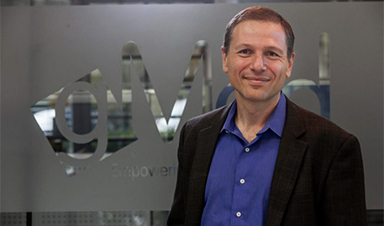
When Joe Rubinsztain started gMed, he was admittedly young—only a few years removed from medical school— and he just didn’t understand leadership that well.
“I needed to be abreast of everything and understand everything and control everything. And I needed to hire people that would do as I requested. As the company got bigger, understood that in order to grow a big company, you needed to bring in people much better than you, who knew very well what they were doing,” Rubinsztain says.
This was one of three lessons he learned in his 20 years in running gMed, a gastroenterology electronic health record company. The second was to hire people compatible with your goals as an organization. Third, respect the culture of the corporation. Rubinsztain is taking the lessons he learned at gMed, which was acquired by Modernizing Medicine in 2015, for his next act and current gig as CEO of ChronWell.
ChronWell has created an artificial intelligence-backed platform for the workers’ compensation insurance industry. The service helps a worker injured on the job by recommending self-care, on-site care or a health care facility, it follows up with the worker and manages the claim.
Chief Executive spoke to Rubinsztain about why he’s investing in artificial intelligence at ChronWell, and speaks about the trends of consumer-driven healthcare, the lack of risks taken by the insurance industry, and non-traditional consolidation between payers and providers. Below are excerpts from this conversation.

Image Credit: Joe Rubinsztain, CEO of ChronWell
Thanks to Dr. ir Johannes Drooghaag. Follow him on twitter:@DrJDrooghaag
News This Week
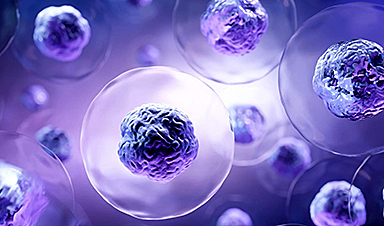
Scientists Just Challenged a Decades-Old Belief About How Cells Work
The tools scientists use to study cells may be changing the very proteins they observe, raising questions about decades of research into how cells maintain their structure. For decades, textbooks and hundreds of scientific [...]
New OpenAI benchmark tests how well models reason complex drug discovery tasks
MedChemBench tests AI reasoning across 99 chemistry problems, exposing gaps in drug property prediction. Key Takeaways MedChemBench evaluates model performance across 99 medicinal chemistry problems drawn from 117 papers and patents. GPT-6 Astra earned [...]
New CRISPR therapy is poised to gain first FDA approval to alter genes inside the body
A single infusion that edits a gene directly inside a patient's liver appears to keep working four years later, according to its developer, Intellia Therapeutics. The treatment now awaits a decision from the US [...]

Blockchain in Healthcare: Real Applications
Blockchain in healthcare refers to the use of distributed ledger technology to secure, manage, and share medical data and processes. Applications include patient record management, prescription tracking, and supply chain authentication, all designed to [...]
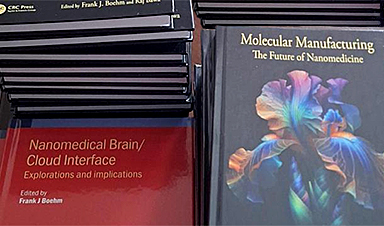
Our books are available worldwide!
Online Sellers other than Amazon, Routledge, and IOPP Indigo Global Health Care Equivalency in the Age of Nanotechnology, Nanomedicine and Artifcial Intelligence Global Health Care Equivalency In The Age Of Nanotechnology, Nanomedicine And Artificial [...]

Scientists Discover a Surprising New Power of Honey That Could Protect Your Skin
Honey’s medical uses may go beyond healing wounds, as laboratory experiments suggest multifloral honey could strengthen human skin cells’ defenses against damaging UV radiation. Ultraviolet (UV) radiation from sunlight can accelerate skin aging and [...]
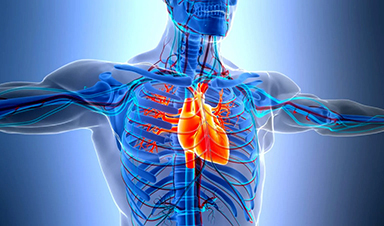
Scientists Discover That Male and Female Hearts Age in Surprisingly Different Ways
A new study reveals surprising differences in how male and female hearts age at the cellular level. The heart may age very differently from one region to another. A detailed study of mouse hearts [...]
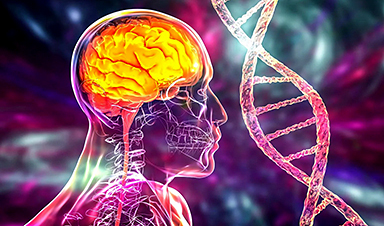
An Ancient Virus May Hold the Secret to What Makes the Human Brain Different
Could a virus that infected chimpanzees millions of years ago help explain how the human brain became different? Researchers at Lund University have discovered that ancient viral DNA embedded in the chimpanzee genome silences [...]
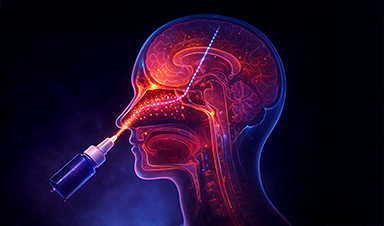
Could a Nasal Spray Stop Alzheimer’s Before Memory Loss Begins?
Protecting memory from Alzheimer’s may one day involve a nasal spray, with encouraging results in animals and evidence that its particles also protect human neurons grown in the lab. Alzheimer’s disease damages the connections [...]
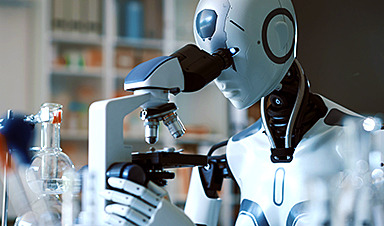
A sceptical guide to AI agents in drug discovery
In conversation with Dr Eric Ma, Senior Principal Data Scientist at Moderna, Dr Raminderpal Singh examines what AI agents are actually good for, where the lock-in hides and why expertise has become more valuable [...]
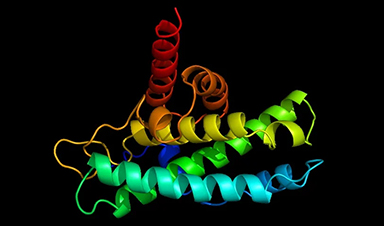
Study identifies new targets for antiviral drugs against coronaviruses
A study led by researchers at the University of California San Diego School of Medicine and University of California, Riverside (UCR) School of Medicine has identified new targets for antiviral drugs against coronaviruses, including [...]
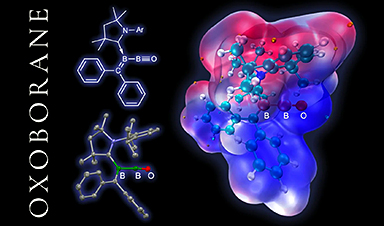
“Nearly Everybody Had Given Up” – Scientists Finally Solve a 60-Year Chemistry Mystery
After more than six decades of failed attempts, chemists have achieved a breakthrough involving a class of molecules long considered too unstable to isolate. Chemists have succeeded in isolating a group of molecules that [...]

Depression Symptoms Improved in Just 48 Hours After a Single Psychedelic Dose
A single dose of psilocybin produced rapid antidepressant effects in a small Swedish clinical trial, with improvements lasting for weeks. A single dose of psilocybin, the psychedelic compound found in magic mushrooms, produced rapid [...]
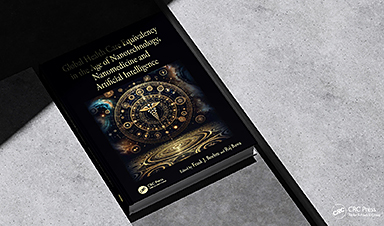
GHCE Concept
From the preface of the book Global Health Care Equivalency in the Age of Nanotechnology, Nanomedicine and Artificial Intelligence, Edited by Frank Boehm: Since the publication of my first book (Nanomedical Device and Systems [...]

Human Bodies Are Producing Two Billion Tons of CO2 a Year
A new study reveals that the amount of carbon dioxide produced by human metabolism has increased dramatically over three decades. The carbon dioxide produced by human bodies as they convert food into energy increased [...]
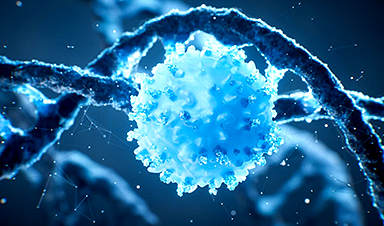
A Hidden DNA Mechanism Could Explain How 20% of Human Cancers Develop
Researchers have identified an unexpected molecular vulnerability in cancers carrying BAF mutations. Mutations found in roughly 20% of human cancers may promote tumor growth by changing how DNA is organized inside cells. Researchers have [...]


Leave A Comment