n June 2021, Israel’s early lead in the world vaccination race seemed to be crumbling. Months earlier it had been the real-world laboratory that showed the effectiveness of vaccines in crushing COVID-19 outbreaks. But now a surge of the faster-moving Delta variant was taking hold, including among the double-jabbed. Data indicated that people vaccinated back in January were more likely to catch COVID than those vaccinated later. Protection from the vaccines seemed to wane after six months.
By September, with new cases topping 10,000 a day, Israel had started rolling out booster shots. At the time, scientists were split over whether a third dose was needed – and the World Health Organisation warned against using up vaccine on boosters while so much of the developing world was still without a single dose.
But, for Israel’s caseload at least, it paid off. The numbers fell again, and studies have since shown that a booster of mRNA sharply lowers the likelihood of COVID infection. With another variant, Omicron, on the loose, the UK, the US, Europe, and now Australia are also turning to boosters, generally six months on from a second dose.
So what does the science say about boosters, why are we mixing and matching vaccine brands and how many more are we likely to need?
Why do we need boosters?
Vaccines teach your body to make special immune cells that can defeat the virus fast if it gets into your system (those are proteins known as antibodies to gum up the virus and killer T-cells to hunt down infected cells). “However healthy your immune system, your body still takes a while to recognise and fight a new threat like [COVID],” says Professor Seshadri Vasan who has spent the pandemic trialling vaccines and tracking coronavirus mutations at the CSIRO’s dangerous-pathogens lab.
Still, this immune memory does fade over time, particularly in older people. Respiratory viruses such as COVID are notoriously difficult to immunise against to begin with, says infectious disease physician Associate Professor Paul Griffin. “We don’t tend to get lifelong protection, even after we catch the common, milder coronaviruses that give us colds. So we always thought we’d need boosters to top up our immunity. What we didn’t know was when.”
The good news is that while people have a higher chance of being infected with COVID six months or more after their second dose, protection against developing a severe case does not decline nearly as fast. To gauge the effectiveness of a vaccine, scientists usually measure antibody levels in someone’s blood. But Griffin says this doesn’t give the complete picture. Antibodies naturally wane over time. “It doesn’t mean the capacity to produce them has gone,” he says. And, while falls in antibody levels may make it easier for a virus to gain a foothold in the body, there will likely still be T cells on the prowl – which are harder to measure but particularly important at stopping severe disease.
In May, Australian researchers calculated that when a vaccinated person’s antibody levels fell to about 20 per cent of their previous level, protection against getting COVID dropped to 50 per cent. But protection against a severe case didn’t fall to 50 per cent until those antibody levels had plunged to just 3 per cent of what they had been.
“The case for boosters is not a failure of the vaccines,” says Griffin. Many existing vaccines need boosters – they both build up antibody levels again and improve the body’s longer-lasting immune defences. COVID boosters can get immunity levels up even higher than where they were two weeks after the second dose.
“The scientific community is actually now debating whether three doses [instead of two] should have been the primary dose schedule all along,” adds Vasan.
When should you have a booster?
Based on both trials and real-world data overseas, Griffin says six months after a second dose has emerged as the standard time to get a booster in Western countries with good access to vaccines such as Australia and the US. (The WHO has yet to recommend widespread boosters.)
As with the original vaccine roll-out, vulnerable groups are at the front of the booster queue. Many Australians with compromised immune systems have had third doses already (at a minimum of two months after their second), and older people and frontline workers who were vaccinated more than six months ago have been getting them too. In November, Australia followed Israel in opening up boosters to every adult six months after their second dose, no matter what vaccine they had already had. As of December 7, 678,154 people were already eligible for an mRNA booster, and, of those, 559,046 had received a third dose of vaccine so far. By the end of the year, 1.75 million people will be eligible and that number will grow to 4.1 million by the end of January, 7.5 million by the end of February before ballooning to 17.8 million by the end of May.
Meanwhile, in places such as the UK, the entire boosters program has been brought forward from six months after your second dose to three as concerns grow that the highly mutated Omicron variant may be better able to evade vaccines. Australia’s expert vaccine advisory group ATAGI considered shortening the interval here too but decided there wasn’t enough evidence that an earlier booster would improve protection against Omicron. The group did advise that the interval could be shortened to five months for logistical reasons, such as for “patients with a greater risk of severe COVID-19 in outbreak settings” but noted this: “There are very limited data on benefit for boosters given prior to 20 weeks after completion of the primary course, and the duration of protection following boosters is not yet known.”
For Australia, where much of the population is still freshly vaccinated, Griffin says waiting the six months will mean many people will be vaccinated around Easter next year right ahead of winter (when the virus may flare up again in the cooler weather). “So I think that’s the right time.”
Are the boosters updated to cover new variants?
Not so far. Vaccine makers have been preparing how best to tweak vaccines for new variants for many months now. But when many existing formulas were found to still work well against the now dominant Delta strain (which emerged in late 2020), regulators approved them as third dose boosters. Some experts have since wondered if that was a missed opportunity but Dr Peter Marks at the Food and Drug Administration (FDA) in the US, where both Pfizer and Moderna are made, has said that changing formulas only when it is really necessary means less “churn and burn” on manufacturing, and so fewer delays in getting boosters out.
Now, scientists around the world, including Vasan at the CSIRO, are poring over samples of the new variant Omicron to see if a tweak is needed this time. Omicron has about twice as many mutations as the highly infectious Delta, including 34 in the crucial spike protein that the virus uses to hack into our cells. But it is still unclear how that will change its behaviour in patients. Vasan describes it this way: “Just because you might understand individual personality traits, doesn’t mean you can predict exactly how someone will behave. We understand a lot about some of these mutations because we’ve encountered them before in other variants, but Omicron has new ones too, and how they all work together could be different.”
So far, South African doctors report many of the new Omicron cases are mild but the speed at which the new strain has exploded across the continent suggests it is highly infectious. Scientists are particularly concerned the new variant’s spike might have changed shape so much that antibodies can no longer stop it in its tracks (and the WHO has said that reinfection appears more likely with Omicron than Delta). But Vasan adds, “There’s not a one-to-one correlation between the number of mutations and resistance to vaccines.”
The mRNA vaccines are the easiest to adapt, he says. They show our body a tiny segment of the virus’s genetic code (known as RNA) – in this case, the spike protein – to train our immune system to make the right antibodies to fight it if it ever shows up for real.
To tweak the vaccine, scientists just need to swap out the original spike RNA for a mutated Omicron version in its nanoparticle casing. BioNTech, which makes Pfizer, says it can produce and ship an updated version of its vaccine within 100 days if Omicron requires it. But its CEO, Ugur Sahin, has so far been more optimistic about existing vaccines holding up to the variant than the head of Moderna, Stéphane Bancel, who told the Financial Times that he expects to see a “material drop” in vaccine effectiveness against Omicron.
In Australia, tens of millions of the booster doses on order are not expected to arrive until next year, and those may be tweaked if companies such as Pfizer decide that an update against variants is needed. Department of Health secretary Professor Brendan Murphy told a senate committee on December 7 that the country’s contracts already “envisage that if a very different vaccine is required those advance purchase agreements cover that”.

News

Quantum-Enabled Regenerative Health: Reimagining Wellness, Precision Health and Longevity Medicine
Introduction Healthcare is approaching a frontier where the quantum portfolio could influence not only how disease is diagnosed and treated, but how health itself is measured, modeled, predicted and preserved. Quantum computing, quantum simulation, [...]

FDA Clears First-of-Its-Kind Nonmedication Treatment for PTSD
The FDA has cleared a system that uses brain activity data to personalize magnetic stimulation for PTSD, adding a new nonmedication treatment option. Every day in the United States, approximately 17.5 veterans die by suicide, [...]
FDA approves breakthrough drug to treat advanced pancreatic cancer
The Food and Drug Administration (FDA) approved on Wednesday a drug that could extend the survival of those with metastatic pancreatic cancer. The drug, called daraxonrasib, will be sold under the brand name Rasonque [...]

AI Decodes a Hidden DNA Signal Linked to Disease-Causing Mutations
Machine learning identifies the likely “initiator” and enables new predictions about DNA mutations that can cause disease. Every human cell depends on tens of thousands of genes being switched on at the right time [...]

Pope Leo Urges Global Response to Congo’s Deadliest Ebola Outbreak
Pope Leo called for international action to address the Ebola outbreak in the Democratic Republic of Congo. The epidemic has claimed over 2,500 lives and is the nation's largest recorded outbreak. The Pope emphasized [...]

Is there a summer COVID-19 surge this year? Yep, it’s ramping up again
Hantavirus. Ebola. West Nile. Measles. And, of course, cyclospora — that stomach parasite making people miserable across the country. Americans have plenty to worry about this summer. But remember COVID-19? It may not be [...]
Natural Compound in Broccoli Could Help Treat a Rare, Incurable Neurological Disease
Swinburne researchers have discovered how broccoli could help treat an extremely rare and incurable disease that affects only about 200 Australians. A naturally occurring compound in broccoli is being investigated as a possible treatment [...]
Antibody recycling, FcRn and the next generation of biologics
FcRn plays a central role in regulating the half-life of IgG antibodies and albumin, making it a critical target in both antibody engineering and autoimmune disease therapy. This article explores the biology of FcRn, [...]
Ebola kills 2,300 in three months with no vaccine available for Congo’s deadliest ever outbreak
It’s Congo’s 17th outbreak, with a toll that has eclipsed that of the country’s 2018-2020 outbreak when 2,299 deaths out of 3,481 cases were recorded. The latest data shows 101 new cases and 33 [...]
Beyond an Agency: How AI, Creativity and Commercialization Are Converging Into a New Growth Model
At a moment when AI is forcing a fundamental rethink of how work gets done, the life sciences industry is grappling with a deeper question: what role should human creativity play in an increasingly [...]

New $60 Blood Test Detects Lung Cancer Without Costly DNA Sequencing
A simple blood test that detects chemical changes in DNA identified more than 90% of stage 2-4 lung cancers in an early study, without relying on costly DNA sequencing. Researchers at Tel Aviv University and collaborating [...]
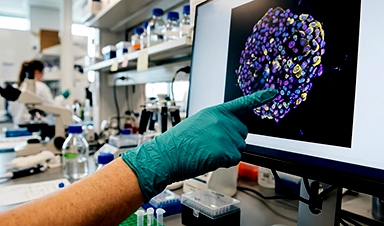
Reducing drug development failures with human-relevant models and AI
Professor Joseph C. Wu of Stanford University explains how stem cells, human-relevant models and AI are helping researchers predict which drug candidates are most likely to succeed before clinical trials. Researchers now have access [...]
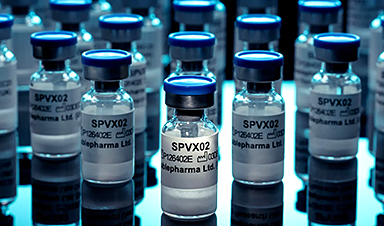
Half of vaccines are binned – ‘fridge-free’ versions could change that
Vaccines that do not need to be kept cool in a fridge have been successfully trialed in patients for the first time, say UK scientists. Currently, most vaccines need to be refrigerated or frozen [...]

Mushroom Mystery: The Fungus That Makes People See Tiny Humans
A mushroom sold in markets and served in restaurants in Southwest China has an unusual warning attached to it: cook it thoroughly, or you may start seeing tiny people. For decades, people have reported [...]

Artificial intelligence used to design brand new viruses
Artificial Intelligence has been used to design brand new viruses that are fully functional and can replicate in the laboratory, say US researchers. It is the first time whole genomes have been successfully designed [...]
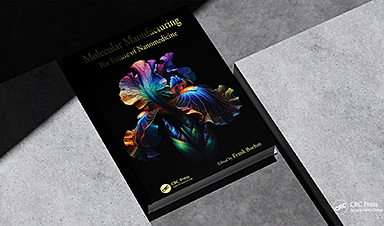
Molecular Manufacturing: The Future of Nanomedicine – New book from NanoappsMedical Inc.
This book explores the revolutionary potential of atomically precise manufacturing technologies to transform global healthcare, as well as practically every other sector across society. This forward-thinking volume examines how envisaged Factory@Home systems might enable the cost-effective [...]