China’s BCI start-ups, seen as potential rivals to Elon Musk’s Neuralink, are gaining momentum as regulatory support and fresh capital fuel growth.
Shares of BCI companies rose on mainland Chinese exchanges on Friday, with Shenzhen-listed Inkon Life Technology surging more than 10 per cent.
The approval awarded to Neuracle, a private firm founded in 2011, marked the first time globally that an invasive BCI could be sold and used on patients as a commercial product, according to China’s National Medical Products Administration.
The company’s founder, Xu Honglai, earned a PhD in biomedical engineering from Tsinghua University.
Last month, Neuracle, which develops and sells scientific research equipment, launched its listing process on the Star Market of the Shanghai Stock Exchange by signing an initial public offering tutoring agreement with Citic Securities.
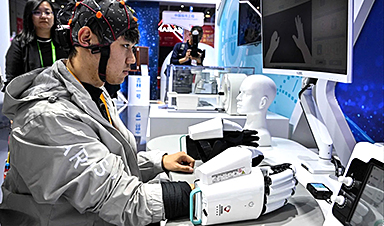
The newly approved implantable BCI hand motor function system was described by the company as a coin-sized wireless device placed on the brain’s outer surface without penetrating tissue, designed to read patients’ neural signals and translate them into hand movements.

StairMed said it was the first company in the implantable BCI field to receive investments from both Alibaba, which owns the South China Morning Post, and Tencent Holdings.
Alibaba and Tencent “have deep strengths in multimodal large models, computing infrastructure, smart hardware and ecosystem deployment, which can be deeply integrated with StairMed’s globally leading brain-computer interface hardware and clinical translation experience”, founder Li Xue said in a statement.
The start-up, founded in 2021 by Li and fellow scientist Zhao Zhengtuo, develops tiny brain implants capable of reading and transmitting neural signals at high speed, as well as ultra-thin flexible electrodes and the robotic tools required to insert them. Zhao completed his postdoctoral research at Rice University after studying at the University of Texas at Austin.
The company plans to launch a “large-scale” clinical trial in mid-2026, aiming to enrol and implant about 40 patients by the end of the year. “By late 2026, StairMed’s total number of clinical implants is expected to approach, or even surpass, the 21 cases reported in trials by Elon Musk’s Neuralink,” the statement said.
It completed three BCI clinical trial implants last year.
Other investors in the latest round of funding included state-backed SDIC Fund Management and Shanghai Guotou Leading Fund, as well as Shanghai-based private equity firm Yuanlai Capital, US investment firm OrbiMed, Oriza Seed, Qiming Venture Partners, Lilly Asia Ventures and Beijing-based venture capital firm Source Code Capital.
China has vowed to develop “two or three” global players in the sector by 2030 to compete with Neuralink. In a document released last year, the government set a goal of achieving breakthroughs in key BCI technologies by 2027, with plans including establishing an advanced technology system and an industrial framework.

News – Curated by Amanda Scott, Alias Group Creative
Follow her on Bluesky
Scientists Discover the Brain Protein That Helps Alzheimer’s Spread Through the Brain
Scientists have identified a brain protein that may help Alzheimer’s spread, revealing a potential new target for slowing the disease’s progression. Alzheimer’s disease is closely linked to the accumulation of a toxic form of the protein [...]
How Immune Dysregulation Contributes to Psychiatric Disorders
Introduction Growing evidence suggests that disruptions in immune function may play an important role in the development and progression of psychiatric disorders. However, immune mechanisms probably contribute more strongly in some patients than others, [...]
Electrostatic Discharge Boosts Triboelectric Nanogenerator Current and Enables DC Output
Controlled electrical discharges could enable triboelectric nanogenerators to achieve higher peak currents, extending nano-enabled energy harvesting into chemical processing and self-powered sensing. Paper: Electrostatic discharge as a breakthrough strategy for triboelectric nanogenerators. A new review [...]
Swiss laboratory uses old drugs against rare diseases
Researchers at the University of Geneva are combing through collections of approved drugs to find new therapies for rare diseases – with some success. This approach is gaining traction around the world, while pharmaceutical [...]

Nanozyme Aptasensors Show Promise for Faster Food, Health, and Environmental Testing
By pairing robust artificial enzymes with highly selective aptamers, nanozyme aptasensors could help detect disease biomarkers, pathogens, and contaminants faster, but the review shows that real-world deployment still depends on overcoming matrix interference, biofouling, [...]
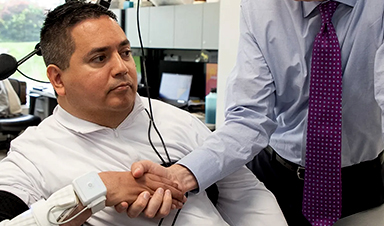
Paralyzed Man Feels Sensation Again With Brain Stimulation Device
Aneuroprosthetic system has allowed a man with paralysis to grasp and lift objects and feel touch again. The device helped 42-year-old Keith Thomas of Massapequa, New York, who was paralyzed from the chest down [...]
Global Cancer Cases Could Surge 67% by 2050, New Report Warns
New data reveal major geographic disparities and highlight the urgent need for global action on prevention, early detection, and equitable access to treatment. For roughly one in five people worldwide, cancer will become part [...]
A Deadly Ebola-Like Virus Is Spreading. Are We Ready?
BU virologist Nancy Sullivan says the Bundibugyo outbreak in the Democratic Republic of the Congo underscores the need for broader outbreak preparedness. The death of a nurse marked the moment health officials recognized that [...]
Why Most Animal Viruses Never Become Human Pandemics
From receptor mismatch to risky human-animal interfaces, this article explains why spillover is common but true pandemic emergence remains rare. Introduction Humans are constantly exposed to animal viruses through farming, wildlife contact, and the [...]

Stem cell organoids repair heart microvessels in coronary artery disease models
A Stanford University team has shown that vascular organoids derived from human stem cells can repair the heart’s microvessel network in pigs with ischaemic heart disease – a proof-of-concept advancement that could open new therapeutic [...]

Goodbye GP waiting rooms, hello prevention at home
Prevention is suddenly everywhere in NHS reform. The recent £340m community pharmacy deal is moving more services onto the high street. Community Diagnostic Centres are being expanded, and the Neighbourhood Health Framework sets out [...]
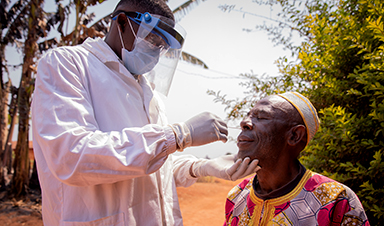
Ebola control is weakened by mistrust and cultural insensitivity
Effective response depends on cooperation with communities and frontline workers, writes Zaeem ul Haq The current Bundibugyo Ebola outbreak in the Democratic Republic of the Congo (DRC) and Uganda is exposing dangerous gaps in [...]

Building the Brain Requires Millions of Dangerous DNA Breaks
Scientists discovered that building a healthy brain involves an unexpected step: young neurons routinely break and rapidly repair their own DNA. As the brain develops, newly formed nerve cells must travel through tightly packed tissue [...]

One Tiny Change May Explain How Viruses Jump From Bats to Humans
Scientists found that one tiny genetic change may determine whether a bat virus stays in bats or becomes a human threat. Most infectious disease outbreaks begin when a virus or other pathogen crosses from animals into [...]

Scientists Discover 250+ Genes That Could Lead to New Ways To Prevent Melanoma
The world’s largest study of mole genetics identified hundreds of genes tied to melanoma risk, uncovering potential new drug targets and paving the way for more accurate melanoma screening and prevention. Researchers at QIMR [...]
Breakthrough Diabetes Treatment Reprograms the Immune System
An engineered stem cell therapy reversed new-onset Type 1 diabetes in mice by shifting the immune system away from attacking insulin-producing cells. For more than a century, people with Type 1 diabetes have relied [...]