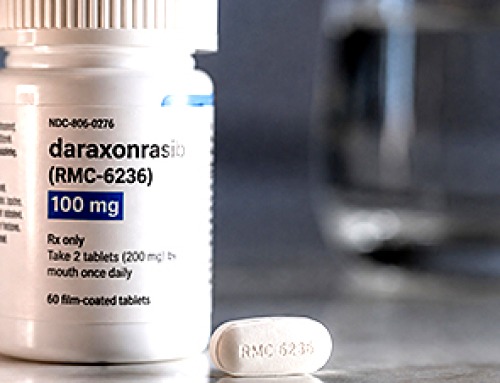
A single nasal spray vaccine may one day protect against viruses, pneumonia, and even allergies.
For decades, scientists have dreamed of creating a universal vaccine capable of protecting against many different pathogens. The idea has often been compared to a Holy Grail of medicine — a goal that seemed almost impossible to achieve.
Now, researchers at Stanford Medicine and their collaborators say they may have taken a major step toward that vision. In a study conducted in mice, the team developed an experimental vaccine designed to defend against a wide variety of respiratory threats, including viruses, bacteria, and even allergens. The vaccine is administered through the nose — such as with a nasal spray — and produced broad immune protection in the lungs that lasted for several months.
The findings, published in Science, showed that vaccinated mice were protected from SARS-CoV-2 and other coronaviruses, as well as from Staphylococcus aureus and Acinetobacter baumannii (common hospital-acquired infections). The animals were also shielded from house dust mites (a common allergen). According to Bali Pulendran, PhD, the Violetta L. Horton Professor II and professor of microbiology and immunology, who served as senior author of the study, the vaccine has demonstrated protection against an unusually wide range of respiratory dangers tested so far.
The study's lead author is Haibo Zhang, PhD, a postdoctoral scholar in Pulendran's lab.
If future research confirms these results in people, the approach could eventually replace several yearly vaccines for seasonal respiratory infections and also serve as a rapid defense against emerging pandemic viruses.
Why Traditional Vaccines Have Limits
The experimental vaccine works very differently from the vaccines currently in use.
Since the late 1700s, when English physician Edward Jenner introduced the concept of vaccination (from the Latin vacca for cow) after using cowpox to protect against smallpox, vaccines have relied on a basic principle called antigen specificity. In this approach, vaccines present the immune system with a recognizable component of a pathogen — such as the spike proteins that cover SARS-CoV-2 — allowing the body to quickly identify and attack the real pathogen in the future.
"That's been the paradigm of vaccinology for the last 230 years," Pulendran said.
However, this strategy has limitations. When viruses mutate or new pathogens appear, existing vaccines may lose effectiveness. This is why updated COVID-19 boosters and seasonal flu shots are required every year.
"It's becoming increasingly clear that many pathogens are able to quickly mutate. Like the proverbial leopard that changes its spots, a virus can change the antigens on its surface," Pulendran said.
Most attempts to design broader vaccines have focused on protecting against an entire family of viruses, such as all coronaviruses or all flu viruses. These strategies typically target parts of viruses that change less frequently during evolution. Still, the concept of one vaccine capable of protecting against many unrelated pathogens has long been viewed as unrealistic.
"We were interested in this idea because it sounded a bit outrageous," Pulendran said. "I think nobody was seriously entertaining that something like this could ever be possible."
Activating the Body's Integrated Immune System
Rather than copying a piece of a virus or bacterium, the new vaccine imitates the signals immune cells send to one another during infection. This strategy connects the body's two main immune defenses — innate immunity and adaptive immunity — and keeps them working together in a sustained response.
Most vaccines mainly stimulate the adaptive immune system. This system produces targeted defenses, such as antibodies and T cells, that recognize specific pathogens and can remember them for years.
The innate immune system works differently. It responds quickly to infection and includes cells such as dendritic cells, neutrophils, and macrophages that attack invading microbes in a more general way. Because its activity usually fades within days, it has traditionally received less attention in vaccine research.
Pulendran's team became interested in this system because of its broad protective abilities.
"What's remarkable about the innate system is that it can protect against a broad range of different microbes," Pulendran said.
Although innate immunity normally fades quickly, scientists have long suspected that it might sometimes last longer. One clue comes from the Bacillus Calmette-Guerin tuberculosis vaccine, which is given to about 100 million newborns each year. Studies have suggested that the vaccine can reduce infant deaths from infections unrelated to tuberculosis, hinting that its protective effects may extend beyond its original target. However, the mechanism behind this cross-protection has remained unclear.
Discovering How Cross Protection Works
In 2023, Pulendran's research group published a study in mice that clarified how this broader protection might occur. Like most vaccines, the tuberculosis vaccine activated both innate and adaptive immune responses in the animals. However, the innate response lasted far longer than expected.
The researchers discovered that T cells that had moved into the lungs during the adaptive response were sending signals that kept the innate immune cells active.
"Those T cells were providing a critical signal to keep the activation of the innate system, which typically lasts for a few days or a week, but in this case, it could last for three months," Pulendran said.
As long as that heightened innate response remained active, the mice were protected from SARS-CoV-2 and other coronavirus infections. The scientists identified the signals from T cells as cytokines that activate pathogen sensing receptors known as toll-like receptors on innate immune cells.
"In that paper, we speculated that since we now know how the tuberculosis vaccine is mediating its cross-protective effects, it would be possible to make a synthetic vaccine, perhaps a nasal spray, that has the right combination of toll-like receptor stimuli and some antigen to get the T cells into the lungs," Pulendran said.
"Fast forward two and a half years, and we've shown that exactly what we had speculated is feasible in mice."
How the Experimental Nasal Vaccine Works
The new vaccine, currently called GLA-3M-052-LS+OVA, is designed to mimic the signals from T cells that activate innate immune cells in the lungs. It also contains a harmless antigen known as ovalbumin or OVA, an egg protein that draws T cells into the lungs and helps sustain the immune response for weeks to months.
During the experiments, mice received drops of the vaccine in their noses. Some animals were given several doses spaced one week apart. After vaccination, each mouse was exposed to a respiratory virus. With three doses, the vaccine protected mice against SARS-CoV-2 and other coronaviruses for at least three months.
Unvaccinated mice experienced severe weight loss — a sign of illness — and many died. Their lungs became inflamed and contained high levels of virus. Vaccinated mice showed far less weight loss, all survived, and their lungs contained very little virus.
Pulendran described the vaccine's effect as a "double whammy." The sustained innate response reduced the amount of virus in the lungs by 700-fold. Any viruses that managed to bypass that first line of defense were quickly confronted by a rapid adaptive immune response.
"The lung immune system is so ready and so alert that it can launch the typical adaptive responses — virus-specific T cells and antibodies — in as little as three days, which is an extraordinarily short length of time," Pulendran said. "Normally, in an unvaccinated mouse, it takes two weeks."
Protection From Viruses, Bacteria, and Allergens
After seeing how well the vaccine worked against viruses, the researchers expanded their testing to include bacterial infections of the respiratory tract. The vaccinated mice were also protected from Staphylococcus aureus and Acinetobacter baumannii for about three months.
"Then we thought, 'What else could go in the lung?'" Pulendran said. "Allergens."
To test that idea, the researchers exposed mice to a protein from house dust mites, which commonly trigger allergic asthma. Allergic reactions involve a type of immune response called Th2 response. Unvaccinated mice showed a strong Th2 response along with mucus buildup in their airways. In vaccinated mice, the Th2 response was suppressed, and their airways remained clear.
"I think what we have is a universal vaccine against diverse respiratory threats," Pulendran said.
Next Steps Toward Human Trials
The researchers now plan to test the vaccine in humans. The next phase will begin with a Phase I safety trial. If those results are positive, larger trials would follow, including studies in which vaccinated volunteers are exposed to infections.
Pulendran believes two doses delivered as a nasal spray could be enough to provide protection in people.
With sufficient funding, he estimates that a universal respiratory vaccine could become available within five to seven years. Such a vaccine could strengthen defenses against future pandemics and simplify seasonal vaccination.
"Imagine getting a nasal spray in the fall months that protects you from all respiratory viruses, including COVID-19, influenza, respiratory syncytial virus, and the common cold, as well as bacterial pneumonia and early spring allergens," Pulendran said. "That would transform medical practice."
Reference: "Mucosal vaccination in mice provides protection from diverse respiratory threats" by Haibo Zhang, Katharine Floyd, Zhuoqing Fang, Filipe Araujo Hoffmann, Audrey Lee, Heather Marie Froggatt, Gurpreet Bharj, Xia Xie, Haleigh B. Eppler, Jordan Mariah Santagata, Yanli Wang, Mengyun Hu, Christopher B. Fox, Prabhu S. Arunachalam, Ralph Baric, Mehul S. Suthar and Bali Pulendran, 19 February 2026, Science.
DOI: 10.1126/science.aea1260
Researchers from Emory University School of Medicine, the University of North Carolina at Chapel Hill, Utah State University, and the University of Arizona contributed to the study.
The work was supported by funding from the National Institutes of Health (grant AI167966), the Violetta L. Horton Professor endowment, the Soffer Fund endowment, and Open Philanthropy.

News – Curated by Amanda Scott, Alias Group Creative
Follow her on Bluesky

Largest-Ever Physics Survey Raises New Doubts About Our Model of the Universe
Physicists around the world remain deeply divided on key mysteries of the universe, from dark matter to quantum gravity. The standard cosmological model failed to gain majority support, and no leading theory dominated the [...]

Scientists Just Overturned a 100-Year-Old Belief About Bacteria in the Lungs
New findings raise questions about the role of microbes living in the lungs. More than 35 trillion bacteria live throughout the human body, forming microbiomes in the gut, mouth, lungs, skin, and urogenital tract. [...]
GHCE Concept
From the preface of the book Global Health Care Equivalency in the Age of Nanotechnology, Nanomedicine and Artificial Intelligence, Edited by Frank Boehm: Since the publication of my first book (Nanomedical Device and Systems [...]

Novartis, Ionis drug failure spurs questions
Pelacarsen didn’t protect heart health despite lowering levels of a protein particle, “Lp(a),” in a large clinical trial — a result with important implications for cardiovascular drug research. Dive Brief: An RNA drug from [...]

New injectable treatment helps the brain rebuild after stroke
Biomedical engineers at Duke University have created an injectable biomaterial that may help the brain recover from damage left behind by an ischemic stroke. In experiments with mice, the material transformed the cavity created [...]

Scientists Discover a Hidden “Immune Organ” Inside the Skull
Researchers discovered lymph node-like immune hubs inside skull bone marrow that appear to act as rapid-response centers for the brain. For decades, the brain was thought to operate largely apart from the immune system. [...]

Engineered tRNAs and lipid nanoparticles target nonsense mutation cystic fibrosis
Researchers have developed a potential new approach for treating a form of cystic fibrosis caused by so-called nonsense mutations, combining chemically modified transfer RNAs with lipid nanoparticles designed to deliver the therapy directly to [...]
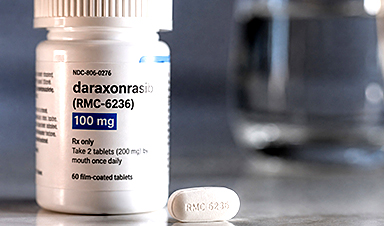
New pancreatic cancer drug carries a $39,800 monthly list price
A groundbreaking treatment for one of the most common forms of pancreatic cancer has been approved in pill form by the FDA. Revolution Medicines’ oral tablet daraxonrasib, branded as Rasonque, reduced the risk of [...]

Researchers Have Discovered a New Way To Reduce Chronic Nerve Pain
A cancer-linked protein called BRAF may help drive chronic nerve pain, and existing cancer drugs targeting it reduced pain sensitivity in preclinical models. Chronic nerve pain can persist long after an injury and often [...]

Our books now available worldwide!
Online Sellers other than Amazon, Routledge, and IOPP Indigo Global Health Care Equivalency in the Age of Nanotechnology, Nanomedicine and Artifcial Intelligence Global Health Care Equivalency In The Age Of Nanotechnology, Nanomedicine And Artificial [...]

Quantum-Enabled Regenerative Health: Reimagining Wellness, Precision Health and Longevity Medicine
Introduction Healthcare is approaching a frontier where the quantum portfolio could influence not only how disease is diagnosed and treated, but how health itself is measured, modeled, predicted and preserved. Quantum computing, quantum simulation, [...]

FDA Clears First-of-Its-Kind Nonmedication Treatment for PTSD
The FDA has cleared a system that uses brain activity data to personalize magnetic stimulation for PTSD, adding a new nonmedication treatment option. Every day in the United States, approximately 17.5 veterans die by suicide, [...]

FDA approves breakthrough drug to treat advanced pancreatic cancer
The Food and Drug Administration (FDA) approved on Wednesday a drug that could extend the survival of those with metastatic pancreatic cancer. The drug, called daraxonrasib, will be sold under the brand name Rasonque [...]

AI Decodes a Hidden DNA Signal Linked to Disease-Causing Mutations
Machine learning identifies the likely “initiator” and enables new predictions about DNA mutations that can cause disease. Every human cell depends on tens of thousands of genes being switched on at the right time [...]

Pope Leo Urges Global Response to Congo’s Deadliest Ebola Outbreak
Pope Leo called for international action to address the Ebola outbreak in the Democratic Republic of Congo. The epidemic has claimed over 2,500 lives and is the nation's largest recorded outbreak. The Pope emphasized [...]

Is there a summer COVID-19 surge this year? Yep, it’s ramping up again
Hantavirus. Ebola. West Nile. Measles. And, of course, cyclospora — that stomach parasite making people miserable across the country. Americans have plenty to worry about this summer. But remember COVID-19? It may not be [...]