In Lake Malawi, hundreds of species of cichlid fish have evolved with astonishing speed, offering scientists a rare opportunity to study how biodiversity arises.
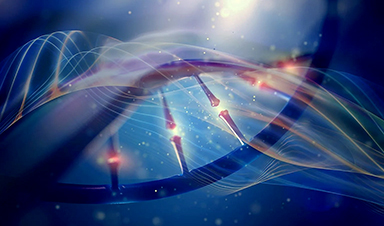
Researchers have identified segments of "flipped" DNA that may allow fish to adapt rapidly to new environments and eventually form new species. These unusual genetic changes appear to function as evolutionary "superchargers," helping populations diversify at remarkable speed.
Why does Earth contain such a vast variety of plants and animals? One of the central questions in biology is how new species originate and how the extraordinary diversity of life developed over time.
Cichlid fish in Lake Malawi in East Africa provide an important example. Within this single lake, more than 800 species have emerged from a shared ancestor. This diversification happened in far less time than it took humans and chimpanzees to split from their own common ancestor.
Even more striking is that this evolutionary explosion took place in the same body of water. Some cichlids evolved into large predators, while others specialized in grazing on algae, filtering sand for food, or feeding on plankton. Over time, each species adapted to its own ecological niche.
Searching the Genome for Answers
Scientists from the University of Cambridge and the University of Antwerp set out to understand how this rapid evolutionary change occurred. Their findings were published in the journal Science.
The research team examined the DNA of more than 1,300 cichlid fish to see whether any unusual genetic features might explain the group's extraordinary rate of diversification. "We discovered that, in some species, large chunks of DNA on five chromosomes are flipped – a type of mutation called a chromosomal inversion," said senior author Hennes Svardal from the University of Antwerp.
In most animals, reproduction involves a process called recombination. During this process, genetic material from each parent is shuffled and mixed together.
However, recombination is largely prevented inside a chromosomal inversion. As a result, the group of genes contained in that flipped section remains linked and is passed down together from one generation to the next. This preserves useful combinations of genes that support survival in specific environments, which can accelerate evolutionary change.
"It's sort of like a toolbox where all the most useful tools are stuck together, preserving winning genetic combinations that help fish adapt to different environments," said first author Moritz Blumer from Cambridge's Department of Genetics.
The Power of "Supergenes"
Scientists sometimes refer to these tightly linked groups of genes as "supergenes." In Lake Malawi cichlids, the study suggests that these supergenes serve several important functions.
Different cichlid species can still interbreed, but chromosomal inversions help maintain distinct species boundaries by limiting how much genetic mixing occurs. This effect is especially important in parts of the lake where multiple species live side by side, such as open sandy habitats where there are no physical barriers separating them.
Many genes within these supergenes influence traits that are essential for survival and reproduction, including vision, hearing, and behavior. Fish that live deep in the lake (down to 200 meters (about 656 feet)) face very different conditions than those near the surface. They encounter lower light levels, different food sources, and higher pressure. The supergenes help maintain the genetic traits that allow them to thrive in these environments.
"When different cichlid species interbred, entire inversions can be passed between them – bringing along key survival traits, like adaptations to specific environments, speeding up the process of evolution," said Blumer.
The study also found that these inversions often function as sex chromosomes, which help determine whether an individual develops as male or female. Because sex chromosomes can influence how new species emerge, this finding raises additional questions about the role these genetic structures play in evolution.
"While our study focused on cichlids, chromosomal inversions aren't unique to them," said co-senior author Professor Richard Durbin, from Cambridge's Department of Genetics. "They're also found in many other animals — including humans — and are increasingly seen as a key factor in evolution and biodiversity."
"We have been studying the process of speciation for a long time," said Svardal. "Now, by understanding how these supergenes evolve and spread, we're getting closer to answering one of science's big questions: how life on Earth becomes so rich and varied."
Reference: "Introgression dynamics of sex-linked chromosomal inversions shape the Malawi cichlid radiation" by L. M. Blumer, V. Burskaia, I. Artiushin, J. Saha, J. Camacho Garcia, F. Campuzano Jiménez, A. Hooft van Huysdynen, J. Elkin, B. Fischer, N. Van Houtte, C. Zhou, S. Gresham, M. Malinsky, T. Linderoth, W. Sawasawa, G. Vernaz, I. Bista, A. Hickey, M. Kucka, S. Louzada, R. Zatha, F. Yang, B. Rusuwa, M. E. Santos, Y. F. Chan, D. A. Joyce, A. Böhne, E. A. Miska, M. Ngochera, G. F. Turner, R. Durbin and H. Svardal, 12 June 2025, Science.
DOI: 10.1126/science.adr9961

News
Scientists Discover a Powerful New Weapon Against a Dangerous Gut Infection
The promise of an experimental treatment for C. difficile gut infections lies partly in the bacteria it leaves alive, according to early laboratory and mouse research. Broad-spectrum antibiotics can disrupt the gut’s microbial community, [...]
Your Bones May Hold a Hidden Clue to Blood Cancer Survival
For people with blood cancers called myelodysplastic syndromes, osteoporosis may hold an overlooked clue to survival, a three-year observational study suggests. In blood cancers that develop in the bone marrow, an important clue to [...]

Researchers Discover What Reading for Pleasure May Be Doing to Your Brain
Reading for pleasure may offer surprising benefits for the brain, with research linking the habit to better mental health, stronger cognitive abilities, and a lower risk of dementia. Reading for pleasure may do far [...]
Scientists Discover a Hidden Trigger That Keeps Inflammation Alive
Inflammation persists after proteins detach from immune receptors, revealing a potential target for autoimmune treatments. Since a Nobel Prize-winning discovery in the 1990s identified molecules called Toll-like Receptors as the guardians of the human [...]
A Virus Gives Itself Away the Moment It Attacks
Researchers have found the trigger behind a powerful bacterial defense against viruses. Viruses that prey on bacteria could become an increasingly important tool for treating bacterial infections, particularly as antibiotic resistance makes some infections [...]

Scientists Discover Aspirin May Slash Dementia Risk by 70% – but Only for Certain People
Aspirin was linked to a sharply lower dementia risk in some older adults, and their genes may hold the clue. A Monash University analysis found that older adults with a particular genetic profile had [...]
Inflammation May Awaken Dormant Cancer Cells Years After Treatment
The body’s response to inflammation may disturb cancer cells that have been lying silent for years, giving them an opportunity to grow again. Researchers at the Francis Crick Institute have found that gut inflammation [...]
Where do nanoparticles go once they enter the body?
New international best practice guidance, co-written at ANSTO, sets out how to measure where nanoparticles like titanium dioxide end up in the body and how long they remain. The guidance has been shared by [...]
Long-Acting HIV Shots Could Solve a Major Treatment Challenge for Young People
A major African trial suggests that changing how HIV treatment is delivered could significantly improve viral suppression in adolescents. Young people with HIV were more likely to keep the virus suppressed when they received [...]

WHO Factsheets – The top 10 causes of death
In 2023, the 10 leading causes of death accounted for 33 million deaths, or 54% of the total 61 million deaths worldwide. The top global causes of death, in order of total number of lives lost, [...]
Aging Cells May Be Hiding From the Immune System – Scientists Think They Know How
Your immune system is supposed to clear out damaged cells. Researchers may have found how some of them hide and linger as the body ages. Researchers led by Cedars-Sinai Health Sciences University have identified [...]

Your Voice May Reveal How Fast Your Brain Is Aging
Researchers have developed a machine-learning “speech clock” that estimates age from subtle patterns in how people speak and what they say. It is possible that people’s voices may contain certain signals of aging that [...]
Optogenetics Pioneers Win 2026 Nobel Prize in Physiology or Medicine
The 2026 Nobel Prize in Physiology or Medicine has been awarded to Peter Hegemann, Georg Nagel, and Karl Deisseroth for the development of optogenetics, a revolutionary technology that uses light to control individual neurons [...]
Molecular Manufacturing: The Future of Nanomedicine – From NanoappsMedical Inc.
This book explores the revolutionary potential of atomically precise manufacturing technologies to transform global healthcare, as well as practically every other sector across society. This forward-thinking volume examines how envisaged Factory@Home systems might enable the cost-effective [...]

What is ‘American Covid’ and how bad is it?
Cases of so-called ‘American Covid’ are on the rise in the UK. The strain is officially called XFG, or ‘Stratus’, and is the most common variant in North America, hence the name. It might soon [...]
Researcher at Russian plague laboratory dies of ‘unknown’ infection
Russian authorities have imposed "anti-epidemic measures" after a laboratory worker at an institute in Siberia dedicated to studying the plague and other infectious diseases died of a mysterious illness. The researcher, a 28-year-old female [...]