New international best practice guidance, co-written at ANSTO, sets out how to measure where nanoparticles like titanium dioxide end up in the body and how long they remain. The guidance has been shared by the Organization for Economic Co-operation and Development (OECD), a forum and knowledge hub for data, analysis and best practices in public policy.
Scientists have well-established ways to measure how a dissolved chemical is absorbed, distributed and cleared by the body. The OECD test guideline for those studies was first adopted in 2010. It was written for chemicals that dissolve and states that it is not intended for nanomaterials.
Poorly soluble nanoparticles are harder to follow. Once they reach the bloodstream, many are rapidly taken up by immune cells that clear foreign material, so very little ever shows up in a blood sample. The nanoparticles collect in a few organs, mainly the liver, spleen, lungs and lymph nodes, and can stay there for months or longer.
The OECD has now published guidance on how to test the safety of nanoparticles that enter our bodies. Its Guidance Document on Toxicokinetics to accommodate Testing of (Nano)particles sets out how researchers should design, conduct and report studies of nanoparticles that are swallowed or inhaled. ANSTO’s Dr. Paul Callaghan was part of the core expert group that wrote it and the only member from the Southern Hemisphere.
Titanium dioxide, a white pigment used in food for decades, is a good example of why guidance was needed. When it is used as a food additive, we absorb very little of what we swallow, probably no more than 0.5%, according to the European Food Safety Authority (EFSA).
Even so, the nanoparticles have been detected in human liver and spleen, and working out how quickly they leave the body has proved difficult. Any assessment of whether a nanoparticle like this is safe depends on knowing where it goes in the body, how much builds up and how long it stays.
The result was 95 days in one study and 265 days in the other, which could mean it takes years to clear these particles from the body. Most feeding studies did not follow the animals long enough to calculate a half-time at all. The OECD guidance provides information on how to measure these things reliably.
The EFSA and the French Agency for Food, Environment and Occupational Health Safety (ANSES) both published statements in 2019 indicating that uncertainties and data gaps in existing toxicology studies meant previous conclusions on the safety of titanium dioxide as a food additive could not be upheld. The concern was not evidence of toxicity itself but the lack of appropriately designed toxicological safety tests to directly demonstrate toxicity.orm of a particle behaves differently in how it is absorbed, broken down and cleared from the body, and how toxicity tests should account for those differences. The Guidance Document on Toxicokinetics to accommodate Testing of (Nano)particles addresses that need.
Finding the nanoparticles within the body is another challenge. Titanium and silicon are already present in tissue and animal feed. When only a tiny fraction of a dose in our food reaches the liver, distinguishing it from the background can become the hardest part of the experiment.
Of the methods the guidance reviews, one of the most sensitive is radioactivation, in which the particle itself is irradiated so that some of its atoms become radioactive and can be followed through the body.
Because nothing is attached to the particle’s surface, its properties are less likely to change, and there is no label to come loose. The guidance rates the method as suitable for studies of up to 90 days.
“Finding the nanoparticles within the body is like tipping a handful of sand onto a beach and then trying to pick out your own grains,” Callaghan said. “The titanium we administered looks the same as the titanium that was already there. If you radiolabel the particles first, the nanoparticles of interest are the only grains that light up.”
Callaghan has led a team of researchers at ANSTO’s Health Research and Technology Group, Nuclear Materials Research and Technology Group, and Sir Charles Gairdner Hospital (Perth, WA) who used radiotracers to study how titanium dioxide from food builds up in animal models. He joined the OECD project, which began in 2024 and was co-led by the Netherlands and the United Kingdom, following on from the European Horizons research program NanoHarmony.
The guidance is advisory: The group set out to write a formal OECD Test Guideline but decided in 2023 that this was not feasible. It covers simple, manufactured particles that are swallowed or inhaled. Fibers, skin exposure and nanomedicines are outside its current scope.
“Callaghan’s contribution shows how far ANSTO’s expertise can reach,” said Dr. Mitra Safavi-Naeini, director of ANSTO’s Health Research and Technology Group. “We have nuclear techniques that can solve measurement problems that are extremely difficult by other means. In this case, that expertise has helped shape how laboratories around the world design and interpret these studies.”

News – Curated by Amanda Scott, Alias Group Creative
Follow her on Bluesky
Where do nanoparticles go once they enter the body?
New international best practice guidance, co-written at ANSTO, sets out how to measure where nanoparticles like titanium dioxide end up in the body and how long they remain. The guidance has been shared by [...]

Long-Acting HIV Shots Could Solve a Major Treatment Challenge for Young People
A major African trial suggests that changing how HIV treatment is delivered could significantly improve viral suppression in adolescents. Young people with HIV were more likely to keep the virus suppressed when they received [...]

WHO Factsheets – The top 10 causes of death
In 2023, the 10 leading causes of death accounted for 33 million deaths, or 54% of the total 61 million deaths worldwide. The top global causes of death, in order of total number of lives lost, [...]
Aging Cells May Be Hiding From the Immune System – Scientists Think They Know How
Your immune system is supposed to clear out damaged cells. Researchers may have found how some of them hide and linger as the body ages. Researchers led by Cedars-Sinai Health Sciences University have identified [...]

Your Voice May Reveal How Fast Your Brain Is Aging
Researchers have developed a machine-learning “speech clock” that estimates age from subtle patterns in how people speak and what they say. It is possible that people’s voices may contain certain signals of aging that [...]
Optogenetics Pioneers Win 2026 Nobel Prize in Physiology or Medicine
The 2026 Nobel Prize in Physiology or Medicine has been awarded to Peter Hegemann, Georg Nagel, and Karl Deisseroth for the development of optogenetics, a revolutionary technology that uses light to control individual neurons [...]
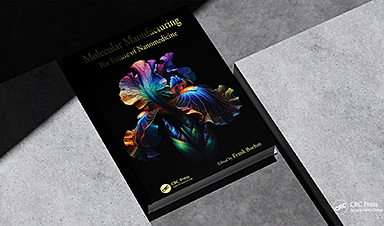
Molecular Manufacturing: The Future of Nanomedicine – From NanoappsMedical Inc.
This book explores the revolutionary potential of atomically precise manufacturing technologies to transform global healthcare, as well as practically every other sector across society. This forward-thinking volume examines how envisaged Factory@Home systems might enable the cost-effective [...]

What is ‘American Covid’ and how bad is it?
Cases of so-called ‘American Covid’ are on the rise in the UK. The strain is officially called XFG, or ‘Stratus’, and is the most common variant in North America, hence the name. It might soon [...]
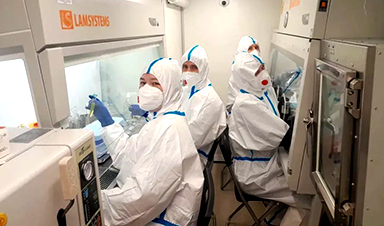
Researcher at Russian plague laboratory dies of ‘unknown’ infection
Russian authorities have imposed "anti-epidemic measures" after a laboratory worker at an institute in Siberia dedicated to studying the plague and other infectious diseases died of a mysterious illness. The researcher, a 28-year-old female [...]

GHCE Concept
From the preface of the book Global Health Care Equivalency in the Age of Nanotechnology, Nanomedicine and Artificial Intelligence, Edited by Frank Boehm: Since the publication of my first book (Nanomedical Device and Systems [...]
A Surprising Brain Signal Could Explain Why Eating Less Protein Extends Lifespan
A new paper suggests that limiting protein intake triggers a coordinated response throughout the body that may help explain how protein restriction affects healthy aging. Animals respond to protein restriction, or reduced protein in [...]

Back and shoulder surgery is often worse than useless
Millions of operations should be scrapped SIX IN TEN Britons have surgery at some point. So do lots of Americans, at a cost of perhaps $500bn a year, a third of all spending on [...]
Cocaine plays with mind, hijacks brain circuit, drives increasingly rigid and repetitive behavior
Researchers have found that cocaine hijacks brain circuit, which to drive increasingly rigid and repetitive behavior. The brain circuit that normally participates in selecting natural mouth and face movements, but which becomes disproportionately engaged [...]
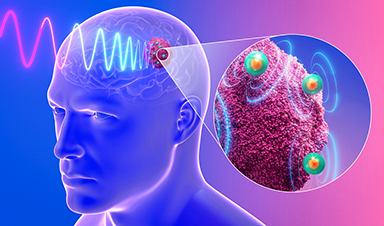
Injectable nanodevices could provide effective treatment for drug-resistant glioblastoma
The brain cancer glioblastoma is one of the most aggressive and treatment-resistant cancers known to medicine, carrying a median survival of just 12-15 months, even with the best available care. Now, researchers at the [...]
New Treatment Cuts “Bad” Cholesterol in Half for a Full Year
A single infusion of an experimental CRISPR-Cas9 therapy was reported to safely lower LDL cholesterol by 52.5% and triglycerides by 47.8%, as measured 12 months after treatment. What if one infusion could keep cholesterol [...]

Too Much RNA Can Drain a Cell’s Energy, Scientists Discover
A virus may cripple a cell’s power supply simply by producing too much of a molecule the cell needs to survive. New research from the Texas A&M College of Veterinary Medicine and Biomedical Sciences [...]