Researchers mapped where DNA first opens and how a helicase gate may release one strand as genome copying begins.
Before a cell can divide, it must open its tightly wound DNA and begin copying the entire genome. Researchers at the MRC Laboratory of Medical Sciences (LMS) and collaborating institutions have now traced this process to one of its earliest moments, revealing where DNA first separates inside living cells and identifying a molecular gate that helps launch replication.
Published in Nature Communications, the findings provide a closer view of how cells begin duplicating their genetic material. Because copying errors can damage the genome, the start of DNA replication must be controlled with exceptional precision.
DNA opens at the ring junction
To prepare DNA for copying, cells activate molecular machines called helicases, which pull apart the two strands of the double helix. At the center of this machinery is MCM2-7, a protein complex made of six subunits. Two MCM2-7 rings are positioned around DNA at designated starting sites known as replication origins.
Once activated, the paired rings separate and become part of two replication forks, the moving structures where new DNA strands are assembled.
Although researchers have studied replication for decades, observing its first steps inside living cells has remained difficult. They still needed to determine exactly where the DNA opens, how one strand leaves the helicase ring and how the machinery reorganizes as copying begins.
Dr Christopher Weekes led the research with senior authors Professor Christian Speck of the MRC Laboratory of Medical Sciences and Imperial College London and Dr Maximilian Reuter of the Institute of Molecular Biology in Mainz, Germany.
"DNA replication is fundamental to every cell division, yet we still did not fully understand how it begins inside living cells. We wanted to find out where the DNA first opens and how the helicase, the molecular machine zipper that separates the two DNA strands, is reorganized into its active form. By identifying these first steps, we can now explain more clearly how cells start copying their DNA in the right place and at the right time," said Dr Maximilian Reuter, Team Leader at IMB Mainz.
Scientists often compare the opening of the double helix to unzipping a zipper before reading or copying the information contained inside.
The researchers combined synthetic biology, genome-wide DNA mapping and protein analysis to follow this transition in living yeast cells. Their measurements showed that DNA first opens at a precise position near the interface where the two MCM2-7 rings meet.
That same compact section of DNA had earlier recruited the proteins needed to initiate replication. The overlap suggests that cells coordinate several stages of the process within a small region of the genome.
A molecular gate releases one strand
The researchers also identified a specialized gate in the helicase complex that operates during the earliest stages of replication. Their evidence indicates that the opening provides an exit route for one DNA strand as the helicase becomes active.
To test the gate's role, the researchers connected neighboring subunits of each helicase with a molecular tether. This interfered with the formation of the two replication forks because the linked helicases could not move past one another without becoming entangled.
The experiment showed that the gate is essential for activating the replication machinery and allowing the cell to move from preparation into active genome copying.
Replication steps form one coordinated sequence
The findings bring several previously separate events into a single sequence. They show how DNA opening, helicase separation, strand release and the arrival and departure of replication proteins are coordinated at the start of replication.
The researchers also observed intermediate forms of the machinery that had not been seen before. These temporary states help explain how inactive protein complexes are reorganized into fully functioning DNA copying machines.
The mechanism may extend beyond yeast
The results deepen scientists' understanding of how cells preserve genetic information and pass it to the next generation. Accurate DNA replication is necessary for genome stability, while mistakes can leave sections of DNA damaged or incompletely copied.
The work does not offer an immediate clinical application. However, many of the proteins involved are conserved from yeast to humans, suggesting that the same basic principles could improve understanding of DNA replication and genome maintenance in many organisms.
The research also demonstrates the importance of examining molecular processes inside living cells. This approach can reveal not only the structures of biological machines, but also where and how they function across the genome.
"Starting DNA replication is not simply a matter of switching on a molecular motor. Two helicase rings must separate, open the DNA, release temporary assembly factors and move past one another in precisely the correct order. By mapping where DNA first opens in living cells and identifying the gate through which one strand exits, we can now explain this fundamental transition with much greater precision," said Professor Christian Speck, Head of the DNA Replication Group at LMS.
Reference: "Mechanisms of MCM2–7 helicase activation and initial DNA melting at near base-pair resolution" by Christopher Weekes, Lia Willerding, Sanjay P. Khadayate, Korbinian Liebl, Audrey Mossler, Alex Montoya, Vanessa Rauthe, Mohammad M. Karimi, Martin Zacharias, Helle D. Ulrich, Christian Speck and L. Maximilian Reuter, 23 July 2026, Nature Communications.
DOI: 10.1038/s41467-026-75695-1
This study was funded by the Biotechnology and Biological Sciences Research Council, Cancer Research UK and Deutsche Forschungsgemeinschaft.

News – Curated by Amanda Scott, Alias Group Creative
Follow her on Bluesky
Brazilian Tree Compounds Fight COVID-19 on Multiple Fronts
Scientists found compounds in a Brazilian tree that hit SARS-CoV-2 on multiple fronts, revealing a promising new lead in the search for COVID-19 treatments. Researchers have found that galloylquinic acids extracted from the leaves [...]
Cutting Two Amino Acids Slowed Prostate Cancer in Mice
A newly identified link between amino acid metabolism and cholesterol production may help prostate tumors adapt to hormone therapy. Prostate cancer can find ways around treatments designed to deprive tumors of the hormones they [...]

Largest-Ever Physics Survey Raises New Doubts About Our Model of the Universe
Physicists around the world remain deeply divided on key mysteries of the universe, from dark matter to quantum gravity. The standard cosmological model failed to gain majority support, and no leading theory dominated the [...]

Scientists Just Overturned a 100-Year-Old Belief About Bacteria in the Lungs
New findings raise questions about the role of microbes living in the lungs. More than 35 trillion bacteria live throughout the human body, forming microbiomes in the gut, mouth, lungs, skin, and urogenital tract. [...]

GHCE Concept
From the preface of the book Global Health Care Equivalency in the Age of Nanotechnology, Nanomedicine and Artificial Intelligence, Edited by Frank Boehm: Since the publication of my first book (Nanomedical Device and Systems [...]

Novartis, Ionis drug failure spurs questions
Pelacarsen didn’t protect heart health despite lowering levels of a protein particle, “Lp(a),” in a large clinical trial — a result with important implications for cardiovascular drug research. Dive Brief: An RNA drug from [...]
New injectable treatment helps the brain rebuild after stroke
Biomedical engineers at Duke University have created an injectable biomaterial that may help the brain recover from damage left behind by an ischemic stroke. In experiments with mice, the material transformed the cavity created [...]

Scientists Discover a Hidden “Immune Organ” Inside the Skull
Researchers discovered lymph node-like immune hubs inside skull bone marrow that appear to act as rapid-response centers for the brain. For decades, the brain was thought to operate largely apart from the immune system. [...]
Engineered tRNAs and lipid nanoparticles target nonsense mutation cystic fibrosis
Researchers have developed a potential new approach for treating a form of cystic fibrosis caused by so-called nonsense mutations, combining chemically modified transfer RNAs with lipid nanoparticles designed to deliver the therapy directly to [...]
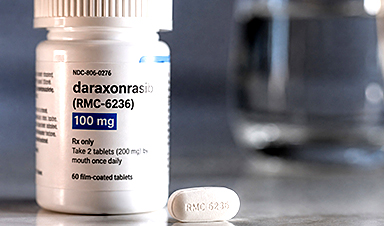
New pancreatic cancer drug carries a $39,800 monthly list price
A groundbreaking treatment for one of the most common forms of pancreatic cancer has been approved in pill form by the FDA. Revolution Medicines’ oral tablet daraxonrasib, branded as Rasonque, reduced the risk of [...]
Researchers Have Discovered a New Way To Reduce Chronic Nerve Pain
A cancer-linked protein called BRAF may help drive chronic nerve pain, and existing cancer drugs targeting it reduced pain sensitivity in preclinical models. Chronic nerve pain can persist long after an injury and often [...]
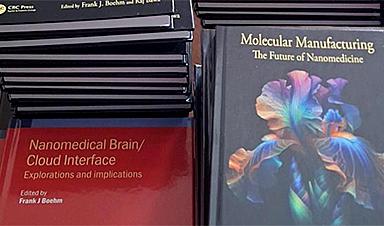
Our books now available worldwide!
Online Sellers other than Amazon, Routledge, and IOPP Indigo Global Health Care Equivalency in the Age of Nanotechnology, Nanomedicine and Artifcial Intelligence Global Health Care Equivalency In The Age Of Nanotechnology, Nanomedicine And Artificial [...]

Quantum-Enabled Regenerative Health: Reimagining Wellness, Precision Health and Longevity Medicine
Introduction Healthcare is approaching a frontier where the quantum portfolio could influence not only how disease is diagnosed and treated, but how health itself is measured, modeled, predicted and preserved. Quantum computing, quantum simulation, [...]

FDA Clears First-of-Its-Kind Nonmedication Treatment for PTSD
The FDA has cleared a system that uses brain activity data to personalize magnetic stimulation for PTSD, adding a new nonmedication treatment option. Every day in the United States, approximately 17.5 veterans die by suicide, [...]
FDA approves breakthrough drug to treat advanced pancreatic cancer
The Food and Drug Administration (FDA) approved on Wednesday a drug that could extend the survival of those with metastatic pancreatic cancer. The drug, called daraxonrasib, will be sold under the brand name Rasonque [...]

AI Decodes a Hidden DNA Signal Linked to Disease-Causing Mutations
Machine learning identifies the likely “initiator” and enables new predictions about DNA mutations that can cause disease. Every human cell depends on tens of thousands of genes being switched on at the right time [...]