Reading for pleasure may offer surprising benefits for the brain, with research linking the habit to better mental health, stronger cognitive abilities, and a lower risk of dementia.
Reading for pleasure may do far more than provide entertainment. A scientific review published in Psychological Medicine links the habit to better mental health, stronger cognitive abilities, and a lower risk of dementia. Research also suggests that reading is associated with measurable differences in brain structure, although scientists are still investigating whether reading directly causes these changes.
Researchers from the University of Cambridge and The Queen’s Reading Room examined evidence spanning childhood through old age. Their findings suggest that reading for enjoyment, whether alone or with others, may support brain health in several ways, with some benefits potentially appearing after just a few minutes.
Reading Early in Life Is Linked to Better Brain Development
Some of the strongest evidence comes from a study involving more than 10,000 young people. Children who began reading for pleasure at an early age tended to perform better on tests of attention, memory, and executive function, the mental abilities involved in planning, decision-making, and controlling behavior. They also showed stronger academic performance, fewer mental health problems, healthier sleep habits, and less screen time.
Reading is closely associated with literacy development, but its relationship with learning extends to mathematics. Both activities rely on overlapping cognitive processes, including working memory, language comprehension, and executive control. Despite these potential advantages, surveys indicate that recreational reading among children and teenagers has fallen to its lowest recorded levels, particularly among adolescent boys and children from disadvantaged backgrounds.
Reading may also provide psychological benefits throughout adulthood. Surveys associate reading for enjoyment with lower stress, greater relaxation, stronger empathy, and more openness to different perspectives. In one survey, nearly two in five adults (38%) identified reading as their preferred way to unwind.
A neuroscience study commissioned by The Queen’s Reading Room in 2024 reported that just five minutes of reading fiction could reduce stress by up to 20%. The research also identified improvements in concentration and problem-solving, alongside reduced feelings of loneliness. These results suggest that even brief reading sessions may offer benefits, although the size and persistence of those effects require further investigation.
Brain Imaging Reveals Structural Differences Associated With Reading
Brain imaging studies have found associations between reading and several features of brain anatomy. These include greater volume and cortical surface area in regions involved in language, learning, emotional regulation, and executive control. Researchers have also observed stronger white matter connections supporting language processing and increased cortical thickness in areas important for reading and comprehension.
Most of these findings are observational, so they cannot establish whether reading produces the anatomical differences or whether existing brain characteristics influence reading habits. However, intervention studies offer preliminary evidence that reading-related training can alter brain structure. In one small study, 11 children with dyslexia aged 7 to 11 completed eight weeks of training involving mental imagery, speech articulation, and tracing letters and words. Their reading abilities improved alongside increases in gray matter volume in specific brain regions. Because the intervention involved specialized training rather than recreational reading, its findings cannot be directly applied to reading for pleasure.
Reading May Help Protect Cognitive Health in Older Adults
The potential benefits of reading extend into later life, when preserving memory and thinking abilities becomes increasingly important. In a study of nearly 5,500 adults aged 55 and older, participants who frequently engaged in mentally stimulating activities, including reading, were significantly less likely to develop cognitive impairment during five years of follow-up.
Another study associated reading newspapers, magazines, and books with a 33% lower risk of Alzheimer’s disease. These findings support a possible relationship between mentally stimulating activities and healthier cognitive aging, but they do not establish that reading prevents dementia. Other factors, including education, general health, and lifestyle, may contribute to the observed associations.
Shared Reading Could Offer Additional Benefits
Reading with other people may provide advantages beyond those associated with reading alone. Book clubs, family reading sessions, and community reading groups combine intellectual engagement with social interaction, potentially helping participants feel less isolated and more connected. Social connection is itself associated with better mental and physical health, particularly among older adults.
“Shared reading groups and book clubs appear to provide additional benefits through social interaction,” said Professor Barbara Sahakian of the University of Cambridge. The Queen’s Reading Room has also introduced shared reading programs in homeless shelters and domestic violence refuges, where books are used as part of therapeutic recovery efforts.
Scientists Say More Research Is Needed
Sahakian and Cambridge researcher Dr. Christelle Langley began examining the broader benefits of reading while writing their 2025 book, Brain Boost: Healthy Habits for a Happier Life. They found evidence linking recreational reading to numerous positive outcomes, but also discovered that the subject had received relatively limited scientific investigation.
Together with Vicki Perrin, CEO of The Queen’s Reading Room, the researchers argue that encouraging people to read for enjoyment could support well-being across the lifespan. They emphasize that reading does not have to involve traditional novels. Comics, graphic novels, and books connected to a person’s existing interests may help make reading more accessible, particularly for children who otherwise show little interest in it.
Reference: “Reading and associations with brain health, cognition, well-being, and mental health” by Barbara J. Sahakian, Vicki Perrin and Christelle Langley, 15 September 2026, Psychological Medicine.
DOI: 10.1017/S0033291726105625

News – Curated by Amanda Scott, Alias Group Creative
Follow her on Bluesky
Researchers Discover What Reading for Pleasure May Be Doing to Your Brain
Reading for pleasure may offer surprising benefits for the brain, with research linking the habit to better mental health, stronger cognitive abilities, and a lower risk of dementia. Reading for pleasure may do far [...]

Scientists Discover a Hidden Trigger That Keeps Inflammation Alive
Inflammation persists after proteins detach from immune receptors, revealing a potential target for autoimmune treatments. Since a Nobel Prize-winning discovery in the 1990s identified molecules called Toll-like Receptors as the guardians of the human [...]
A Virus Gives Itself Away the Moment It Attacks
Researchers have found the trigger behind a powerful bacterial defense against viruses. Viruses that prey on bacteria could become an increasingly important tool for treating bacterial infections, particularly as antibiotic resistance makes some infections [...]
Scientists Discover Aspirin May Slash Dementia Risk by 70% – but Only for Certain People
Aspirin was linked to a sharply lower dementia risk in some older adults, and their genes may hold the clue. A Monash University analysis found that older adults with a particular genetic profile had [...]

Inflammation May Awaken Dormant Cancer Cells Years After Treatment
The body’s response to inflammation may disturb cancer cells that have been lying silent for years, giving them an opportunity to grow again. Researchers at the Francis Crick Institute have found that gut inflammation [...]

Where do nanoparticles go once they enter the body?
New international best practice guidance, co-written at ANSTO, sets out how to measure where nanoparticles like titanium dioxide end up in the body and how long they remain. The guidance has been shared by [...]

Long-Acting HIV Shots Could Solve a Major Treatment Challenge for Young People
A major African trial suggests that changing how HIV treatment is delivered could significantly improve viral suppression in adolescents. Young people with HIV were more likely to keep the virus suppressed when they received [...]

WHO Factsheets – The top 10 causes of death
In 2023, the 10 leading causes of death accounted for 33 million deaths, or 54% of the total 61 million deaths worldwide. The top global causes of death, in order of total number of lives lost, [...]

Aging Cells May Be Hiding From the Immune System – Scientists Think They Know How
Your immune system is supposed to clear out damaged cells. Researchers may have found how some of them hide and linger as the body ages. Researchers led by Cedars-Sinai Health Sciences University have identified [...]

Your Voice May Reveal How Fast Your Brain Is Aging
Researchers have developed a machine-learning “speech clock” that estimates age from subtle patterns in how people speak and what they say. It is possible that people’s voices may contain certain signals of aging that [...]
Optogenetics Pioneers Win 2026 Nobel Prize in Physiology or Medicine
The 2026 Nobel Prize in Physiology or Medicine has been awarded to Peter Hegemann, Georg Nagel, and Karl Deisseroth for the development of optogenetics, a revolutionary technology that uses light to control individual neurons [...]
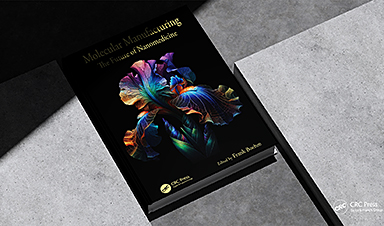
Molecular Manufacturing: The Future of Nanomedicine – From NanoappsMedical Inc.
This book explores the revolutionary potential of atomically precise manufacturing technologies to transform global healthcare, as well as practically every other sector across society. This forward-thinking volume examines how envisaged Factory@Home systems might enable the cost-effective [...]

What is ‘American Covid’ and how bad is it?
Cases of so-called ‘American Covid’ are on the rise in the UK. The strain is officially called XFG, or ‘Stratus’, and is the most common variant in North America, hence the name. It might soon [...]

Researcher at Russian plague laboratory dies of ‘unknown’ infection
Russian authorities have imposed "anti-epidemic measures" after a laboratory worker at an institute in Siberia dedicated to studying the plague and other infectious diseases died of a mysterious illness. The researcher, a 28-year-old female [...]

GHCE Concept
From the preface of the book Global Health Care Equivalency in the Age of Nanotechnology, Nanomedicine and Artificial Intelligence, Edited by Frank Boehm: Since the publication of my first book (Nanomedical Device and Systems [...]

A Surprising Brain Signal Could Explain Why Eating Less Protein Extends Lifespan
A new paper suggests that limiting protein intake triggers a coordinated response throughout the body that may help explain how protein restriction affects healthy aging. Animals respond to protein restriction, or reduced protein in [...]