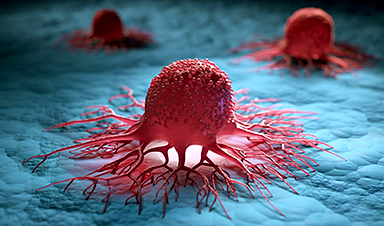
The body’s response to inflammation may disturb cancer cells that have been lying silent for years, giving them an opportunity to grow again.
Researchers at the Francis Crick Institute have found that gut inflammation can reactivate dormant breast cancer cells in a mouse model of bone marrow. Their study, published in Cell Reports, suggests that changes needed to produce more immune cells can also create conditions that favor cancer growth.
Cancer cells can leave the original tumor and settle elsewhere in the body, a process called metastasis that accounts for most cancer-related deaths. Breast cancer cells frequently reach bone marrow, where an inactive state helps them evade immune defenses and resist chemotherapy.
“Cancer cells that have moved to another part of the body can stay dormant for years after the original tumor has been treated,” explains Crick group leader Ilaria Malanchi, whose lab studies interactions between cancer cells and the body. “It’s a worrying period for people, as they don’t know if these metastatic cells will reactivate, leading to a relapse.”
“We can’t wait five years to see if dormant cancer cells reactivate in mice, as this exceeds their lifespan,” Ilaria explains. “We’ve known for a long time that we need to think creatively about a new model.”
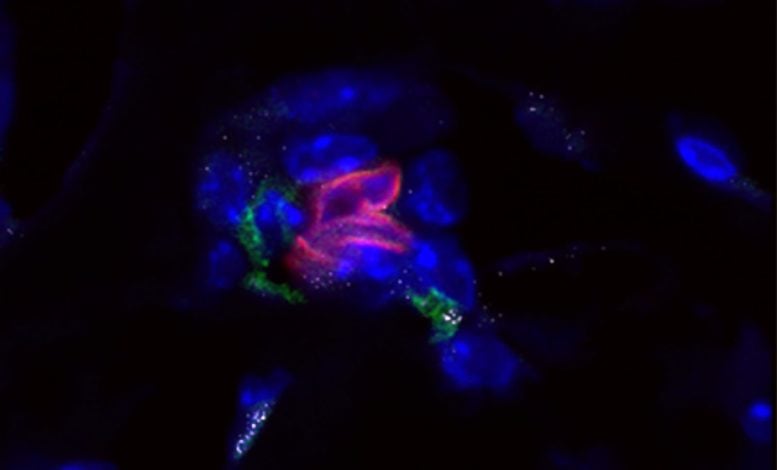
Recreating Dormant Cancer In Bone Marrow
Building on previous work by Laurie Gay, Stefania di Blasio, and Tatiana Rizou developed an “extramedullary bone model”: bone tissue grown from skeletal stem cells beneath the skin. The replica contains the marrow cells needed to produce blood cells and responds to inflammatory signals much like natural bone marrow.
“We then added cells from a mouse mammary tumor onto the replica bone,” explains Ilaria. “Most entered a dormant state, with only sporadic replication activity.”
The model gave the team a way to investigate how events elsewhere in the body affect these resting cells. Fractures and other bone injuries can encourage metastatic cancer growth in marrow, but the researchers wanted to test whether a more distant injury or infection could also disturb dormancy.
Gut Inflammation Changes The Cancer Environment
“We induced intestinal colitis—inflammation in the gut—in the mice with the extramedullary bone hosting dormant metastatic cells. Because the replica bone responds to the immune system, gut inflammation triggered a rapid production of immune cells from the bone,” Ilaria explains.
That response required the marrow environment to reorganize to support greater immune cell production. As it changed, more of the dormant cancer cells began dividing, increasing the chance of a tumor forming. The findings connect inflammation in one organ with changes in the tissue sheltering cancer cells elsewhere.
Examining gene activity in the bone and cancer cells pointed to HMGB2, a molecule that stimulates cell growth. Its levels rose alongside the surge in immune cell production, and it also promoted cancer cell reactivation.
“Even without inflammation elsewhere in the body, just the increased HMGB2 in the artificial bone was enough to stimulate more cancer cells to activate,” Ilaria says. “We also analyzed bone samples from people with breast or prostate cancer—HMGB2 was present where there were actively dividing cancer cells.
“All of these findings suggest that boosting immune cell production in the bone, as part of a normal response to inflammation, comes at the cost of disrupting tumor dormancy, tipping the balance towards reactivation and metastatic growth.”
Why Inflammation Does Not Guarantee Relapse
Ilaria emphasizes that inflammation does not automatically cause cancer to return. “We think it’s a piecemeal situation where each systemic change increases the chance of more metastatic cells waking up each time,” she says.
The research suggests that monitoring infections, inflammation, and injuries after remission might help identify periods when dormant cells are more likely to become active.
“Once cancer cells are actively replicating, they can respond to chemotherapy, so understanding developments affecting the bone marrow could lead to early intervention,” Ilaria concludes.
Reference: “An extramedullary bone model of metastatic dormancy reveals an increased rate of metastatic reactivation upon distant insults” by Stefania Di Blasio, Tatiana Rizou, Laurie J. Gay, Nicolas Rabas, Xuanxuan Fan, Xing-Yu Liu, Victoria L. Bridgeman, Ernesto Rodriguez, Probir Chakravarty, Thomas Snoeks, Adam Karoutas, Felipe S. Rodrigues, Elodie Montaudon, Cristina Lo Celso, Elisabetta Marangoni, Dominique Bonnet, Bin-Zhi Qian, Ander Abarrategi and Ilaria Malanchi, 1 October 2026, Cell Reports.
DOI: 10.1016/j.celrep.2026.118088

News – Curated by Amanda Scott, Alias Group Creative
Follow her on Bluesky
Inflammation May Awaken Dormant Cancer Cells Years After Treatment
The body’s response to inflammation may disturb cancer cells that have been lying silent for years, giving them an opportunity to grow again. Researchers at the Francis Crick Institute have found that gut inflammation [...]

Where do nanoparticles go once they enter the body?
New international best practice guidance, co-written at ANSTO, sets out how to measure where nanoparticles like titanium dioxide end up in the body and how long they remain. The guidance has been shared by [...]
Long-Acting HIV Shots Could Solve a Major Treatment Challenge for Young People
A major African trial suggests that changing how HIV treatment is delivered could significantly improve viral suppression in adolescents. Young people with HIV were more likely to keep the virus suppressed when they received [...]

WHO Factsheets – The top 10 causes of death
In 2023, the 10 leading causes of death accounted for 33 million deaths, or 54% of the total 61 million deaths worldwide. The top global causes of death, in order of total number of lives lost, [...]
Aging Cells May Be Hiding From the Immune System – Scientists Think They Know How
Your immune system is supposed to clear out damaged cells. Researchers may have found how some of them hide and linger as the body ages. Researchers led by Cedars-Sinai Health Sciences University have identified [...]

Your Voice May Reveal How Fast Your Brain Is Aging
Researchers have developed a machine-learning “speech clock” that estimates age from subtle patterns in how people speak and what they say. It is possible that people’s voices may contain certain signals of aging that [...]

Optogenetics Pioneers Win 2026 Nobel Prize in Physiology or Medicine
The 2026 Nobel Prize in Physiology or Medicine has been awarded to Peter Hegemann, Georg Nagel, and Karl Deisseroth for the development of optogenetics, a revolutionary technology that uses light to control individual neurons [...]
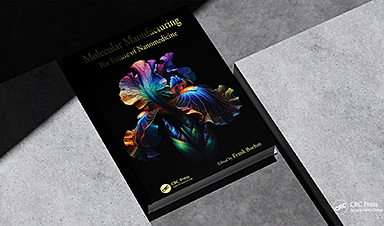
Molecular Manufacturing: The Future of Nanomedicine – From NanoappsMedical Inc.
This book explores the revolutionary potential of atomically precise manufacturing technologies to transform global healthcare, as well as practically every other sector across society. This forward-thinking volume examines how envisaged Factory@Home systems might enable the cost-effective [...]

What is ‘American Covid’ and how bad is it?
Cases of so-called ‘American Covid’ are on the rise in the UK. The strain is officially called XFG, or ‘Stratus’, and is the most common variant in North America, hence the name. It might soon [...]
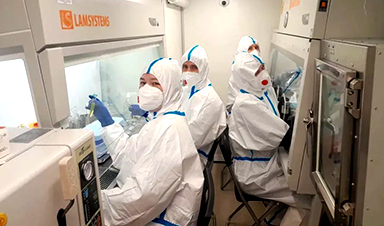
Researcher at Russian plague laboratory dies of ‘unknown’ infection
Russian authorities have imposed "anti-epidemic measures" after a laboratory worker at an institute in Siberia dedicated to studying the plague and other infectious diseases died of a mysterious illness. The researcher, a 28-year-old female [...]
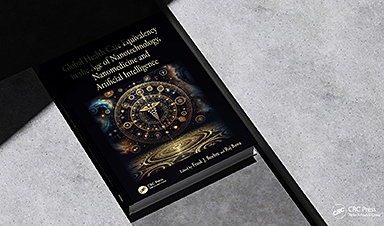
GHCE Concept
From the preface of the book Global Health Care Equivalency in the Age of Nanotechnology, Nanomedicine and Artificial Intelligence, Edited by Frank Boehm: Since the publication of my first book (Nanomedical Device and Systems [...]

A Surprising Brain Signal Could Explain Why Eating Less Protein Extends Lifespan
A new paper suggests that limiting protein intake triggers a coordinated response throughout the body that may help explain how protein restriction affects healthy aging. Animals respond to protein restriction, or reduced protein in [...]

Back and shoulder surgery is often worse than useless
Millions of operations should be scrapped SIX IN TEN Britons have surgery at some point. So do lots of Americans, at a cost of perhaps $500bn a year, a third of all spending on [...]
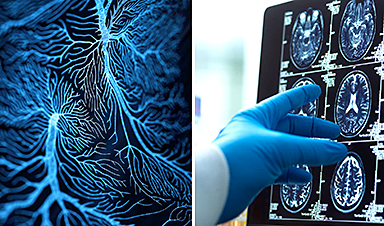
Cocaine plays with mind, hijacks brain circuit, drives increasingly rigid and repetitive behavior
Researchers have found that cocaine hijacks brain circuit, which to drive increasingly rigid and repetitive behavior. The brain circuit that normally participates in selecting natural mouth and face movements, but which becomes disproportionately engaged [...]
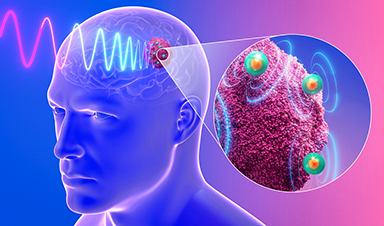
Injectable nanodevices could provide effective treatment for drug-resistant glioblastoma
The brain cancer glioblastoma is one of the most aggressive and treatment-resistant cancers known to medicine, carrying a median survival of just 12-15 months, even with the best available care. Now, researchers at the [...]
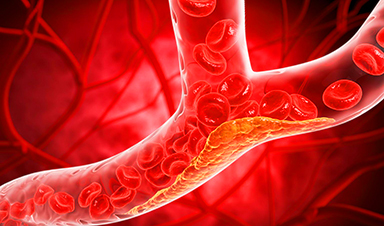
New Treatment Cuts “Bad” Cholesterol in Half for a Full Year
A single infusion of an experimental CRISPR-Cas9 therapy was reported to safely lower LDL cholesterol by 52.5% and triglycerides by 47.8%, as measured 12 months after treatment. What if one infusion could keep cholesterol [...]