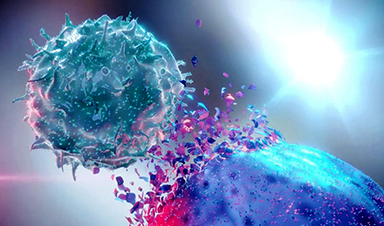
New technology using CRISPR to enhance the immune system's ability to detect cancer cells has been created, potentially paving the way for innovative cancer treatment methods.
Major histocompatibility complex (MHC) class I molecules are an immune complex present on the surface of all cells in humans. MHC class I molecules are a prerequisite for the immune system to recognize and eliminate cancer. When cancer cells are faced with pressure from the immune system, they actively reduce their MHC class I molecules, so cancer cells can hide from drawing the attention of CD8+ T cells, the immune system's primary cancer-fighting cells.
Researchers in Japan and the United States, led by Professor Koichi Kobayashi of Hokkaido University and Texas A&M Health Center, and Dr. Paul de Figueiredo, Bond LSC principal investigator and NEXTGEN Precision Health endowed professor at the University of Missouri, have developed technology to robustly augment the amount of MHC class I in cancer cells. This development, a novel method for boosting the immune system's capability to detect and eliminate cancer cells, was published in the journal Proceedings of the National Academy of Sciences.
Revolutionary Technology for Cancer Immunotherapy
"Our discovery has the potential to transform the way we approach cancer treatment," says Kobayashi. "Our technology enables us to specifically target immune responsive genes and activate the immune system against cancer cells, offering hope to those who are resistant to current immunotherapy."
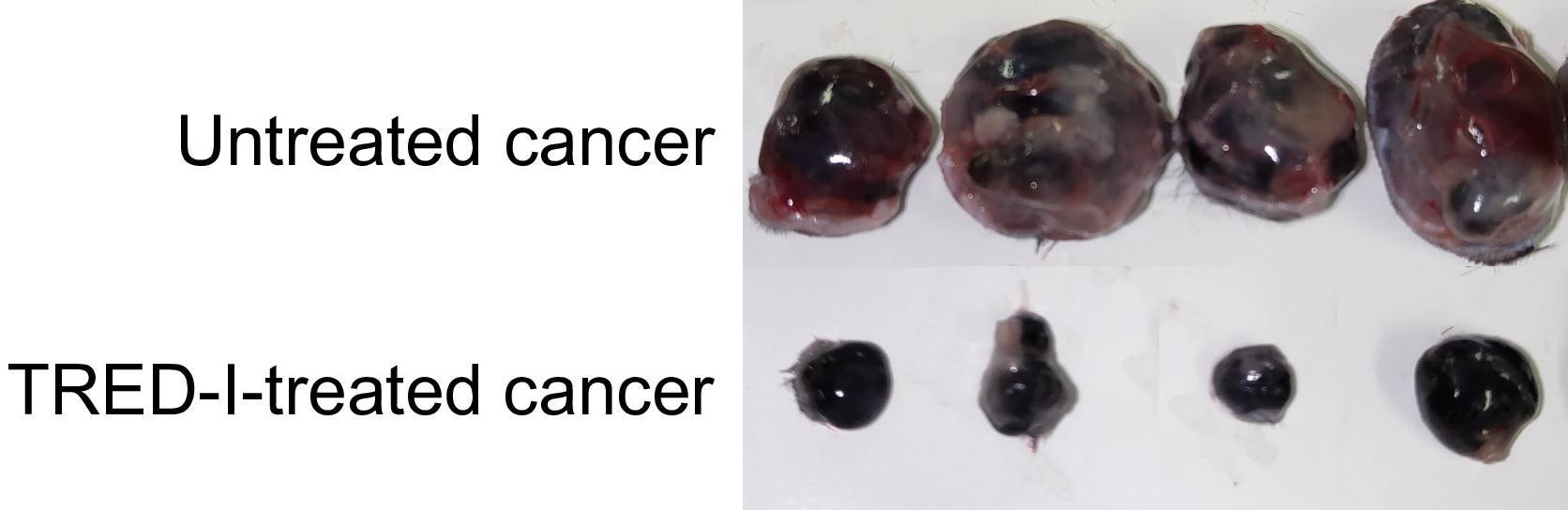
Compared with untreated cancer, the TRED-I system significantly reduced cancer size in mice models. Credit: Xin Sun, et al. Proceedings of the National Academy of Sciences. January 29, 2024
Kobayashi and his team previously identified a gene, called NLRC5, that regulates MHC class I levels. They further found that NLRC5 is suppressed by turning off molecular switches existing on DNA in cancers—through a process called DNA methylation—to reduce levels of MHC class I.
Promising Results and Future Directions
Their technology, known as TRED-I (Targeted Reactivation and Demethylation for MHC-I) system, was able to restore DNA methylation of NLRC5 gene and further activate NLRC5, thus increasing MHC class I levels in cancer without causing severe side effects.
"New modalities for fighting cancer like this are desperately needed because we have few solutions to fight some cancer types," said de Figueiredo. "This is a radically new approach, and I've felt lucky to be part of it."
TRED-I was tested with animal cancer models. It reduced tumor sizes significantly and increased the activity of cytotoxic CD8+ T cells. When used in conjunction with existing immunotherapy, TRED-I markedly enhanced treatment efficacy.
Unexpectedly, the TRED-I system was effective for the tumor distantly located from the original targeted tumor, showing potential to treat metastasized cancers.
"This work is the culmination of our team's research over the past decade," Kobayashi concludes. "It's great to shed light on moving our findings to potential clinical applications. We believe with further refinement, the TRED-I system could contribute significantly to cancer therapy."
Further research will focus on enabling direct delivery of the TRED-I system in cancer patients. Such drugs could improve the efficacy of the immune system in eliminating cancer and would be also able to improve the response to existing therapy.
Reference: "Targeted demethylation and activation of NLRC5 augment cancer immunogenicity through MHC class I" by Xin Sun, Toshiyuki Watanabe, Yoshitaka Oda, Weidong Shen, Alaa Ahmad, Ryota Ouda, Paul de Figueiredo, Hidemitsu Kitamura, Shinya Tanaka and Koichi S. Kobayashi, 1 February 2024, Proceedings of the National Academy of Sciences.
DOI: 10.1073/pnas.2310821121
The study was funded by the Japan Society for the Promotion of Science, the Japan Agency for Medical Research and Development, the Japan Science and Technology Agency, the Takeda Science Foundation, Bristol-Myers Squibb, the SENSHIN Medical Research Foundation, the Hitachi Global Foundation, the Kobayashi Foundation for Cancer Research, and the Toyo Suisan Foundation.

News
Novartis, Ionis drug failure spurs questions
Pelacarsen didn’t protect heart health despite lowering levels of a protein particle, “Lp(a),” in a large clinical trial — a result with important implications for cardiovascular drug research. Dive Brief: An RNA drug from [...]
New injectable treatment helps the brain rebuild after stroke
Biomedical engineers at Duke University have created an injectable biomaterial that may help the brain recover from damage left behind by an ischemic stroke. In experiments with mice, the material transformed the cavity created [...]
Scientists Discover a Hidden “Immune Organ” Inside the Skull
Researchers discovered lymph node-like immune hubs inside skull bone marrow that appear to act as rapid-response centers for the brain. For decades, the brain was thought to operate largely apart from the immune system. [...]
Engineered tRNAs and lipid nanoparticles target nonsense mutation cystic fibrosis
Researchers have developed a potential new approach for treating a form of cystic fibrosis caused by so-called nonsense mutations, combining chemically modified transfer RNAs with lipid nanoparticles designed to deliver the therapy directly to [...]
New pancreatic cancer drug carries a $39,800 monthly list price
A groundbreaking treatment for one of the most common forms of pancreatic cancer has been approved in pill form by the FDA. Revolution Medicines’ oral tablet daraxonrasib, branded as Rasonque, reduced the risk of [...]
Researchers Have Discovered a New Way To Reduce Chronic Nerve Pain
A cancer-linked protein called BRAF may help drive chronic nerve pain, and existing cancer drugs targeting it reduced pain sensitivity in preclinical models. Chronic nerve pain can persist long after an injury and often [...]
Our books now available worldwide!
Online Sellers other than Amazon, Routledge, and IOPP Indigo Global Health Care Equivalency in the Age of Nanotechnology, Nanomedicine and Artifcial Intelligence Global Health Care Equivalency In The Age Of Nanotechnology, Nanomedicine And Artificial [...]

Quantum-Enabled Regenerative Health: Reimagining Wellness, Precision Health and Longevity Medicine
Introduction Healthcare is approaching a frontier where the quantum portfolio could influence not only how disease is diagnosed and treated, but how health itself is measured, modeled, predicted and preserved. Quantum computing, quantum simulation, [...]

FDA Clears First-of-Its-Kind Nonmedication Treatment for PTSD
The FDA has cleared a system that uses brain activity data to personalize magnetic stimulation for PTSD, adding a new nonmedication treatment option. Every day in the United States, approximately 17.5 veterans die by suicide, [...]
FDA approves breakthrough drug to treat advanced pancreatic cancer
The Food and Drug Administration (FDA) approved on Wednesday a drug that could extend the survival of those with metastatic pancreatic cancer. The drug, called daraxonrasib, will be sold under the brand name Rasonque [...]
AI Decodes a Hidden DNA Signal Linked to Disease-Causing Mutations
Machine learning identifies the likely “initiator” and enables new predictions about DNA mutations that can cause disease. Every human cell depends on tens of thousands of genes being switched on at the right time [...]

Pope Leo Urges Global Response to Congo’s Deadliest Ebola Outbreak
Pope Leo called for international action to address the Ebola outbreak in the Democratic Republic of Congo. The epidemic has claimed over 2,500 lives and is the nation's largest recorded outbreak. The Pope emphasized [...]

Is there a summer COVID-19 surge this year? Yep, it’s ramping up again
Hantavirus. Ebola. West Nile. Measles. And, of course, cyclospora — that stomach parasite making people miserable across the country. Americans have plenty to worry about this summer. But remember COVID-19? It may not be [...]

Natural Compound in Broccoli Could Help Treat a Rare, Incurable Neurological Disease
Swinburne researchers have discovered how broccoli could help treat an extremely rare and incurable disease that affects only about 200 Australians. A naturally occurring compound in broccoli is being investigated as a possible treatment [...]
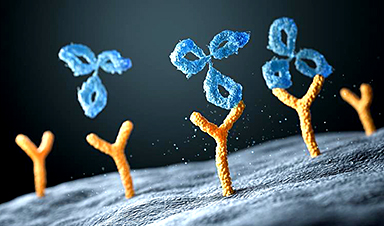
Antibody recycling, FcRn and the next generation of biologics
FcRn plays a central role in regulating the half-life of IgG antibodies and albumin, making it a critical target in both antibody engineering and autoimmune disease therapy. This article explores the biology of FcRn, [...]
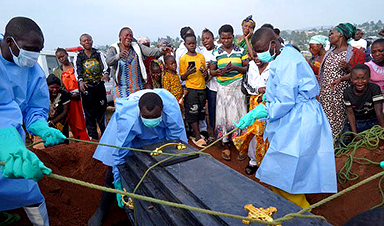
Ebola kills 2,300 in three months with no vaccine available for Congo’s deadliest ever outbreak
It’s Congo’s 17th outbreak, with a toll that has eclipsed that of the country’s 2018-2020 outbreak when 2,299 deaths out of 3,481 cases were recorded. The latest data shows 101 new cases and 33 [...]