Scientists have developed tiny metal-oxide particles that push cancer cells past their stress limits while sparing healthy tissue.
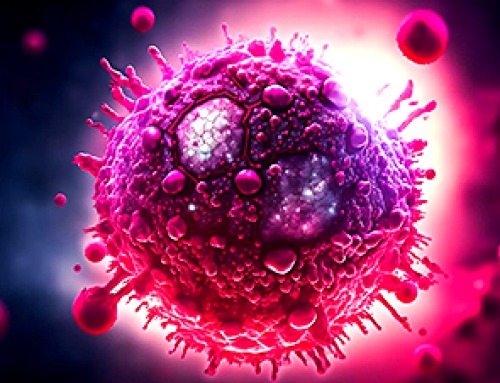
An international team led by RMIT University has developed tiny particles called nanodots, crafted from a metallic compound, that can destroy cancer cells while largely preserving healthy ones.
Although the research is still limited to cell cultures and has not yet been evaluated in animals or humans, the findings suggest a promising new approach for creating cancer treatments that take advantage of vulnerabilities within cancer cells.
These nanodots consist of molybdenum oxide, a material derived from the rare metal molybdenum, which is commonly used in electronics and metal alloys.
According to lead researchers Professor Jian Zhen Ou and Dr. Baoyue Zhang of the School of Engineering, slight adjustments to the particles' chemistry caused them to release reactive oxygen molecules. These unstable oxygen forms can harm vital parts of a cell and initiate cell death.
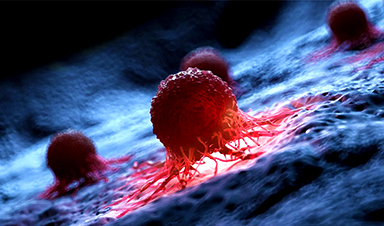
In laboratory experiments, the nanodots eliminated cervical cancer cells at three times the rate observed in healthy cells over a 24-hour period. Notably, they were effective without the need for light, which is uncommon for technologies of this type.
"Cancer cells already live under higher stress than healthy ones," Zhang said.
"Our particles push that stress a little further – enough to trigger self-destruction in cancer cells, while healthy cells cope just fine."
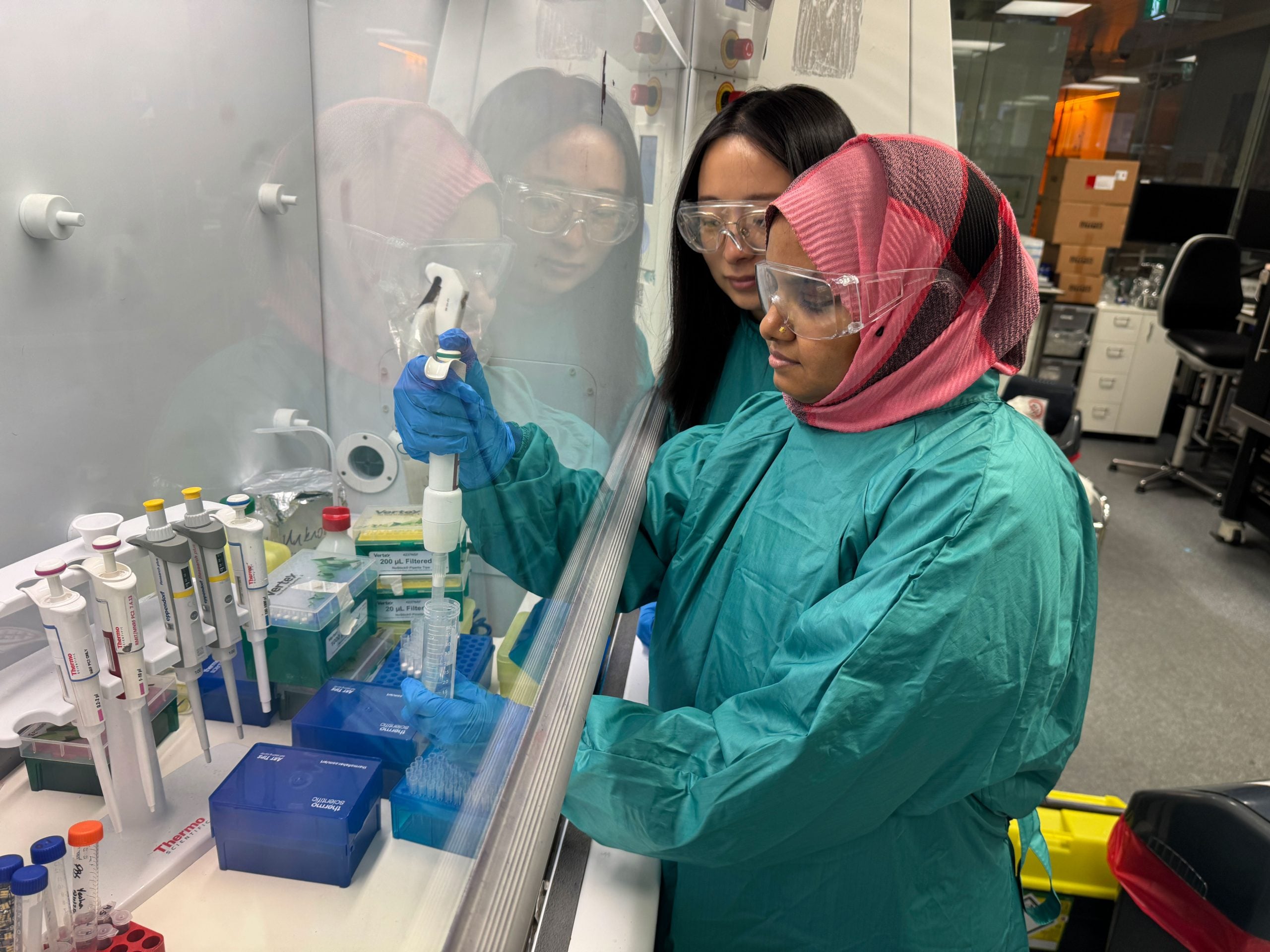
The collaboration involved Dr Shwathy Ramesan at The Florey Institute of Neuroscience and Mental Health in Melbourne and researchers from institutions in China including Southeast University, Hong Kong Baptist University and Xidian University, with support from the ARC Centre of Excellence in Optical Microcombs (COMBS).
"The result was particles that generate oxidative stress selectively in cancer cells under lab conditions," she said.
How the innovation works
The team adjusted the recipe of the metal oxide, adding tiny amounts of hydrogen and ammonium.
This fine-tuning changed how the particles handled electrons, helping them produce more of the reactive oxygen molecules that drive cancer cells into apoptosis – the body's natural clean-up process for damaged cells.
In another test, the same particles broke down a blue dye by 90 per cent in just 20 minutes, showing how powerful their reactions can be even in darkness.
Most current cancer treatments affect both cancerous and healthy tissue. Technologies that more selectively stress cancer cells could lead to gentler, more targeted therapies.
Because these particles are based on a common metal oxide rather than expensive or toxic noble metals like gold or silver, they could also be cheaper and safer to develop.
Next steps for industry and clinical researchers
The COMBS team at RMIT is continuing this work, with next steps including:
- targeting delivery systems so the particles activate only inside tumors.
- controlling the release of reactive oxygen species to avoid damage to healthy tissue.
- seeking partnerships with biotech or pharmaceutical companies to test the particles in animal models and develop scalable manufacturing methods.
Reference: "Ultrathin Multi-Doped Molybdenum Oxide Nanodots as a Tunable Selective Biocatalyst" by Bao Yue Zhang, Farjana Haque, Shwathy Ramesan, Sanjida Afrin, Muhammad Waqas Khan, Haibo Ding, Xin Zhou, Qijie Ma, Jiaru Zhang, Rui Ou, Md Mohiuddin, Enamul Haque, Yichao Wang, Azmira Jannat, Yumin Li, Robi S. Datta, Kate Fox, Guolang Li, Hujun Jia and Jian Zhen Ou, 3 October 2025, Advanced Science.
DOI: 10.1002/advs.202500643
Organizations that want to partner with RMIT researchers can contact research.partnerships@rmit.edu.au
Funding: Australian Research Council

News
Scientists Discover a Hidden Trigger That Keeps Inflammation Alive
Inflammation persists after proteins detach from immune receptors, revealing a potential target for autoimmune treatments. Since a Nobel Prize-winning discovery in the 1990s identified molecules called Toll-like Receptors as the guardians of the human [...]
A Virus Gives Itself Away the Moment It Attacks
Researchers have found the trigger behind a powerful bacterial defense against viruses. Viruses that prey on bacteria could become an increasingly important tool for treating bacterial infections, particularly as antibiotic resistance makes some infections [...]
Scientists Discover Aspirin May Slash Dementia Risk by 70% – but Only for Certain People
Aspirin was linked to a sharply lower dementia risk in some older adults, and their genes may hold the clue. A Monash University analysis found that older adults with a particular genetic profile had [...]
Inflammation May Awaken Dormant Cancer Cells Years After Treatment
The body’s response to inflammation may disturb cancer cells that have been lying silent for years, giving them an opportunity to grow again. Researchers at the Francis Crick Institute have found that gut inflammation [...]
Where do nanoparticles go once they enter the body?
New international best practice guidance, co-written at ANSTO, sets out how to measure where nanoparticles like titanium dioxide end up in the body and how long they remain. The guidance has been shared by [...]
Long-Acting HIV Shots Could Solve a Major Treatment Challenge for Young People
A major African trial suggests that changing how HIV treatment is delivered could significantly improve viral suppression in adolescents. Young people with HIV were more likely to keep the virus suppressed when they received [...]

WHO Factsheets – The top 10 causes of death
In 2023, the 10 leading causes of death accounted for 33 million deaths, or 54% of the total 61 million deaths worldwide. The top global causes of death, in order of total number of lives lost, [...]
Aging Cells May Be Hiding From the Immune System – Scientists Think They Know How
Your immune system is supposed to clear out damaged cells. Researchers may have found how some of them hide and linger as the body ages. Researchers led by Cedars-Sinai Health Sciences University have identified [...]

Your Voice May Reveal How Fast Your Brain Is Aging
Researchers have developed a machine-learning “speech clock” that estimates age from subtle patterns in how people speak and what they say. It is possible that people’s voices may contain certain signals of aging that [...]
Optogenetics Pioneers Win 2026 Nobel Prize in Physiology or Medicine
The 2026 Nobel Prize in Physiology or Medicine has been awarded to Peter Hegemann, Georg Nagel, and Karl Deisseroth for the development of optogenetics, a revolutionary technology that uses light to control individual neurons [...]
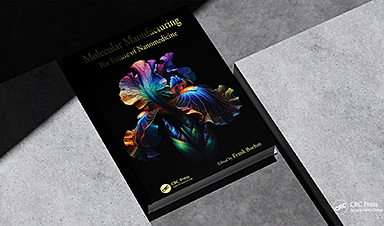
Molecular Manufacturing: The Future of Nanomedicine – From NanoappsMedical Inc.
This book explores the revolutionary potential of atomically precise manufacturing technologies to transform global healthcare, as well as practically every other sector across society. This forward-thinking volume examines how envisaged Factory@Home systems might enable the cost-effective [...]

What is ‘American Covid’ and how bad is it?
Cases of so-called ‘American Covid’ are on the rise in the UK. The strain is officially called XFG, or ‘Stratus’, and is the most common variant in North America, hence the name. It might soon [...]
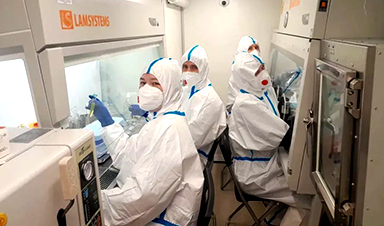
Researcher at Russian plague laboratory dies of ‘unknown’ infection
Russian authorities have imposed "anti-epidemic measures" after a laboratory worker at an institute in Siberia dedicated to studying the plague and other infectious diseases died of a mysterious illness. The researcher, a 28-year-old female [...]
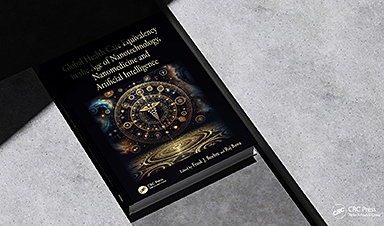
GHCE Concept
From the preface of the book Global Health Care Equivalency in the Age of Nanotechnology, Nanomedicine and Artificial Intelligence, Edited by Frank Boehm: Since the publication of my first book (Nanomedical Device and Systems [...]

A Surprising Brain Signal Could Explain Why Eating Less Protein Extends Lifespan
A new paper suggests that limiting protein intake triggers a coordinated response throughout the body that may help explain how protein restriction affects healthy aging. Animals respond to protein restriction, or reduced protein in [...]

Back and shoulder surgery is often worse than useless
Millions of operations should be scrapped SIX IN TEN Britons have surgery at some point. So do lots of Americans, at a cost of perhaps $500bn a year, a third of all spending on [...]