A new CRISPR-powered light sensor can detect the faintest whispers of cancer in a single drop of blood.
Scientists have created an advanced light-based sensor capable of identifying extremely small amounts of cancer biomarkers in blood. The technology could eventually allow doctors to detect early warning signs of cancer and other diseases through a routine blood test.
Biomarkers such as proteins, fragments of DNA, or other molecules can signal whether cancer is present, how it is progressing, or a person's level of risk. The challenge is that at the earliest stages of disease, these molecules exist in very tiny amounts, making them difficult to measure.
"Our sensor combines nanostructures made of DNA with quantum dots and CRISPR gene editing technology to detect faint biomarker signals using a light-based approach known as second harmonic generation (SHG)," said research team leader Han Zhang from Shenzhen University in China. "If successful, this approach could help make disease treatments simpler, potentially improve survival rates and lower overall healthcare costs."
Writing in Optica, Optica Publishing Group's journal for high-impact research, Zhang and colleagues reported that the sensor detected lung cancer biomarkers in patient samples at sub-attomolar levels. That means it was able to generate a clear signal even when only a handful of molecules were present. Because the system is programmable, it could potentially be adapted to identify viruses, bacteria, environmental toxins, or biomarkers linked to conditions such as Alzheimer's disease.
"For early diagnosis, this method holds promise for enabling simple blood screenings for lung cancer before a tumor might be visible on a CT scan," said Zhang. "It could also help advance personalized treatment options by allowing doctors to monitor a patient's biomarker levels daily or weekly to assess drug efficacy, rather than waiting months for imaging results."
Amplification-Free Optical Sensing Technology
Most current methods for detecting biomarkers require chemical amplification to boost tiny molecular signals, a process that can add time, complexity, and cost. The researchers aimed to design a direct detection method that avoids these extra steps.
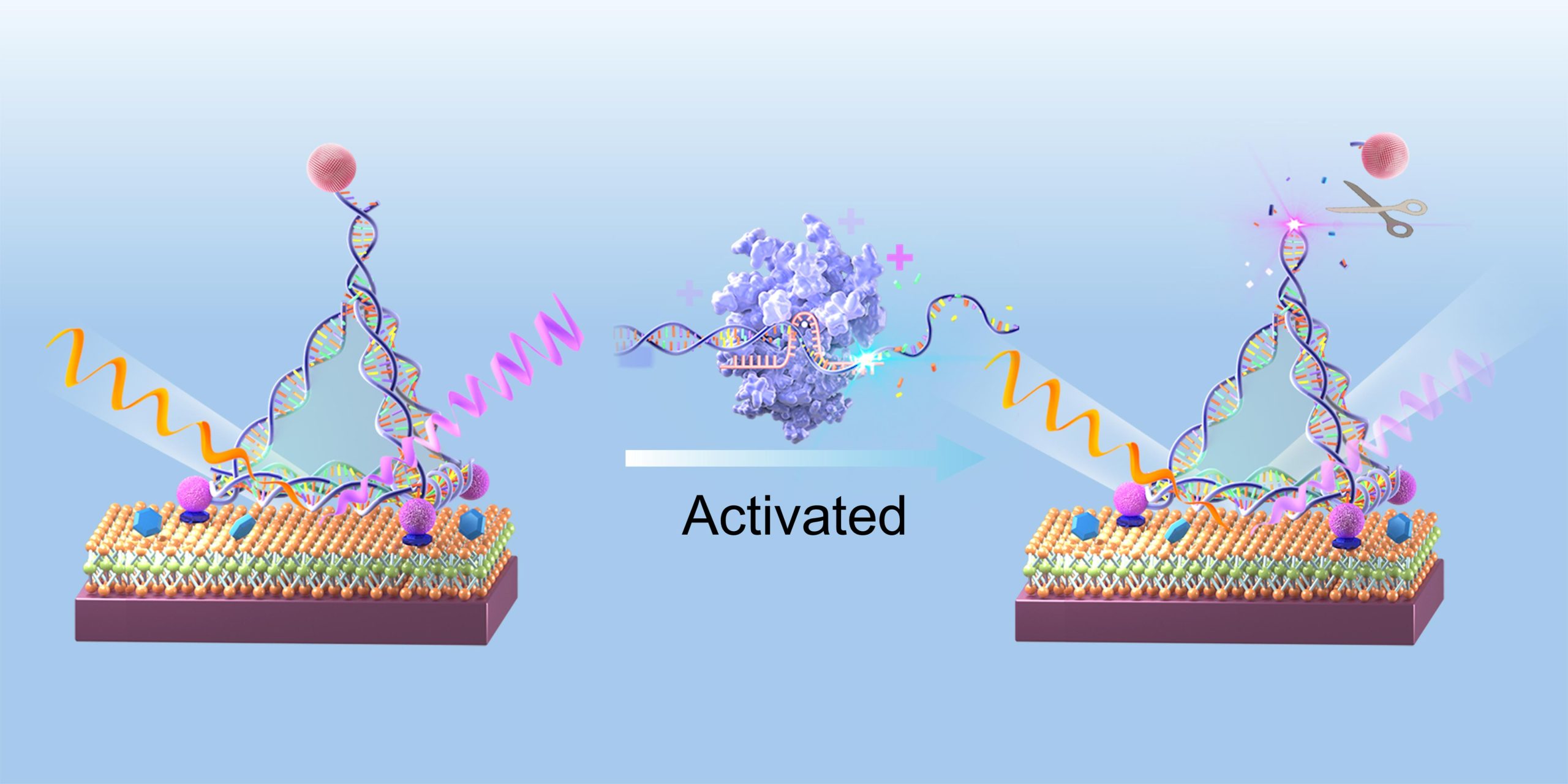
The new platform relies on SHG, a nonlinear optical effect in which incoming light is transformed into light with half the wavelength. In this system, SHG takes place on the surface of a two-dimensional semiconductor called molybdenum disulfide (MoS2).
To fine-tune the signal, the team used DNA tetrahedrons, which are small pyramid-shaped nanostructures built entirely from DNA, to position quantum dots at exact distances from the MoS2 surface. These quantum dots intensify the local optical field, strengthening the SHG response.
CRISPR-Cas gene editing was then incorporated to recognize specific biomarkers. When the Cas12a protein identifies its target, it cuts the DNA strands anchoring the quantum dots. This action produces a measurable decrease in the SHG signal. Because the SHG technique generates very little background noise, the system can detect extremely low biomarker concentrations with high sensitivity.
"Instead of viewing DNA only as a biological substance, we use it as programmable building blocks, allowing us to assemble the components of our sensor with nanometer-level precision," said Zhang. "By combining optical nonlinear sensing, which effectively minimizes background noise, with an amplification-free design, our method offers a distinct balance of speed and precision."
Successful Tests With Lung Cancer Samples
To evaluate performance, the researchers focused on miR-21, a microRNA linked to lung cancer. After confirming detection in a controlled buffer solution, they tested the sensor using human serum from lung cancer patients, mimicking real-world blood testing conditions.
"The sensor worked exceptionally well, showing that integrating optics, nanomaterials, and biology can be an effective strategy to optimize a device," said Zhang. "The sensor was also highly specific, ignoring other similar RNA strands and detecting only the lung cancer target."
The next step is to shrink the optical system. The team hopes to develop a compact, portable device suitable for bedside use, outpatient clinics, or remote areas with limited medical resources.
Reference: "Sub-Attomolar-Level Biosensing of Cancer Biomarkers Using SHG Modulation in DNA-Programmable Quantum Dots/MoS2 Disordered Metasurfaces" by Siyi Han, lingfeng gao, Qiao Jiang, Wenbo Du, Shi Chen, Yi Liu, Han Zhang, Xilin Tian, Yong Liu, Zheng Xie, Linjun Li, Ke Jiang and Zhi Chen, 12 February 2026, Optica.
DOI: 10.1364/OPTICA.577416

News

Study finds higher heart disease risk in long COVID patients
People with long COVID are at increased risk of developing cardiovascular disease, according to a new study from Karolinska Institutet published in eClinicalMedicine. The results show that the risk of conditions such as cardiac arrhythmias [...]
The Corona variant Cicada is here – we know that
Online and on social media, reports are piling up about a new Sars-Cov-2 variant that is currently on the rise: BA.3.2, also known as Cicada. That's what it's all about: The Omicron variant BA.3.2, [...]

A Simple Blood Test Could Predict Dementia Risk 25 Years Early
A single blood marker may quietly signal dementia risk decades in advance. Scientists at the University of California, San Diego, have identified a blood signal that could forecast dementia risk decades before symptoms begin. Their [...]

Sperm Get Lost in Space and Scientists Finally Know Why
Having a baby in space may be far more complicated than expected, as new research shows sperm struggle to find their way in microgravity. Starting a family beyond Earth could be more complicated than [...]
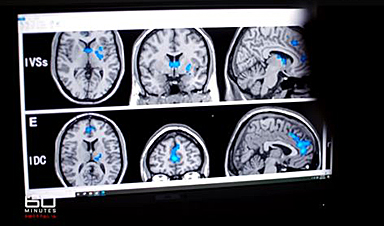
Digital Dementia – Brain fog and disassociation from being chronically online
New medical evidence, featured on 60 Minutes Australia, indicates excessive screen time is causing "digital dementia" in young Australians, with brain scans showing physical shrinkage and damage. Experts warn that high device usage (6-8 hours [...]
A new, highly mutated COVID variant called ‘Cicada’ is spreading in the US.
BA.3.2, a heavily mutated new COVID-19 variant which may be better able to escape immunity from vaccines or prior infection, is now spreading in the United States. Although COVID cases are currently low nationally, [...]

Molecular Manufacturing: The Future of Nanomedicine – New book from NanoappsMedical Inc.
This book explores the revolutionary potential of atomically precise manufacturing technologies to transform global healthcare, as well as practically every other sector across society. This forward-thinking volume examines how envisaged Factory@Home systems might enable the cost-effective [...]

Ancient bacteria strain discovered in ice cave is resistant to some modern antibiotics
In the depths of Scarisoara cave in Romania sits one of the world’s biggest underground glaciers, a monumental slab of ice the size of roughly 40 Olympic swimming pools that began to form around [...]

Scientists Identify “Good” Bacteria That May Prevent Long COVID
According to the WHO, about 6% of people worldwide who get COVID-19, roughly 400 million people, later develop a long-lasting form of the illness. That shows the condition remains a significant public health challenge. In [...]

New book from Nanoappsmedical Inc. – Global Health Care Equivalency
A new book by Frank Boehm, NanoappsMedical Inc. Founder. This groundbreaking volume explores the vision of a Global Health Care Equivalency (GHCE) system powered by artificial intelligence and quantum computing technologies, operating on secure [...]
RNA Recycling Extends Lifespan
Summary: Researchers discovered a biological “trash disposal” mechanism that directly controls how fast we age. While circular RNA has long been known to accumulate in cells as we get older, this study proves for the [...]
Cancer’s Deadly Paradox: How Tumors Break Their Own DNA To Keep Growing
Cancer’s strongest gene switches push DNA into damaging overdrive, creating repeated breaks and repairs that may fuel tumor evolution while exposing possible therapeutic weak spots. A new study indicates that cancer can harm its own genetic [...]

NanoMedical Brain/Cloud Interface – Explorations and Implications. A new book from Frank Boehm
New book from Frank Boehm, NanoappsMedical Inc Founder: This book explores the future hypothetical possibility that the cerebral cortex of the human brain might be seamlessly, safely, and securely connected with the Cloud via [...]

Our books now available worldwide!
Online Sellers other than Amazon, Routledge, and IOPP Indigo Global Health Care Equivalency in the Age of Nanotechnology, Nanomedicine and Artifcial Intelligence Global Health Care Equivalency In The Age Of Nanotechnology, Nanomedicine And Artificial [...]

Ryugu asteroid samples contain all DNA and RNA building blocks, bolstering origin-of-life theories
All the essential ingredients to make the DNA and RNA underpinning life on Earth have been discovered in samples collected from the asteroid Ryugu, scientists said Monday. The discovery comes after these building blocks [...]

Is Berberine Really a “Natural Ozempic”?
Often labeled a “natural Ozempic,” berberine is widely discussed as a metabolic aid. Yet research suggests its influence may lie deeper. In recent years, berberine has gained significant attention as a supposed “natural way” [...]