Some people carry a rare mutation that makes them resistant to viruses.
Now scientists have copied that effect with an experimental mRNA therapy that stopped both flu and COVID in animal trials — raising hopes for a universal antiviral.
Rare Mutation Unlocks Viral Immunity
For only a few dozen people worldwide, living with a rare immune disorder comes with an unexpected advantage: the ability to resist every virus that comes their way.
About 15 years ago, Columbia immunologist Dusan Bogunovic first uncovered this remarkable protection shortly after identifying the genetic mutation behind the condition.
Initially, the disorder appeared to simply make people more susceptible to certain bacterial infections. But as more cases were studied, a surprising benefit became clear. Bogunovic, now a professor of pediatric immunology at Columbia University's Vagelos College of Physicians and Surgeons, found that everyone with the mutation, which leads to a shortage of an immune regulator known as ISG15, experiences mild but persistent whole-body inflammation.
Hidden Antiviral Clues
"The type of inflammation they had was antiviral, and that's when it dawned on me that these individuals could be hiding something," Bogunovic recalls. When he and his colleagues looked at the individuals' immune cells, they could see encounters with all sorts of viruses—flu, measles, mumps, chickenpox. But the patients had never reported any overt signs of infection or illness.
"In the back of my mind, I kept thinking that if we could produce this type of light immune activation in other people, we could protect them from just about any virus," Bogunovic says.
Now, after years of research, he is developing a potential therapy that could replicate this unusual form of protection and serve as a powerful safeguard in the next pandemic.
Breakthrough Experiment Shows Promise
In his latest study, published on August 13 in Science Translational Medicine, Bogunovic and his team report that an experimental therapy they've developed temporarily gives recipients (hamsters and mice, so far) the same antiviral superpower as people with ISG15 deficiency. When administered prophylactically into the animals' lungs via a nasal drip, the therapy prevented viral replication of influenza and SARS-CoV-2 viruses and lessened disease severity.
In cell culture, "we have yet to find a virus that can break through the therapy's defenses," Bogunovic says.
How the Therapy Works
Bogunovic's therapy is designed to mimic what happens in people with ISG15 deficiency, but only for a short time.
Instead of turning off ISG15 directly—which leads to the production of more than 60 proteins—Bogunovic's therapeutic turns on the production of 10 proteins that are primarily responsible for the broad antiviral protection.
The current design resembles COVID mRNA vaccines but with a twist: Ten mRNAs encoding the 10 proteins are packaged inside a lipid nanoparticle. Once the nanoparticles are absorbed by the recipient's cells, the cells generate the ten host proteins to produce the antiviral protection.
"We only generate a small amount of these ten proteins, for a very short time, and that leads to much less inflammation than what we see in ISG15-deficient individuals," Bogunovic says. "But that inflammation is enough to prevent antiviral diseases."
Next-Gen Pandemic Preparedness
Bogunovic's team views their technology as a weapon against the next pandemic, providing protection for first responders, individuals in nursing homes, and family members of infected individuals, regardless of the responsible virus.
"We believe the technology will work even if we don't know the identity of the virus," Bogunovic says. Importantly, the antiviral protection provided by the technology will not prevent people from developing their own immunological memory to the virus for longer-term protection.
But the technology's drug delivery and absorption properties still need optimization. When delivered to animals via nanoparticles, the 10 proteins were produced in the lungs, "but probably not at high enough levels that makes us comfortable going into people immediately," Bogunovic says.
Fine-Tuning for Human Use
"Once the therapy reaches our cells, it works, but the delivery of any nucleic acid, DNA or RNA, into the part of the body you want to protect is currently the biggest challenge in the field." The researchers also need to determine how long the therapy's antiviral protection will last, currently estimated at three to four days.
"Our findings reinforce the power of research driven by curiosity without preconceived notions," Bogunovic says. "We were not looking for an antiviral when we began studying our rare patients, but the studies have inspired the potential development of a universal antiviral for everyone."
Reference: "An mRNA-based broad-spectrum antiviral inspired by ISG15 deficiency protects against viral infections in vitro and in vivo" by Yemsratch T. Akalu, Roosheel S. Patel, Justin Taft, Rodrigo Canas-Arranz, Rachel Geltman, Ashley Richardson, Sofija Buta, Marta Martin-Fernandez, Christos Sazeides, Rebecca L. Pearl, Gayatri Mainkar, Andrew P. Kurland, Haylen Rosberger, Diana D. Kang, Ann Anu Kurian, Keerat Kaur, Jennie Altman, Yizhou Dong, Jeffrey R. Johnson, Lior Zangi, Jean K. Lim, Randy A. Albrecht, Adolfo García-Sastre, Brad R. Rosenberg and Dusan Bogunovic, 13 August 2025, Science Translational Medicine.
DOI: 10.1126/scitranslmed.adx5758

News
Cutting Two Amino Acids Slowed Prostate Cancer in Mice
A newly identified link between amino acid metabolism and cholesterol production may help prostate tumors adapt to hormone therapy. Prostate cancer can find ways around treatments designed to deprive tumors of the hormones they [...]
Largest-Ever Physics Survey Raises New Doubts About Our Model of the Universe
Physicists around the world remain deeply divided on key mysteries of the universe, from dark matter to quantum gravity. The standard cosmological model failed to gain majority support, and no leading theory dominated the [...]

Scientists Just Overturned a 100-Year-Old Belief About Bacteria in the Lungs
New findings raise questions about the role of microbes living in the lungs. More than 35 trillion bacteria live throughout the human body, forming microbiomes in the gut, mouth, lungs, skin, and urogenital tract. [...]
GHCE Concept
From the preface of the book Global Health Care Equivalency in the Age of Nanotechnology, Nanomedicine and Artificial Intelligence, Edited by Frank Boehm: Since the publication of my first book (Nanomedical Device and Systems [...]

Novartis, Ionis drug failure spurs questions
Pelacarsen didn’t protect heart health despite lowering levels of a protein particle, “Lp(a),” in a large clinical trial — a result with important implications for cardiovascular drug research. Dive Brief: An RNA drug from [...]
New injectable treatment helps the brain rebuild after stroke
Biomedical engineers at Duke University have created an injectable biomaterial that may help the brain recover from damage left behind by an ischemic stroke. In experiments with mice, the material transformed the cavity created [...]

Scientists Discover a Hidden “Immune Organ” Inside the Skull
Researchers discovered lymph node-like immune hubs inside skull bone marrow that appear to act as rapid-response centers for the brain. For decades, the brain was thought to operate largely apart from the immune system. [...]
Engineered tRNAs and lipid nanoparticles target nonsense mutation cystic fibrosis
Researchers have developed a potential new approach for treating a form of cystic fibrosis caused by so-called nonsense mutations, combining chemically modified transfer RNAs with lipid nanoparticles designed to deliver the therapy directly to [...]
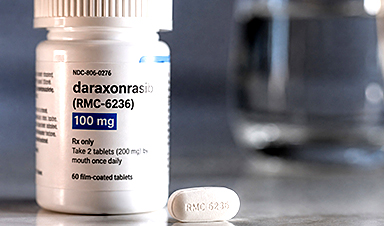
New pancreatic cancer drug carries a $39,800 monthly list price
A groundbreaking treatment for one of the most common forms of pancreatic cancer has been approved in pill form by the FDA. Revolution Medicines’ oral tablet daraxonrasib, branded as Rasonque, reduced the risk of [...]
Researchers Have Discovered a New Way To Reduce Chronic Nerve Pain
A cancer-linked protein called BRAF may help drive chronic nerve pain, and existing cancer drugs targeting it reduced pain sensitivity in preclinical models. Chronic nerve pain can persist long after an injury and often [...]
Our books now available worldwide!
Online Sellers other than Amazon, Routledge, and IOPP Indigo Global Health Care Equivalency in the Age of Nanotechnology, Nanomedicine and Artifcial Intelligence Global Health Care Equivalency In The Age Of Nanotechnology, Nanomedicine And Artificial [...]

Quantum-Enabled Regenerative Health: Reimagining Wellness, Precision Health and Longevity Medicine
Introduction Healthcare is approaching a frontier where the quantum portfolio could influence not only how disease is diagnosed and treated, but how health itself is measured, modeled, predicted and preserved. Quantum computing, quantum simulation, [...]

FDA Clears First-of-Its-Kind Nonmedication Treatment for PTSD
The FDA has cleared a system that uses brain activity data to personalize magnetic stimulation for PTSD, adding a new nonmedication treatment option. Every day in the United States, approximately 17.5 veterans die by suicide, [...]
FDA approves breakthrough drug to treat advanced pancreatic cancer
The Food and Drug Administration (FDA) approved on Wednesday a drug that could extend the survival of those with metastatic pancreatic cancer. The drug, called daraxonrasib, will be sold under the brand name Rasonque [...]

AI Decodes a Hidden DNA Signal Linked to Disease-Causing Mutations
Machine learning identifies the likely “initiator” and enables new predictions about DNA mutations that can cause disease. Every human cell depends on tens of thousands of genes being switched on at the right time [...]

Pope Leo Urges Global Response to Congo’s Deadliest Ebola Outbreak
Pope Leo called for international action to address the Ebola outbreak in the Democratic Republic of Congo. The epidemic has claimed over 2,500 lives and is the nation's largest recorded outbreak. The Pope emphasized [...]