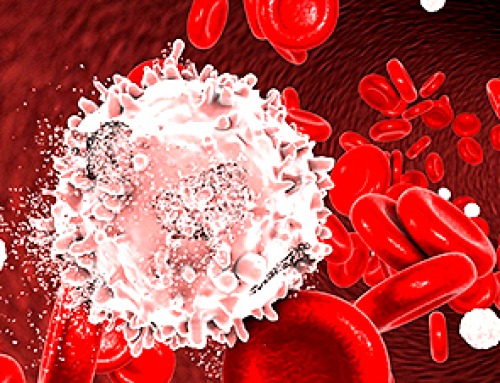
Nanoparticles can be used as powerful vehicles to administer vaccines and prevent serious illness, as with the treatment of COVID-19 and to deliver chemotherapeutic drugs to cancer cells with goal of eradicating the cancer cells and leaving the healthy cells unharmed. For cancer patients, this has the potential to reduce severe side effects that originate from the toxicity of chemotherapeutics. Unfortunately, no clinically applied selective nanoparticle treatment (also known as nanotherapeutic) exists yet, with research focusing on improving and understanding current nanotherapeutics. For her Ph.D. research, Laura Woythe took a closer look at nanoparticles and cancer cells to design selective nanotherapeutics using advanced optical microscopy techniques.
However, this so-called functionalization process is hard to control, due to the small size of the nanoparticles, causing some molecules to be misplaced, to function incorrectly, or to be erroneously attached on the nanoparticle surface. All of these reduce a nanoparticle’s capacity to interact with cancer cells in the intended way.
Furthermore, questions remain regarding the efficiency of such attachment protocols, and if the number of molecules we are attaching is efficient enough to target cancer cells. The challenges lie in the small size of the molecules and cell receptors, and the limited quantitative methods that are available to estimate the number of molecules on the surface of the nanoparticles. In other words, how can scientists count the number of molecules on the surface of the nanoparticles in order to check that the nanoparticles can be effective against cancer cells?
Super-resolution microscopy
For her Ph.D. research, Laura Woythe investigated the functionality of molecules attached to nanoparticles for selective cancer targeting using advanced optical microscopy techniques or “super-resolution” optical microscopy.
Super-resolution microscopy encompasses a group of microscopy techniques that have a resolution power that is 10 times higher than conventional optical microscopy. This allows for the visualization of nanometric structures, such as nanoparticles and cell receptors, in the range of 10 to 100 nanometers (nm). This size range is equivalent to visualizing structures up to 5,000 times smaller than a human hair.
Using super-resolution microscopy, Woythe and her colleagues were able to count individual ligands on nanoparticles and receptors on cancer cells, thus enabling the finetuning of the targeting interaction. These numbers can go a long way towards developing more efficient nanotherapeutic delivery.
Woythe’s research is an important step towards a better understanding of nanomaterials for biomedical applications, specifically selective cell targeting of cancer cells and diseased cells without affecting healthy tissue, and thus minimizing the potential side-effects and the burden this cause to cancer patients.

News

Our books are available worldwide!
Online Sellers other than Amazon, Routledge, and IOPP Indigo Global Health Care Equivalency in the Age of Nanotechnology, Nanomedicine and Artifcial Intelligence Global Health Care Equivalency In The Age Of Nanotechnology, Nanomedicine And Artificial [...]

After only a short training, people in a coma managed to send targeted signals
Researchers have succeeded in communicating with brain-injured patients who are unconscious. They see enormous potential in this for future treatments. Patients who lie motionless in bed after a severe brain injury and do not [...]
MIT Scientists Reprogram Immune Cells Inside the Body To Destroy Cancer
Natural killer cells reprogrammed inside mice eliminated lymphoma tumors and helped damaged livers heal, though whether this approach could help people with cancer or autoimmune disease remains unknown. To make a cancer treatment from [...]

Melanoma mRNA Vaccine Shows Promise in Preventing Disease Recurrence
Key takeaways: Phase 3 trial finds personalized intismeran plus pembrolizumab may better prevent high-risk melanoma recurrence after surgery The trial enrolled 1,137 patients and builds on phase 2 results showing about half the recurrence [...]
Scientists Discover a Powerful New Weapon Against a Dangerous Gut Infection
The promise of an experimental treatment for C. difficile gut infections lies partly in the bacteria it leaves alive, according to early laboratory and mouse research. Broad-spectrum antibiotics can disrupt the gut’s microbial community, [...]
Your Bones May Hold a Hidden Clue to Blood Cancer Survival
For people with blood cancers called myelodysplastic syndromes, osteoporosis may hold an overlooked clue to survival, a three-year observational study suggests. In blood cancers that develop in the bone marrow, an important clue to [...]

Researchers Discover What Reading for Pleasure May Be Doing to Your Brain
Reading for pleasure may offer surprising benefits for the brain, with research linking the habit to better mental health, stronger cognitive abilities, and a lower risk of dementia. Reading for pleasure may do far [...]
Scientists Discover a Hidden Trigger That Keeps Inflammation Alive
Inflammation persists after proteins detach from immune receptors, revealing a potential target for autoimmune treatments. Since a Nobel Prize-winning discovery in the 1990s identified molecules called Toll-like Receptors as the guardians of the human [...]
A Virus Gives Itself Away the Moment It Attacks
Researchers have found the trigger behind a powerful bacterial defense against viruses. Viruses that prey on bacteria could become an increasingly important tool for treating bacterial infections, particularly as antibiotic resistance makes some infections [...]
Scientists Discover Aspirin May Slash Dementia Risk by 70% – but Only for Certain People
Aspirin was linked to a sharply lower dementia risk in some older adults, and their genes may hold the clue. A Monash University analysis found that older adults with a particular genetic profile had [...]
Inflammation May Awaken Dormant Cancer Cells Years After Treatment
The body’s response to inflammation may disturb cancer cells that have been lying silent for years, giving them an opportunity to grow again. Researchers at the Francis Crick Institute have found that gut inflammation [...]

Where do nanoparticles go once they enter the body?
New international best practice guidance, co-written at ANSTO, sets out how to measure where nanoparticles like titanium dioxide end up in the body and how long they remain. The guidance has been shared by [...]
Long-Acting HIV Shots Could Solve a Major Treatment Challenge for Young People
A major African trial suggests that changing how HIV treatment is delivered could significantly improve viral suppression in adolescents. Young people with HIV were more likely to keep the virus suppressed when they received [...]

WHO Factsheets – The top 10 causes of death
In 2023, the 10 leading causes of death accounted for 33 million deaths, or 54% of the total 61 million deaths worldwide. The top global causes of death, in order of total number of lives lost, [...]
Aging Cells May Be Hiding From the Immune System – Scientists Think They Know How
Your immune system is supposed to clear out damaged cells. Researchers may have found how some of them hide and linger as the body ages. Researchers led by Cedars-Sinai Health Sciences University have identified [...]

Your Voice May Reveal How Fast Your Brain Is Aging
Researchers have developed a machine-learning “speech clock” that estimates age from subtle patterns in how people speak and what they say. It is possible that people’s voices may contain certain signals of aging that [...]