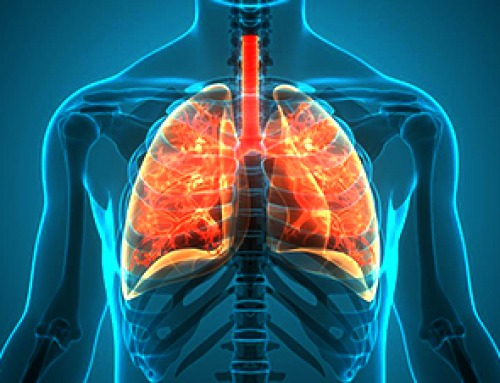
Ozempic and similar weight-loss drugs were linked to a striking 30% reduction in breast cancer risk in a study of more than 110,000 women.
Popular weight-loss and diabetes medications such as Ozempic, Wegovy, Mounjaro, and Zepbound may offer an unexpected benefit beyond helping people lose weight. A large new study found that women taking these drugs were significantly less likely to develop breast cancer than women who were not using them.
The research, presented at the 2026 American Society of Clinical Oncology (ASCO) Annual Meeting and published in JCO Oncology Practice, analyzed health records from more than 110,000 women. Researchers found that women taking GLP-1 medications, a class of drugs that includes semaglutide (the active ingredient in Ozempic and Wegovy) and similar treatments, had about a 30% lower risk of developing breast cancer.
"While our study was observational and does not definitively confirm an association between GLP-1 medications and reduced breast cancer incidence, it does add to the growing body of evidence suggesting that it's worth investigating these weight-loss drugs as potential cancer prevention tools," said Elizabeth McDonald, MD, PhD, a professor of Radiology at the University of Pennsylvania Perelman School of Medicine and a practicing breast radiologist at Penn's Abramson Cancer Center.
Ozempic and Similar Drugs Draw Interest From Cancer Researchers
GLP-1 medications mimic a naturally occurring hormone called glucagon-like peptide-1, which helps regulate blood sugar and appetite. Drugs in this category were originally developed for type 2 diabetes but have become household names because of their effectiveness for weight loss.
Ozempic and Wegovy contain semaglutide, while Mounjaro and Zepbound use a related medication called tirzepatide. Together, these drugs are now used by millions of Americans.
Researchers have increasingly become interested in whether these medications might also affect cancer risk. Several recent observational studies have linked GLP-1 drugs to lower rates of certain cancers or improved outcomes among cancer survivors. However, researchers stress that prospective clinical trials, considered the gold standard of medical research, are still needed.
McDonald and her colleagues are currently working to launch a multisite clinical trial to determine whether GLP-1 medications can help prevent breast cancer in women at elevated risk, including some with a history of the disease.
"GLP-1 medications are intriguing from a cancer research perspective because they weren't designed for cancer therapy, but they do affect many different targets and pathways associated with cancer development, so we're eager to study them in this context," McDonald said.
Study of More Than 110,000 Women Finds Lower Breast Cancer Rates
The researchers examined electronic health records from 111,646 women between the ages of 45 and 80 who had a body mass index (BMI) of 25 or higher and underwent breast imaging through Penn Medicine between January 2022 and June 2025.
Among these women, 15,264 (13.7 percent) had documented prescriptions for GLP-1 medications, while 96,382 (86.3 percent) had no documented exposure to the drugs.
The team looked for new breast cancer diagnoses in two groups. The first included the entire study population. The second included a smaller matched cohort of 30,528 women. In that analysis, each woman taking a GLP-1 drug was paired with a nonuser who shared similar characteristics, including age, race, ethnicity, BMI, breast density, and diabetes status.
The findings were consistent across both groups. In the full study population, GLP-1 users had 35.1 percent lower odds of developing breast cancer. In the matched analysis, the reduction was 30.5 percent.
The study did not account for the specific type of GLP-1 medication used, how long participants took the drugs, inherited genetic risk factors, or the stage and type of cancer diagnosed. Researchers plan additional analyses to explore some of these questions.
Why Might Ozempic and Other GLP-1 Drugs Affect Cancer Risk?
Maintaining a healthy weight has long been considered an important part of breast cancer prevention because excess body weight, especially after menopause, is a well-established risk factor.
Because Ozempic, Wegovy, Mounjaro, and Zepbound can produce substantial weight loss, some of the observed benefit may be linked to improved weight management. However, researchers believe other biological effects could also be involved.
Scientists have long suspected that chronic low-grade inflammation contributes to cancer development. GLP-1 medications reduce inflammation through multiple pathways and also influence metabolism and epigenetic processes that help regulate gene activity. Researchers currently believe this combination of effects may help slow or prevent tumor formation.
Searching for Better Ways to Prevent Breast Cancer
Current options for reducing breast cancer risk remain limited.
Beyond regular screening with mammography or MRI, some people with inherited genetic mutations that greatly increase breast cancer risk choose preventive surgery, including prophylactic mastectomy.
Tamoxifen can substantially reduce breast cancer incidence in high-risk women, but concerns about side effects have limited its use among many eligible patients.
Because GLP-1 medications such as Ozempic, Wegovy, Mounjaro, and Zepbound are already widely prescribed, researchers see them as a potentially promising avenue for future cancer prevention research.
"Ultimately, we want to find better options to prevent breast cancer," McDonald said. "It's been encouraging to see the survival rates for breast cancer improve over recent decades, and we'd love to see the same gains in prevention."
Reference: "GLP-1 Agonists Are Associated With a Significant Reduction in Breast Cancer Incidence in Women" by Elizabeth S. McDonald, Laura B. Gillis, Peter Gabriel, Kham Xapakdy, Anthony Young, Abigail Doucette, Mitchell D. Schnall, John B. Buse and Etta D. Pisano, 2 June 2026, JCO Oncology Practice.
DOI: 10.1200/OP-26-00485
The study was supported by the American College of Radiology Center for Research and Innovation, the Pennsylvania Breast Cancer Coalition, and the Abramson Cancer Center.

News – Curated by Amanda Scott, Alias Group Creative
Follow her on Bluesky

Largest-Ever Physics Survey Raises New Doubts About Our Model of the Universe
Physicists around the world remain deeply divided on key mysteries of the universe, from dark matter to quantum gravity. The standard cosmological model failed to gain majority support, and no leading theory dominated the [...]

Scientists Just Overturned a 100-Year-Old Belief About Bacteria in the Lungs
New findings raise questions about the role of microbes living in the lungs. More than 35 trillion bacteria live throughout the human body, forming microbiomes in the gut, mouth, lungs, skin, and urogenital tract. [...]

GHCE Concept
From the preface of the book Global Health Care Equivalency in the Age of Nanotechnology, Nanomedicine and Artificial Intelligence, Edited by Frank Boehm: Since the publication of my first book (Nanomedical Device and Systems [...]

Novartis, Ionis drug failure spurs questions
Pelacarsen didn’t protect heart health despite lowering levels of a protein particle, “Lp(a),” in a large clinical trial — a result with important implications for cardiovascular drug research. Dive Brief: An RNA drug from [...]

New injectable treatment helps the brain rebuild after stroke
Biomedical engineers at Duke University have created an injectable biomaterial that may help the brain recover from damage left behind by an ischemic stroke. In experiments with mice, the material transformed the cavity created [...]

Scientists Discover a Hidden “Immune Organ” Inside the Skull
Researchers discovered lymph node-like immune hubs inside skull bone marrow that appear to act as rapid-response centers for the brain. For decades, the brain was thought to operate largely apart from the immune system. [...]

Engineered tRNAs and lipid nanoparticles target nonsense mutation cystic fibrosis
Researchers have developed a potential new approach for treating a form of cystic fibrosis caused by so-called nonsense mutations, combining chemically modified transfer RNAs with lipid nanoparticles designed to deliver the therapy directly to [...]
New pancreatic cancer drug carries a $39,800 monthly list price
A groundbreaking treatment for one of the most common forms of pancreatic cancer has been approved in pill form by the FDA. Revolution Medicines’ oral tablet daraxonrasib, branded as Rasonque, reduced the risk of [...]

Researchers Have Discovered a New Way To Reduce Chronic Nerve Pain
A cancer-linked protein called BRAF may help drive chronic nerve pain, and existing cancer drugs targeting it reduced pain sensitivity in preclinical models. Chronic nerve pain can persist long after an injury and often [...]

Our books now available worldwide!
Online Sellers other than Amazon, Routledge, and IOPP Indigo Global Health Care Equivalency in the Age of Nanotechnology, Nanomedicine and Artifcial Intelligence Global Health Care Equivalency In The Age Of Nanotechnology, Nanomedicine And Artificial [...]

Quantum-Enabled Regenerative Health: Reimagining Wellness, Precision Health and Longevity Medicine
Introduction Healthcare is approaching a frontier where the quantum portfolio could influence not only how disease is diagnosed and treated, but how health itself is measured, modeled, predicted and preserved. Quantum computing, quantum simulation, [...]

FDA Clears First-of-Its-Kind Nonmedication Treatment for PTSD
The FDA has cleared a system that uses brain activity data to personalize magnetic stimulation for PTSD, adding a new nonmedication treatment option. Every day in the United States, approximately 17.5 veterans die by suicide, [...]
FDA approves breakthrough drug to treat advanced pancreatic cancer
The Food and Drug Administration (FDA) approved on Wednesday a drug that could extend the survival of those with metastatic pancreatic cancer. The drug, called daraxonrasib, will be sold under the brand name Rasonque [...]

AI Decodes a Hidden DNA Signal Linked to Disease-Causing Mutations
Machine learning identifies the likely “initiator” and enables new predictions about DNA mutations that can cause disease. Every human cell depends on tens of thousands of genes being switched on at the right time [...]

Pope Leo Urges Global Response to Congo’s Deadliest Ebola Outbreak
Pope Leo called for international action to address the Ebola outbreak in the Democratic Republic of Congo. The epidemic has claimed over 2,500 lives and is the nation's largest recorded outbreak. The Pope emphasized [...]

Is there a summer COVID-19 surge this year? Yep, it’s ramping up again
Hantavirus. Ebola. West Nile. Measles. And, of course, cyclospora — that stomach parasite making people miserable across the country. Americans have plenty to worry about this summer. But remember COVID-19? It may not be [...]