According to the WHO, about 6% of people worldwide who get COVID-19, roughly 400 million people, later develop a long-lasting form of the illness. That shows the condition remains a significant public health challenge.
In 2021, during the COVID-19 pandemic, the University of Louvain (UCLouvain, Belgium) and its hospital, the Cliniques universitaires Saint-Luc, launched a large-scale study to see whether long-term symptoms could be predicted during the acute phase of infection. The goal was to better understand the biological mechanisms involved and potentially identify a preventive treatment.
A Bacterium Linked to Recovery
After five years of research, scientists identified an important role for Dolosigranulum pigrum, a bacterium that naturally lives in the respiratory microbiome. Higher levels of this bacterium were associated with a lower likelihood that long Covid symptoms would persist.
Jean Cyr Yombi, Leïla Belkir, and Julien De Greef, UCLouvain professors and infectious disease specialists at the Cliniques universitaires Saint-Luc, examined the severity of long Covid symptoms in 156 patients. They focused mainly on severe fatigue, cognitive problems, and respiratory issues (shortness of breath).
Laure Elens and Patrice Cani, also UCLouvain professors, along with Bradley Ward, a postdoctoral researcher at the UCLouvain Louvain Drug Research Institute, then analyzed blood samples and nasopharyngeal swabs for molecular signatures linked to this more severe form of the disease. These signatures may help explain why symptoms persist in some patients but not in others.
Clues From the Respiratory Microbiome
UCLouvain and Cliniques universitaires Saint-Luc researchers stated, "This study suggests that certain so-called protective bacteria in the respiratory microbiome may be associated with improved recovery following viral respiratory infections (such as long Covid or influenza), and that their alteration (particularly in the context of severe infection or non-targeted antibiotic therapy) may influence longer-term clinical outcomes."
In simpler terms, when this bacterium is present in higher amounts, it appears to help protect against long Covid or severe influenza (through a mechanism that has yet to be elucidated). When it is present at low levels, researchers found a greater tendency toward developing a persistent form of the disease.
Implications for Future Treatments
Researchers already knew this bacterium had a protective effect in infectious influenza. The new findings, published in Microbiology Spectrum, add to the evidence that Dolosigranulum pigrum may be beneficial.
Scientists hope the discovery will speed up research and support new treatment strategies, including the possible development of a probiotic, for example, in the form of a nasal spray, that could be used before winter to help protect people from severe infectious diseases such as Covid-19 or influenza.
The study also found that non-targeted antibiotics can affect the respiratory microbiome's ability to defend against severe infections. That is another reason careful antibiotic use remains important.
Reference: "Association of nasopharyngeal Dolosigranulum pigrum and Corynebacterium species with post-acute sequelae of SARS-CoV-2 in a longitudinal cohort" by Bradley Ward, Laure B. Bindels, Jean-Luc Balligand, Bertrand Bearzatto, Guido Bommer, Patrice D. Cani, Julien De Greef, Joseph P. Dewulf, Laurent Gatto, Vincent Haufroid, Sébastien Jodogne, Benoît Kabamba, Sébastien Pyr dit Ruys, Didier Vertommen, Jean Cyr Yombi, Leïla Belkhir and Laure Elens, 17 March 2026, Microbiology Spectrum.
DOI: 10.1128/spectrum.02313-25
This research involved the University of Louvain HYGIEIA consortium and the Cliniques universitaires Saint-Luc, and was made possible thanks to the support of the Sofina Covid Solidarity Fund and partnerships with the Fondation Saint-Luc, the FNRS (via an emergency research grant) and the WEL Research Institute of the Walloon Region.

News – Curated by Amanda Scott, Alias Group Creative
Follow her on Bluesky
Scientists Identify “Good” Bacteria That May Prevent Long COVID
According to the WHO, about 6% of people worldwide who get COVID-19, roughly 400 million people, later develop a long-lasting form of the illness. That shows the condition remains a significant public health challenge. In [...]
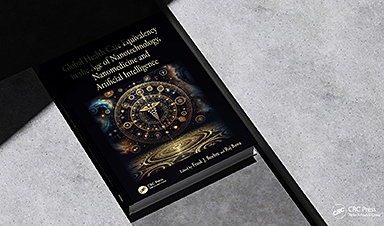
New book from Nanoappsmedical Inc. – Global Health Care Equivalency
A new book by Frank Boehm, NanoappsMedical Inc. Founder. This groundbreaking volume explores the vision of a Global Health Care Equivalency (GHCE) system powered by artificial intelligence and quantum computing technologies, operating on secure [...]
RNA Recycling Extends Lifespan
Summary: Researchers discovered a biological “trash disposal” mechanism that directly controls how fast we age. While circular RNA has long been known to accumulate in cells as we get older, this study proves for the [...]
Cancer’s Deadly Paradox: How Tumors Break Their Own DNA To Keep Growing
Cancer’s strongest gene switches push DNA into damaging overdrive, creating repeated breaks and repairs that may fuel tumor evolution while exposing possible therapeutic weak spots. A new study indicates that cancer can harm its own genetic [...]
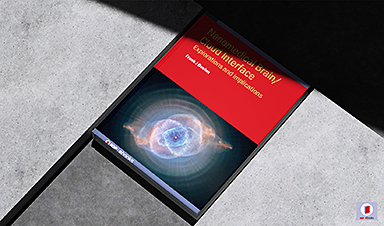
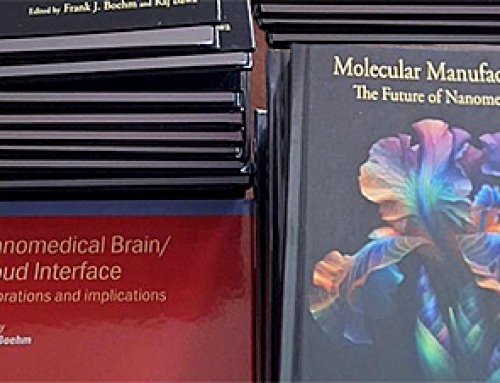
NanoMedical Brain/Cloud Interface – Explorations and Implications. A new book from Frank Boehm
New book from Frank Boehm, NanoappsMedical Inc Founder: This book explores the future hypothetical possibility that the cerebral cortex of the human brain might be seamlessly, safely, and securely connected with the Cloud via [...]
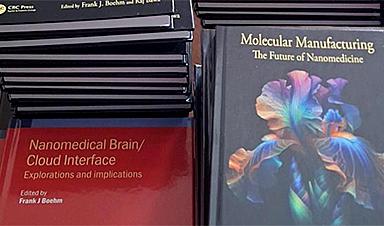
Our books now available worldwide!
Online Sellers other than Amazon, Routledge, and IOPP Indigo Global Health Care Equivalency in the Age of Nanotechnology, Nanomedicine and Artifcial Intelligence Global Health Care Equivalency In The Age Of Nanotechnology, Nanomedicine And Artificial [...]
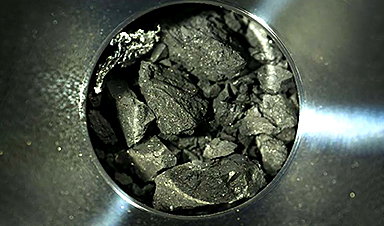
Ryugu asteroid samples contain all DNA and RNA building blocks, bolstering origin-of-life theories
All the essential ingredients to make the DNA and RNA underpinning life on Earth have been discovered in samples collected from the asteroid Ryugu, scientists said Monday. The discovery comes after these building blocks [...]

Is Berberine Really a “Natural Ozempic”?
Often labeled a “natural Ozempic,” berberine is widely discussed as a metabolic aid. Yet research suggests its influence may lie deeper. In recent years, berberine has gained significant attention as a supposed “natural way” [...]
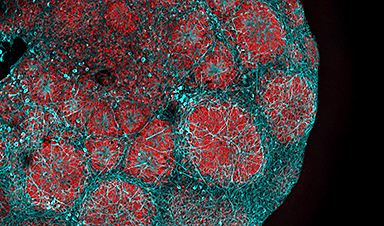
Viagra Ingredient Shows Promise for Rare Childhood Brain Disease in Surprising Study
A rare childhood disease with no approved treatment may have an unexpected new therapeutic candidate. Sildenafil, the active ingredient also sold under the brand name Viagra, may help reduce symptoms in people with Leigh [...]

In a first for China, Neuracle’s implantable brain-computer interface wins approval
In a landmark development, Neuracle Medical Technology has secured the country’s first-ever approval for an implantable brain-computer interface (BCI) system designed to restore hand motor function in patients with spinal cord injuries, in a [...]
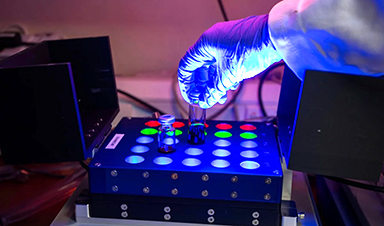
A Cambridge Lab Mistake Reveals a Powerful New Way to Modify Drug Molecules
A surprising lab discovery reveals a light-powered way to tweak complex drugs faster, cleaner, and later in development. Researchers at the University of Cambridge have created a new technique for altering complex drug molecules [...]
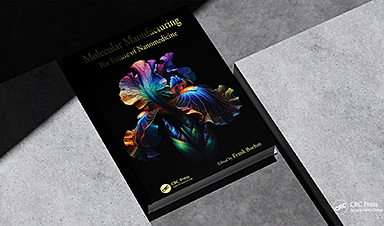
New book from NanoappsMedical Inc – Molecular Manufacturing: The Future of Nanomedicine
This book explores the revolutionary potential of atomically precise manufacturing technologies to transform global healthcare, as well as practically every other sector across society. This forward-thinking volume examines how envisaged Factory@Home systems might enable the cost-effective [...]

Scientists Discover Simple Saliva Test That Reveals Hidden Diabetes Risk
Researchers have identified a potential new way to assess metabolic health using saliva instead of blood. High insulin levels in the blood, known as hyperinsulinemia, can reveal metabolic problems long before obvious symptoms appear. It is [...]

One Nasal Spray Could Protect Against COVID, Flu, Pneumonia, and More
A single nasal spray vaccine may one day protect against viruses, pneumonia, and even allergies. For decades, scientists have dreamed of creating a universal vaccine capable of protecting against many different pathogens. The idea [...]
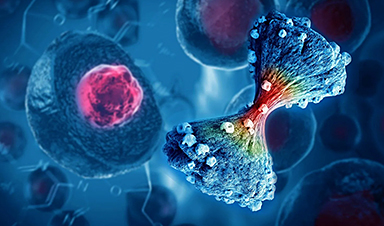
New AI Model Predicts Cancer Spread With Incredible Accuracy
Scientists have developed an AI system that analyzes complex gene-expression signatures to estimate the likelihood that a tumor will spread. Why do some tumors spread throughout the body while others remain confined to their [...]

Scientists Discover DNA “Flips” That Supercharge Evolution
In Lake Malawi, hundreds of species of cichlid fish have evolved with astonishing speed, offering scientists a rare opportunity to study how biodiversity arises. Researchers have identified segments of “flipped” DNA that may allow fish to adapt rapidly [...]