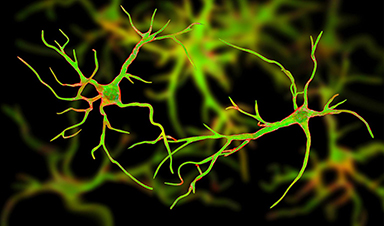
Scientists have discovered that the brain may have a built-in way to fight Alzheimer's.
By activating a protein called Sox9, researchers were able to switch on star-shaped brain cells known as astrocytes and turn them into powerful cleaners that remove toxic plaques linked to memory loss. Tests in mice that already had Alzheimer's-like symptoms showed that boosting this protein helped clear out these harmful deposits and protect their memory.
Astrocytes and a Surprising Plaque-Clearing Mechanism
Researchers at Baylor College of Medicine have identified a natural process in the brain that can remove existing amyloid plaques in mouse models of Alzheimer's disease and help maintain memory and thinking ability. This process relies on astrocytes, star-shaped brain cells that can clear away the toxic plaques commonly found in Alzheimer's. When the researchers increased production of Sox9, a protein that guides many astrocyte functions as the brain ages, these cells became more effective at eliminating amyloid buildup. The findings, published today (November 21) in Nature Neuroscience, point to the possibility of developing treatments that strengthen astrocyte activity to slow cognitive decline in neurodegenerative conditions.
"Astrocytes perform diverse tasks that are essential for normal brain function, including facilitating brain communications and memory storage. As the brain ages, astrocytes show profound functional alterations; however, the role these alterations play in aging and neurodegeneration is not yet understood," said first author Dr. Dong-Joo Choi, who was at the Center for Cell and Gene Therapy and the Department of Neurosurgery at Baylor while he was working on this project. Choi currently is an assistant professor at the Center for Neuroimmunology and Glial Biology, Institute of Molecular Medicine at the University of Texas Health Science Center at Houston.
Decoding How Aging Astrocytes Change
In this study, the team set out to uncover how aging affects astrocytes and how those changes relate to Alzheimer's disease. They focused on Sox9 because it acts as a key regulator for many genes in aging astrocytes.
"We manipulated the expression of the Sox9 gene to assess its role in maintaining astrocyte function in the aging brain and in Alzheimer's disease models," said corresponding author Dr. Benjamin Deneen, professor and Dr. Russell J. and Marian K. Blattner Chair in the Department of Neurosurgery, director of the Center for Cancer Neuroscience, a member of the Dan L Duncan Comprehensive Cancer Center at Baylor and a principal investigator at the Jan and Dan Duncan Neurological Research Institute at Texas Children's Hospital.
Testing Sox9 in Mice With Existing Cognitive Decline
"An important point of our experimental design is that we worked with mouse models of Alzheimer's disease that had already developed cognitive impairment, such as memory deficits, and had amyloid plaques in the brain," Choi said. "We believe these models are more relevant to what we see in many patients with Alzheimer's disease symptoms than other models in which these types of experiments are conducted before the plaques form."
In these Alzheimer's models, the researchers either increased or removed Sox9 and then monitored the cognitive abilities of individual mice for six months, tracking how well they recognized familiar objects or environments. When the study concluded, the team examined the animals' brains to evaluate the amount of plaque that had accumulated.
Boosting Sox9 Reverses Plaque Build-Up and Cognitive Loss
Compared to reducing Sox9 expression, increasing it had the opposite effect. Sox9 knockout accelerated plaque formation, reduced astrocyte complexity and decreased clearance of amyloid deposits. Overexpression reversed these trends, promoting plaque clearance, while increasing the cells' activity and complexity. Importantly, overexpression of Sox9 also preserved cognitive function in these mice, indicating that astrocytic clearance of plaques halts neurodegenerative-related cognitive decline.
"We found that increasing Sox9 expression triggered astrocytes to ingest more amyloid plaques, clearing them from the brain like a vacuum cleaner," Deneen said. "Most current treatments focus on neurons or try to prevent the formation of amyloid plaques. This study suggests that enhancing astrocytes' natural ability to clean up could be just as important."
A Path Toward Astrocyte-Powered Therapies
Choi, Deneen, and their colleagues caution that more research is needed to understand how Sox9 works in the human brain over time. But their work opens the door to therapies that could one day harness the power of astrocytes to fight neurodegenerative diseases.
Reference: "Astrocytic Sox9 overexpression in Alzheimer's disease mouse models promotes Aβ plaque phagocytosis and preserves cognitive function" 21 November 2025, Nature Neuroscience.
DOI: 10.1038/s41593-025-02115-w
A number of additional researchers at Baylor College of Medicine played key roles in this project, including Sanjana Murali, Wookbong Kwon, Junsung Woo, Eun-Ah Christine Song, Yeunjung Ko, Debo Sardar, Brittney Lozzi, Yi-Ting Cheng, Michael R. Williamson, Teng-Wei Huang, Kaitlyn Sanchez and Joanna Jankowsky.
Funding for the study came from several National Institutes of Health grants (R35-NS132230, R01-AG071687, R01-CA284455, K01-AG083128, R56-MH133822). The project also received support from the David and Eula Wintermann Foundation, the Eunice Kennedy Shriver National Institute of Child Health & Human Development of the National Institutes of Health under Award Number P50HD103555, and from shared resources provided by Houston Methodist and Baylor College of Medicine.

News
Researcher at Russian plague laboratory dies of ‘unknown’ infection
Russian authorities have imposed "anti-epidemic measures" after a laboratory worker at an institute in Siberia dedicated to studying the plague and other infectious diseases died of a mysterious illness. The researcher, a 28-year-old female [...]
GHCE Concept
From the preface of the book Global Health Care Equivalency in the Age of Nanotechnology, Nanomedicine and Artificial Intelligence, Edited by Frank Boehm: Since the publication of my first book (Nanomedical Device and Systems [...]

A Surprising Brain Signal Could Explain Why Eating Less Protein Extends Lifespan
A new paper suggests that limiting protein intake triggers a coordinated response throughout the body that may help explain how protein restriction affects healthy aging. Animals respond to protein restriction, or reduced protein in [...]

Back and shoulder surgery is often worse than useless
Millions of operations should be scrapped SIX IN TEN Britons have surgery at some point. So do lots of Americans, at a cost of perhaps $500bn a year, a third of all spending on [...]
Cocaine plays with mind, hijacks brain circuit, drives increasingly rigid and repetitive behavior
Researchers have found that cocaine hijacks brain circuit, which to drive increasingly rigid and repetitive behavior. The brain circuit that normally participates in selecting natural mouth and face movements, but which becomes disproportionately engaged [...]
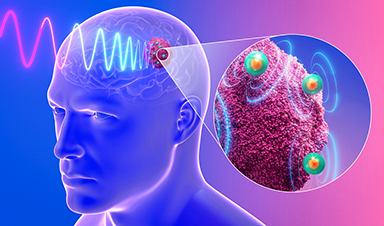
Injectable nanodevices could provide effective treatment for drug-resistant glioblastoma
The brain cancer glioblastoma is one of the most aggressive and treatment-resistant cancers known to medicine, carrying a median survival of just 12-15 months, even with the best available care. Now, researchers at the [...]
New Treatment Cuts “Bad” Cholesterol in Half for a Full Year
A single infusion of an experimental CRISPR-Cas9 therapy was reported to safely lower LDL cholesterol by 52.5% and triglycerides by 47.8%, as measured 12 months after treatment. What if one infusion could keep cholesterol [...]
Too Much RNA Can Drain a Cell’s Energy, Scientists Discover
A virus may cripple a cell’s power supply simply by producing too much of a molecule the cell needs to survive. New research from the Texas A&M College of Veterinary Medicine and Biomedical Sciences [...]
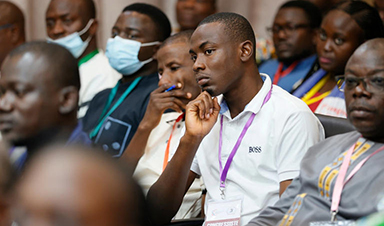
West African scientists warn of weakening health systems and urge stronger outbreak detection
LOME, Togo (AP) — West African laboratory scientists called on governments Friday to strengthen capacity to detect disease outbreaks to avoid another major outbreak, saying health systems across the region are becoming weaker. Participants [...]

A Little-Known Protein Could Point to a New Way To Treat Alzheimer’s
A study suggests that increasing SORLA protein levels could help treat Alzheimer’s disease and other disorders involving tau protein. Increasing SORLA, a protein with a protective role in the brain, helped mice withstand damage [...]
Cancer’s Hidden Antioxidant Shield Helps It Escape the Immune System
Blocking an antioxidant protein that tumors use to suppress immune attacks improved cancer immunotherapy responses in mice. Cancer cells can release antioxidants that interfere with the immune cells trying to kill them. Researchers have [...]

Scientists Find a Berry Compound That Helps Muscle Cells Burn Fat
Pterostilbene, a compound found naturally in some foods, affects how skeletal muscles process fats by stabilizing a protein called PPARδ and increasing its signaling activity. Pterostilbene, a natural compound found in blueberries, grapes, and [...]
Two Hidden Forces Help Build the Human Brain Before Birth
Scientists have uncovered two surprising forces that help guide how the human brain forms before birth. Before birth, the human brain is shaped in large part by an unusual class of stem cells known [...]
Researchers Uncover a Hidden Trigger Behind Chronic Inflammation
The findings offer new insights that could help guide the development of future therapies. A protein called human resistin may help flip on one of the immune system’s most powerful inflammatory switches. Researchers at [...]
Scientists Have Uncovered Previously Hidden Microbial Activity on Human Skin
The most abundant microbes on your skin may not be the ones doing most of the work. Human skin supports vast communities of bacteria, fungi, and viruses that can influence its protective barrier, immune [...]
Brazilian Tree Compounds Fight COVID-19 on Multiple Fronts
Scientists found compounds in a Brazilian tree that hit SARS-CoV-2 on multiple fronts, revealing a promising new lead in the search for COVID-19 treatments. Researchers have found that galloylquinic acids extracted from the leaves [...]