In Lake Malawi, hundreds of species of cichlid fish have evolved with astonishing speed, offering scientists a rare opportunity to study how biodiversity arises.
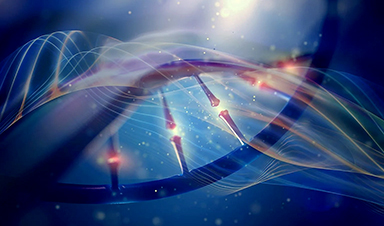
Researchers have identified segments of "flipped" DNA that may allow fish to adapt rapidly to new environments and eventually form new species. These unusual genetic changes appear to function as evolutionary "superchargers," helping populations diversify at remarkable speed.
Why does Earth contain such a vast variety of plants and animals? One of the central questions in biology is how new species originate and how the extraordinary diversity of life developed over time.
Cichlid fish in Lake Malawi in East Africa provide an important example. Within this single lake, more than 800 species have emerged from a shared ancestor. This diversification happened in far less time than it took humans and chimpanzees to split from their own common ancestor.
Even more striking is that this evolutionary explosion took place in the same body of water. Some cichlids evolved into large predators, while others specialized in grazing on algae, filtering sand for food, or feeding on plankton. Over time, each species adapted to its own ecological niche.
Searching the Genome for Answers
Scientists from the University of Cambridge and the University of Antwerp set out to understand how this rapid evolutionary change occurred. Their findings were published in the journal Science.
The research team examined the DNA of more than 1,300 cichlid fish to see whether any unusual genetic features might explain the group's extraordinary rate of diversification. "We discovered that, in some species, large chunks of DNA on five chromosomes are flipped – a type of mutation called a chromosomal inversion," said senior author Hennes Svardal from the University of Antwerp.
In most animals, reproduction involves a process called recombination. During this process, genetic material from each parent is shuffled and mixed together.
However, recombination is largely prevented inside a chromosomal inversion. As a result, the group of genes contained in that flipped section remains linked and is passed down together from one generation to the next. This preserves useful combinations of genes that support survival in specific environments, which can accelerate evolutionary change.
"It's sort of like a toolbox where all the most useful tools are stuck together, preserving winning genetic combinations that help fish adapt to different environments," said first author Moritz Blumer from Cambridge's Department of Genetics.
The Power of "Supergenes"
Scientists sometimes refer to these tightly linked groups of genes as "supergenes." In Lake Malawi cichlids, the study suggests that these supergenes serve several important functions.
Different cichlid species can still interbreed, but chromosomal inversions help maintain distinct species boundaries by limiting how much genetic mixing occurs. This effect is especially important in parts of the lake where multiple species live side by side, such as open sandy habitats where there are no physical barriers separating them.
Many genes within these supergenes influence traits that are essential for survival and reproduction, including vision, hearing, and behavior. Fish that live deep in the lake (down to 200 meters (about 656 feet)) face very different conditions than those near the surface. They encounter lower light levels, different food sources, and higher pressure. The supergenes help maintain the genetic traits that allow them to thrive in these environments.
"When different cichlid species interbred, entire inversions can be passed between them – bringing along key survival traits, like adaptations to specific environments, speeding up the process of evolution," said Blumer.
The study also found that these inversions often function as sex chromosomes, which help determine whether an individual develops as male or female. Because sex chromosomes can influence how new species emerge, this finding raises additional questions about the role these genetic structures play in evolution.
"While our study focused on cichlids, chromosomal inversions aren't unique to them," said co-senior author Professor Richard Durbin, from Cambridge's Department of Genetics. "They're also found in many other animals — including humans — and are increasingly seen as a key factor in evolution and biodiversity."
"We have been studying the process of speciation for a long time," said Svardal. "Now, by understanding how these supergenes evolve and spread, we're getting closer to answering one of science's big questions: how life on Earth becomes so rich and varied."
Reference: "Introgression dynamics of sex-linked chromosomal inversions shape the Malawi cichlid radiation" by L. M. Blumer, V. Burskaia, I. Artiushin, J. Saha, J. Camacho Garcia, F. Campuzano Jiménez, A. Hooft van Huysdynen, J. Elkin, B. Fischer, N. Van Houtte, C. Zhou, S. Gresham, M. Malinsky, T. Linderoth, W. Sawasawa, G. Vernaz, I. Bista, A. Hickey, M. Kucka, S. Louzada, R. Zatha, F. Yang, B. Rusuwa, M. E. Santos, Y. F. Chan, D. A. Joyce, A. Böhne, E. A. Miska, M. Ngochera, G. F. Turner, R. Durbin and H. Svardal, 12 June 2025, Science.
DOI: 10.1126/science.adr9961

News
Scientists Discover DNA “Flips” That Supercharge Evolution
In Lake Malawi, hundreds of species of cichlid fish have evolved with astonishing speed, offering scientists a rare opportunity to study how biodiversity arises. Researchers have identified segments of “flipped” DNA that may allow fish to adapt rapidly [...]

Our books now available worldwide!
Online Sellers other than Amazon, Routledge, and IOPP Indigo Global Health Care Equivalency in the Age of Nanotechnology, Nanomedicine and Artifcial Intelligence Global Health Care Equivalency In The Age Of Nanotechnology, Nanomedicine And Artificial [...]
Scientists Discover Why Some COVID Survivors Still Can’t Taste Food Years Later
A new study provides the first direct biological evidence explaining why some people continue to experience taste loss long after recovering from COVID-19. Researchers have uncovered specific biological changes in taste buds that could help [...]

Catching COVID significantly raises the risk of developing kidney disease, researchers find
Catching Covid significantly raises the risk of developing deadly kidney disease, research has shown. The virus was found to increase the chances that patients will develop the incurable condition by around 50 per cent. [...]

New Toothpaste Stops Gum Disease Without Harming Healthy Bacteria
Researchers have developed a targeted approach to combat periodontitis without disrupting the natural balance of the oral microbiome. The innovation could reshape how gum disease is treated while preserving beneficial bacteria. The human mouth [...]
Plastic Without End: Are We Polluting the Planet for Eternity?
The Kunming Montreal Global Biodiversity Framework calls for the elimination of plastic pollution by 2030. If that goal has been clearly set, why have meaningful measures that create real change still not been implemented? [...]
Scientists Rewire Natural Killer Cells To Attack Cancer Faster and Harder
Researchers tested new CAR designs in NK-92 cells and found the modified cells killed tumor cells more effectively, showing stronger anti-cancer activity. Researchers at the Ribeirão Preto Blood Center and the Center for Cell-Based [...]
New “Cellular” Target Could Transform How We Treat Alzheimer’s Disease
A new study from researchers highlights an unexpected player in Alzheimer’s disease: aging astrocytes. Senescent astrocytes have been identified as a major contributor to Alzheimer’s progression. The cells lose protective functions and fuel inflammation, particularly in [...]

Treating a Common Dental Infection… Effects That Extend Far Beyond the Mouth
Successful root canal treatment may help lower inflammation associated with heart disease and improve blood sugar and cholesterol levels. Treating an infected tooth with a successful root canal procedure may do more than relieve [...]
Microplastics found in prostate tumors in small study
In a new study, researchers found microplastics deep inside prostate cancer tumors, raising more questions about the role the ubiquitous pollutants play in public health. The findings — which come from a small study of 10 [...]
All blue-eyed people have this one thing in common
All Blue-Eyed People Have This One Thing In Common Blue Eyes Aren’t Random—Research Traces Them Back to One Prehistoric Human It sounds like a myth at first — something you’d hear in a folklore [...]
Scientists reveal how exercise protects the brain from Alzheimer’s
Researchers at UC San Francisco have identified a biological process that may explain why exercise sharpens thinking and memory. Their findings suggest that physical activity strengthens the brain's built in defense system, helping protect [...]

NanoMedical Brain/Cloud Interface – Explorations and Implications. A new book from Frank Boehm
New book from Frank Boehm, NanoappsMedical Inc Founder: This book explores the future hypothetical possibility that the cerebral cortex of the human brain might be seamlessly, safely, and securely connected with the Cloud via [...]
Deadly Pancreatic Cancer Found To “Wire Itself” Into the Body’s Nerves
A newly discovered link between pancreatic cancer and neural signaling reveals a promising drug target that slows tumor growth by blocking glutamate uptake. Pancreatic cancer is among the most deadly cancers, and scientists are [...]
This Simple Brain Exercise May Protect Against Dementia for 20 Years
A long-running study following thousands of older adults suggests that a relatively brief period of targeted brain training may have effects that last decades. Starting in the late 1990s, close to 3,000 older adults [...]
Scientists Crack a 50-Year Tissue Mystery With Major Cancer Implications
Researchers have resolved a 50-year-old scientific mystery by identifying the molecular mechanism that allows tissues to regenerate after severe damage. The discovery could help guide future treatments aimed at reducing the risk of cancer [...]