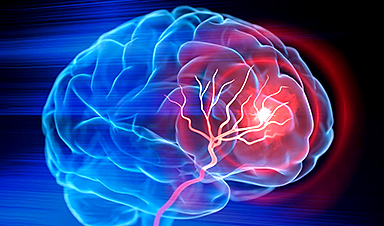
New nanomaterial passes the blood-brain barrier to reduce damaging inflammation after the most common form of stroke.
When someone experiences a stroke, doctors must quickly restore blood flow to the brain to prevent death. However, this sudden return of circulation can also set off a harmful cascade that damages brain cells, drives inflammation, and raises the risk of lasting disability.
Researchers at Northwestern University have now created an injectable regenerative nanomaterial designed to protect the brain during this critical period after blood flow is restored.
In a new preclinical study, the scientists tested a single intravenous dose given immediately following reperfusion in a mouse model of ischemic stroke, the most common form of the condition. The therapy was able to cross the blood-brain barrier, a hurdle that prevents many treatments from reaching brain tissue, and promote repair. Mice that received the treatment showed significantly less brain damage, with no evidence of side effects or toxicity in major organs.
The results, published in the journal Neurotherapeutics, indicate that this approach could eventually work alongside existing stroke therapies by reducing secondary injury and aiding recovery.
"Current clinical approaches are entirely focused on blood flow restoration," said co-corresponding author Dr. Ayush Batra, associate professor, neurology (neurocritical care) and pathology at Northwestern University Feinberg School of Medicine, co-director of the NeuroVascular Inflammation Laboratory at Northwestern and a neurocritical care physician with Northwestern Medicine. "Any treatment that facilitates neuronal recovery and minimizes injury would be very powerful, but that holy grail doesn't yet exist. This study is promising because it's leading us down a pathway to develop these technologies and therapeutics for this unmet need."
"One of the most promising aspects of this study is that we were able to show this therapeutic technology, which has shown incredible promise in spinal cord injury, can now begin to be applied in a stroke model and that it can be delivered systemically," said Stupp, co-corresponding author and Board of Trustees Professor of Materials Science and Engineering, Chemistry, Medicine and Biomedical Engineering at Northwestern. "This systemic delivery mechanism and the ability to cross the blood-brain barrier is a significant advance that could also be useful in treating traumatic brain injuries and neurodegenerative diseases such as ALS."
Stupp also is founding director of the Center for Regenerative Nanomedicine. He has appointments in the McCormick School of Engineering, Weinberg College of Arts and Sciences and Feinberg School of Medicine.
Study mimicked real-world stroke treatment
Acute ischemic stroke, which accounts for 80% of all strokes in the U.S., is a devastating condition and is one of the leading causes of morbidity and mortality worldwide, Batra said. Ischemic strokes occur when a clot blocks blood flow to the brain. Physicians reopen the vessel by administering "clot-busting" drugs or using devices to surgically remove the clot.
Severe strokes can lead to permanent, significant disability that affects a patient's quality of life and their ability to return to work and engage with their family and society.
"It has not only a significant personal and emotional burden on patients, but also a financial burden on families and communities," he said. "Reducing this level of disability with a therapy that could potentially help in restoring function and minimizing injury would really have a powerful long-term impact."
The findings are highly relevant for future clinical applications because the scientists tested the approach in a mouse model that closely mimics real-world ischemic stroke treatment, Batra said. They first blocked blood flow to simulate a major ischemic stroke and then restored it (a process called reperfusion), just as doctors restore blood flow acutely for ischemic stroke patients.
The scientists monitored the mice for seven days and didn't observe any significant side effects or biocompatibility issues such as toxicity or immune system rejection. They used advanced imaging techniques, such as real-time intravital intracranial microscopy, to confirm the therapy localized to the stroke injury site. Compared to untreated mice, those treated with the "dancing molecules" had significantly less brain tissue damage, reduced signs of inflammation, and reduced signs of excessive, damaging immune response.
Stupp said the therapy has pro-regenerative and anti-inflammatory properties, both of which contributed to the positive results.
"You get an accumulation of harmful molecules once the blockage occurs and then suddenly you remove the clot and all those 'bad actors' get released into the bloodstream, where they cause additional damage," Stupp said. "But the dancing molecules carry with them some anti-inflammatory activity to counteract these effects and at the same time help repair neural networks."
Dynamic 'dancing molecules' can be dialed down in concentration
The secret behind Stupp's "dancing molecules" breakthrough therapeutic is tuning the collective motion of molecules, so they can find and properly engage constantly moving cellular receptors. The treatment sends signals that encourage nerve cells to repair themselves. For example, it can help nerve fibers (called axons) grow again and reconnect with other nerve cells, restoring lost communication. This process is called plasticity, which means the brain and spinal cord can adapt and rebuild connections after injury.
In previous studies, scientists injected the dancing molecules as a liquid, and when used to treat spinal cord injury, the therapy immediately gels into a complex network of nanofibers that mimic the dense, extracellular matrix of the spinal cord. By matching the matrix's structure, mimicking the motion of biological molecules and incorporating signals for receptors, the synthetic materials are able to communicate with cells.
In the new study, the scientists dialed down the concentration of supramolecular peptide assemblies to prevent possible clotting as the therapy enters the bloodstream. Smaller aggregates of peptides easily crossed the blood-brain barrier. Once enough molecules cross, larger nanofiber assemblies can form in brain tissue to produce a more potent therapeutic effect, Stupp said.
"We chose for this stroke study one of the most dynamic therapies we had in terms of its molecular structure so that supramolecular assemblies would have a better probability of crossing the blood-brain barrier," Stupp said.
Optimizing therapeutic targeting
The fact that seemingly effective therapies cannot cross the blood-brain barrier has plagued the neuroscience field for decades, Batra said. This new therapy could change that.
When a physician acutely restores blood flow to a region of the brain in a stroke patient, the blood-brain barrier permeability is locally increased, naturally creating a transient opening and opportunity for therapeutic intervention, Batra said.
"Add to that a dynamic peptide that is able to cross more readily, and you're really optimizing the chances that your therapy is going where you want it to go," Batra said.
Next steps
Further studies will need to assess whether this treatment can support longer-term, functional recovery, Batra said. For instance, many stroke patients suffer from significant cognitive decline throughout the subsequent year after a stroke. The new therapy is primed to address that secondary injury, Batra said, but the studies will require a longer follow-up period and more sophisticated behavioral testing.
In addition, the team is interested in testing whether additional regenerative signals could be incorporated into the therapeutic peptides to produce even better results.
Reference: "Toward development of a dynamic supramolecular peptide therapy for acute ischemic stroke" by Zijun Gao, Luisa Helena Andrade da Silva, Zhiwei Li, Feng Chen, Cara Smith, Zoie Lipfert, Ryan Martynowicz, Erika Arias, William A. Muller, David P. Sullivan, Samuel I. Stupp and Ayush Batra, 8 January 2026, Neurotherapeutics.
DOI: 10.1016/j.neurot.2025.e00820
Funding for this study was primarily provided by the SQI Synthesizer Grant Program at the Center for Regenerative Nanomedicine.

News
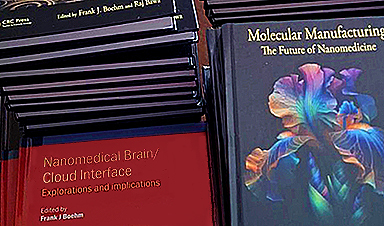
Our books now available worldwide!
Online Sellers other than Amazon, Routledge, and IOPP Indigo Global Health Care Equivalency in the Age of Nanotechnology, Nanomedicine and Artifcial Intelligence Global Health Care Equivalency In The Age Of Nanotechnology, Nanomedicine And Artificial [...]

Scientists Discover Why Some COVID Survivors Still Can’t Taste Food Years Later
A new study provides the first direct biological evidence explaining why some people continue to experience taste loss long after recovering from COVID-19. Researchers have uncovered specific biological changes in taste buds that could help [...]

Catching COVID significantly raises the risk of developing kidney disease, researchers find
Catching Covid significantly raises the risk of developing deadly kidney disease, research has shown. The virus was found to increase the chances that patients will develop the incurable condition by around 50 per cent. [...]
New Toothpaste Stops Gum Disease Without Harming Healthy Bacteria
Researchers have developed a targeted approach to combat periodontitis without disrupting the natural balance of the oral microbiome. The innovation could reshape how gum disease is treated while preserving beneficial bacteria. The human mouth [...]

Plastic Without End: Are We Polluting the Planet for Eternity?
The Kunming Montreal Global Biodiversity Framework calls for the elimination of plastic pollution by 2030. If that goal has been clearly set, why have meaningful measures that create real change still not been implemented? [...]
Scientists Rewire Natural Killer Cells To Attack Cancer Faster and Harder
Researchers tested new CAR designs in NK-92 cells and found the modified cells killed tumor cells more effectively, showing stronger anti-cancer activity. Researchers at the Ribeirão Preto Blood Center and the Center for Cell-Based [...]
New “Cellular” Target Could Transform How We Treat Alzheimer’s Disease
A new study from researchers highlights an unexpected player in Alzheimer’s disease: aging astrocytes. Senescent astrocytes have been identified as a major contributor to Alzheimer’s progression. The cells lose protective functions and fuel inflammation, particularly in [...]

Treating a Common Dental Infection… Effects That Extend Far Beyond the Mouth
Successful root canal treatment may help lower inflammation associated with heart disease and improve blood sugar and cholesterol levels. Treating an infected tooth with a successful root canal procedure may do more than relieve [...]
Microplastics found in prostate tumors in small study
In a new study, researchers found microplastics deep inside prostate cancer tumors, raising more questions about the role the ubiquitous pollutants play in public health. The findings — which come from a small study of 10 [...]

All blue-eyed people have this one thing in common
All Blue-Eyed People Have This One Thing In Common Blue Eyes Aren’t Random—Research Traces Them Back to One Prehistoric Human It sounds like a myth at first — something you’d hear in a folklore [...]
Scientists reveal how exercise protects the brain from Alzheimer’s
Researchers at UC San Francisco have identified a biological process that may explain why exercise sharpens thinking and memory. Their findings suggest that physical activity strengthens the brain's built in defense system, helping protect [...]
NanoMedical Brain/Cloud Interface – Explorations and Implications. A new book from Frank Boehm
New book from Frank Boehm, NanoappsMedical Inc Founder: This book explores the future hypothetical possibility that the cerebral cortex of the human brain might be seamlessly, safely, and securely connected with the Cloud via [...]
Deadly Pancreatic Cancer Found To “Wire Itself” Into the Body’s Nerves
A newly discovered link between pancreatic cancer and neural signaling reveals a promising drug target that slows tumor growth by blocking glutamate uptake. Pancreatic cancer is among the most deadly cancers, and scientists are [...]
This Simple Brain Exercise May Protect Against Dementia for 20 Years
A long-running study following thousands of older adults suggests that a relatively brief period of targeted brain training may have effects that last decades. Starting in the late 1990s, close to 3,000 older adults [...]
Scientists Crack a 50-Year Tissue Mystery With Major Cancer Implications
Researchers have resolved a 50-year-old scientific mystery by identifying the molecular mechanism that allows tissues to regenerate after severe damage. The discovery could help guide future treatments aimed at reducing the risk of cancer [...]
This New Blood Test Can Detect Cancer Before Tumors Appear
A new CRISPR-powered light sensor can detect the faintest whispers of cancer in a single drop of blood. Scientists have created an advanced light-based sensor capable of identifying extremely small amounts of cancer biomarkers [...]