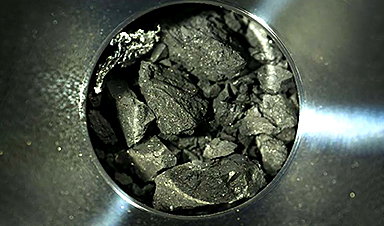
All the essential ingredients to make the DNA and RNA underpinning life on Earth have been discovered in samples collected from the asteroid Ryugu, scientists said Monday.
The discovery comes after these building blocks of life were detected on another asteroid called Bennu, suggesting they are abundant throughout the solar system.
One longstanding theory is that life first began on Earth when asteroids carrying fundamental elements crashed into our planet long ago.
The asteroids that hurtle through our solar system give scientists a rare chance to study this possibility.
In 2014, the Japanese spacecraft Hayabusa-2 blasted off on a 300-million-kilometer (185-million-mile) mission to land on Ryugu, a 900-meter-wide (2,950-feet-wide) asteroid.
It successfully managed to collect two samples of rocks weighing 5.4 grams (under a fifth of an ounce) each and bring them back to Earth in 2020.
Research in 2023 showed that these samples contained uracil, which is one of the four bases that make up RNA.
While DNA, the famed double helix, functions as a genetic blueprint, single-strand RNA is an all-important messenger, converting the instructions contained in DNA for implementation.
On Monday, a new study by a Japanese team of researchers in Nature Astronomy demonstrated that the samples contained all the “nucleobases” for both DNA and RNA.
These included uracil as well as adenine, guanine, cytosine and thymine.
This “does not mean that life existed on Ryugu,” the study’s lead author, Toshiki Koga, told AFP.
“Instead, their presence indicates that primitive asteroids could produce and preserve molecules that are important for the chemistry related to the origin of life,” added the biochemist from the Japan Agency for Marine-Earth Science and Technology.
The discovery also “demonstrates their widespread presence throughout the solar system and reinforces the hypothesis that carbonaceous asteroids contributed to the prebiotic chemical inventory of early Earth,” according to the study.
Cesar Menor Salvan, an astrobiologist at Spain’s University of Alcala not involved in the research, emphasized that “these results do not suggest that the origin of life took place in space.”
However, “with this and the results from Bennu, we have a very clear idea of which organic materials can form under prebiotic conditions anywhere in the universe,” he added.
“Unique” ammonia finding
Last year, the same building blocks were found in fragments brought back to Earth by NASA from the asteroid Bennu.
Scientists have also detected their presence in the meteorites Orgueil and Murchison, which were part of asteroids that fell to Earth.
For the new research, the Japanese team compared the amount of each nucleobase detected in these different space rocks, finding the quantities varied depending on their history.
They also identified a correlation between the ratios of the building blocks and the concentration of another important chemical for life: ammonia.
“Because no known formation mechanism predicts such a relationship, this finding may point to a previously unrecognized pathway for nucleobase formation in early solar system materials,” Toshiki Koga said.
Morgan Cable, a scientist at the Victoria University of Wellington not involved in the research, called this particular finding “unique.”
“This discovery has important implications for how biologically important molecules may have originally formed and promoted the genesis of life on Earth,” she said.
Publication details
Toshiki Koga et al, A complete set of canonical nucleobases in the carbonaceous asteroid (162173) Ryugu, Nature Astronomy (2026). DOI: 10.1038/s41550-026-02791-z
Journal information: Nature Astronomy

News – Curated by Amanda Scott, Alias Group Creative
Follow her on Bluesky
Ryugu asteroid samples contain all DNA and RNA building blocks, bolstering origin-of-life theories
All the essential ingredients to make the DNA and RNA underpinning life on Earth have been discovered in samples collected from the asteroid Ryugu, scientists said Monday. The discovery comes after these building blocks [...]

Is Berberine Really a “Natural Ozempic”?
Often labeled a “natural Ozempic,” berberine is widely discussed as a metabolic aid. Yet research suggests its influence may lie deeper. In recent years, berberine has gained significant attention as a supposed “natural way” [...]
Viagra Ingredient Shows Promise for Rare Childhood Brain Disease in Surprising Study
A rare childhood disease with no approved treatment may have an unexpected new therapeutic candidate. Sildenafil, the active ingredient also sold under the brand name Viagra, may help reduce symptoms in people with Leigh [...]

In a first for China, Neuracle’s implantable brain-computer interface wins approval
In a landmark development, Neuracle Medical Technology has secured the country’s first-ever approval for an implantable brain-computer interface (BCI) system designed to restore hand motor function in patients with spinal cord injuries, in a [...]
A Cambridge Lab Mistake Reveals a Powerful New Way to Modify Drug Molecules
A surprising lab discovery reveals a light-powered way to tweak complex drugs faster, cleaner, and later in development. Researchers at the University of Cambridge have created a new technique for altering complex drug molecules [...]
New book from NanoappsMedical Inc – Molecular Manufacturing: The Future of Nanomedicine
This book explores the revolutionary potential of atomically precise manufacturing technologies to transform global healthcare, as well as practically every other sector across society. This forward-thinking volume examines how envisaged Factory@Home systems might enable the cost-effective [...]

Scientists Discover Simple Saliva Test That Reveals Hidden Diabetes Risk
Researchers have identified a potential new way to assess metabolic health using saliva instead of blood. High insulin levels in the blood, known as hyperinsulinemia, can reveal metabolic problems long before obvious symptoms appear. It is [...]

One Nasal Spray Could Protect Against COVID, Flu, Pneumonia, and More
A single nasal spray vaccine may one day protect against viruses, pneumonia, and even allergies. For decades, scientists have dreamed of creating a universal vaccine capable of protecting against many different pathogens. The idea [...]
New AI Model Predicts Cancer Spread With Incredible Accuracy
Scientists have developed an AI system that analyzes complex gene-expression signatures to estimate the likelihood that a tumor will spread. Why do some tumors spread throughout the body while others remain confined to their [...]

Scientists Discover DNA “Flips” That Supercharge Evolution
In Lake Malawi, hundreds of species of cichlid fish have evolved with astonishing speed, offering scientists a rare opportunity to study how biodiversity arises. Researchers have identified segments of “flipped” DNA that may allow fish to adapt rapidly [...]
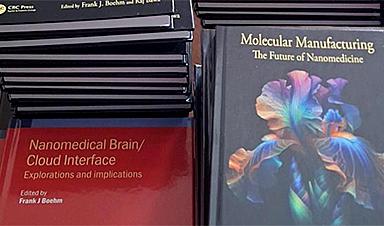
Our books now available worldwide!
Online Sellers other than Amazon, Routledge, and IOPP Indigo Global Health Care Equivalency in the Age of Nanotechnology, Nanomedicine and Artifcial Intelligence Global Health Care Equivalency In The Age Of Nanotechnology, Nanomedicine And Artificial [...]

Scientists Discover Why Some COVID Survivors Still Can’t Taste Food Years Later
A new study provides the first direct biological evidence explaining why some people continue to experience taste loss long after recovering from COVID-19. Researchers have uncovered specific biological changes in taste buds that could help [...]

Catching COVID significantly raises the risk of developing kidney disease, researchers find
Catching Covid significantly raises the risk of developing deadly kidney disease, research has shown. The virus was found to increase the chances that patients will develop the incurable condition by around 50 per cent. [...]
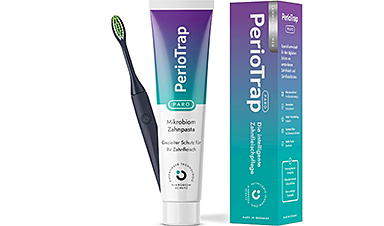
New Toothpaste Stops Gum Disease Without Harming Healthy Bacteria
Researchers have developed a targeted approach to combat periodontitis without disrupting the natural balance of the oral microbiome. The innovation could reshape how gum disease is treated while preserving beneficial bacteria. The human mouth [...]

Plastic Without End: Are We Polluting the Planet for Eternity?
The Kunming Montreal Global Biodiversity Framework calls for the elimination of plastic pollution by 2030. If that goal has been clearly set, why have meaningful measures that create real change still not been implemented? [...]
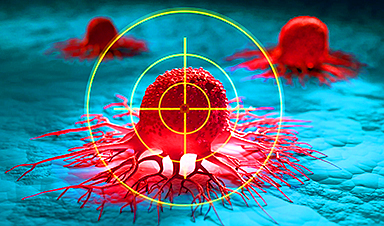
Scientists Rewire Natural Killer Cells To Attack Cancer Faster and Harder
Researchers tested new CAR designs in NK-92 cells and found the modified cells killed tumor cells more effectively, showing stronger anti-cancer activity. Researchers at the Ribeirão Preto Blood Center and the Center for Cell-Based [...]