Microplastics could be fueling neurodegenerative diseases like Alzheimer’s and Parkinson’s, with a new study highlighting five ways microplastics can trigger inflammation and damage in the brain.
More than 57 million people live with dementia, and cases of Alzheimer’s and Parkinson’s are projected to rise sharply. The possibility that microplastics could aggravate or accelerate these brain diseases is a major public health concern.
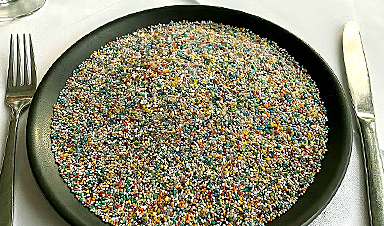
Pharmaceutical scientist Associate Professor Kamal Dua, from the University of Technology Sydney, said it is estimated that adults are consuming 250 grams of microplastics every year – enough to cover a dinner plate.
“Common plastics include polyethylene, polypropylene, polystyrene and polyethylene terephthalate or PET. The majority of these microplastics are cleared from our bodies, however studies show they do accumulate in our organs, including our brains.”
The systematic review, recently published in Molecular and Cellular Biochemistry, was an international collaboration led by researchers from the University of Technology Sydney and Auburn University in the US.
The researchers highlighted five main pathways through which microplastics can cause harm to the brain, including triggering immune cell activity, generating oxidative stress, disrupting the blood–brain barrier, impairing mitochondria and damaging neurons.
Microplastics actually weaken the blood–brain barrier, making it leaky. Once that happens, immune cells and inflammatory molecules are activated, which then causes even more damage to the barrier’s cells.”
Kamal Dua, Associate Professor, University of Technology Sydney
“The body treats microplastics as foreign intruders, which prompts the brain’s immune cells to attack them. When the brain is stressed by factors like toxins or environmental pollutants this also causes oxidative stress,” he said.
Microplastics cause oxidative stress in two main ways: they increase the amount of “reactive oxygen species” or unstable molecules that can damage cells, and they weaken the body’s antioxidant systems, which normally help keep those molecules in check.
“Microplastics also interfere with the way mitochondria produce energy, reducing the supply of ATP, or adenosine triphosphate, which is the fuel cells need to function. This energy shortfall weakens neuron activity and can ultimately damage brain cells,” said Associate Professor Dua.
“All these pathways interact with each other to increase damage in the brain.”
The paper also explores specific ways in which microplastics could contribute to Alzheimer’s, including triggering increased buildup of beta-amyloid and tau; and in Parkinson’s through aggregation of α-Synuclein and damage to dopaminergic neurons.
First author UTS Master of Pharmacy student Alexander Chi Wang Siu is a currently working in the lab of Professor Murali Dhanasekaran at Auburn University, in collaboration with co-authors Associate Professor Dua, Dr Keshav Raj Paudel and Distinguished Professor Brian Oliver from UTS, to better understand how microplastics affect brain cell function.
Previous UTS research has examined how microplastics are inhaled and where they are deposited in the lungs. Dr Paudel, a visiting scholar in the UTS Faculty of Engineering, is also currently investigating the impact of microplastic inhalation on lung health.
While evidence suggests microplastics could worsen diseases like Alzheimer’s and Parkinson’s, the authors emphasise that more research is needed to prove a direct link. However, they recommend taking steps to reduce microplastic exposure.
“We need to change our habits and use less plastic. Steer clear of plastic containers and plastic cutting boards, don’t use the dryer, choose natural fibres instead of synthetic ones and eat less processed and packaged foods,” said Dr Paudel.
The researchers hope the current findings will help shape environmental policies to cut plastic production, improve waste management and reduce long-term public health risks posed by this ubiquitous environmental pollutant.
Chi, A., et al. (2025). Do microplastics play a role in the pathogenesis of neurodegenerative diseases? Shared pathophysiological pathways for Alzheimer’s and Parkinson’s disease. Molecular and Cellular Biochemistry. doi: 10.1007/s11010-025-05428-3. https://link.springer.com/article/10.1007/s11010-025-05428-3

News
Our books now available worldwide!
Online Sellers other than Amazon, Routledge, and IOPP Indigo Global Health Care Equivalency in the Age of Nanotechnology, Nanomedicine and Artifcial Intelligence Global Health Care Equivalency In The Age Of Nanotechnology, Nanomedicine And Artificial [...]

Scientists Discover Why Some COVID Survivors Still Can’t Taste Food Years Later
A new study provides the first direct biological evidence explaining why some people continue to experience taste loss long after recovering from COVID-19. Researchers have uncovered specific biological changes in taste buds that could help [...]

Catching COVID significantly raises the risk of developing kidney disease, researchers find
Catching Covid significantly raises the risk of developing deadly kidney disease, research has shown. The virus was found to increase the chances that patients will develop the incurable condition by around 50 per cent. [...]

New Toothpaste Stops Gum Disease Without Harming Healthy Bacteria
Researchers have developed a targeted approach to combat periodontitis without disrupting the natural balance of the oral microbiome. The innovation could reshape how gum disease is treated while preserving beneficial bacteria. The human mouth [...]

Plastic Without End: Are We Polluting the Planet for Eternity?
The Kunming Montreal Global Biodiversity Framework calls for the elimination of plastic pollution by 2030. If that goal has been clearly set, why have meaningful measures that create real change still not been implemented? [...]
Scientists Rewire Natural Killer Cells To Attack Cancer Faster and Harder
Researchers tested new CAR designs in NK-92 cells and found the modified cells killed tumor cells more effectively, showing stronger anti-cancer activity. Researchers at the Ribeirão Preto Blood Center and the Center for Cell-Based [...]
New “Cellular” Target Could Transform How We Treat Alzheimer’s Disease
A new study from researchers highlights an unexpected player in Alzheimer’s disease: aging astrocytes. Senescent astrocytes have been identified as a major contributor to Alzheimer’s progression. The cells lose protective functions and fuel inflammation, particularly in [...]

Treating a Common Dental Infection… Effects That Extend Far Beyond the Mouth
Successful root canal treatment may help lower inflammation associated with heart disease and improve blood sugar and cholesterol levels. Treating an infected tooth with a successful root canal procedure may do more than relieve [...]
Microplastics found in prostate tumors in small study
In a new study, researchers found microplastics deep inside prostate cancer tumors, raising more questions about the role the ubiquitous pollutants play in public health. The findings — which come from a small study of 10 [...]

All blue-eyed people have this one thing in common
All Blue-Eyed People Have This One Thing In Common Blue Eyes Aren’t Random—Research Traces Them Back to One Prehistoric Human It sounds like a myth at first — something you’d hear in a folklore [...]
Scientists reveal how exercise protects the brain from Alzheimer’s
Researchers at UC San Francisco have identified a biological process that may explain why exercise sharpens thinking and memory. Their findings suggest that physical activity strengthens the brain's built in defense system, helping protect [...]

NanoMedical Brain/Cloud Interface – Explorations and Implications. A new book from Frank Boehm
New book from Frank Boehm, NanoappsMedical Inc Founder: This book explores the future hypothetical possibility that the cerebral cortex of the human brain might be seamlessly, safely, and securely connected with the Cloud via [...]
Deadly Pancreatic Cancer Found To “Wire Itself” Into the Body’s Nerves
A newly discovered link between pancreatic cancer and neural signaling reveals a promising drug target that slows tumor growth by blocking glutamate uptake. Pancreatic cancer is among the most deadly cancers, and scientists are [...]
This Simple Brain Exercise May Protect Against Dementia for 20 Years
A long-running study following thousands of older adults suggests that a relatively brief period of targeted brain training may have effects that last decades. Starting in the late 1990s, close to 3,000 older adults [...]
Scientists Crack a 50-Year Tissue Mystery With Major Cancer Implications
Researchers have resolved a 50-year-old scientific mystery by identifying the molecular mechanism that allows tissues to regenerate after severe damage. The discovery could help guide future treatments aimed at reducing the risk of cancer [...]

This New Blood Test Can Detect Cancer Before Tumors Appear
A new CRISPR-powered light sensor can detect the faintest whispers of cancer in a single drop of blood. Scientists have created an advanced light-based sensor capable of identifying extremely small amounts of cancer biomarkers [...]