Introduction
Healthcare is approaching a frontier where the quantum portfolio could influence not only how disease is diagnosed and treated, but how health itself is measured, modeled, predicted and preserved. Quantum computing, quantum simulation, quantum sensing, quantum communications and post-quantum cryptography could become increasingly important components of the computational and security infrastructure supporting wellness, precision health and longevity medicine.
The opportunity extends beyond faster computation. It lies in developing new capabilities to interrogate biological complexity across molecular, cellular, physiological, behavioral, and environmental scales—and integrating these dimensions into increasingly individualized models of human health.
From Wellness to Continuous Biological Intelligence
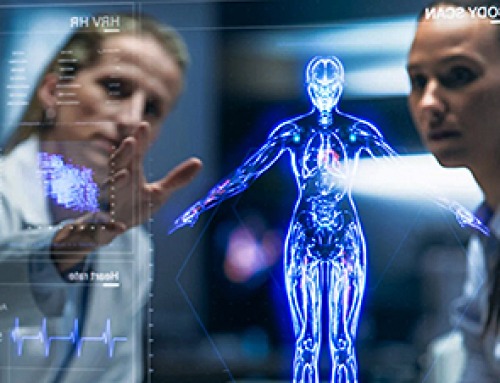
Wellness is transitioning from episodic measurements and generalized recommendations toward continuous, data-rich health ecosystems. Wearables already generate information about sleep, activity, cardiovascular function, glucose, temperature, and stress. Future ecosystems may add increasingly sophisticated biosensors, bioimplants, ingestibles, nanotechnology-enabled sensors, smart prosthetics and ambient human-computer interaction systems.
Quantum sensing could further expand this frontier by enabling extremely sensitive measurements of magnetic fields, molecular interactions and other biological phenomena. Combined with conventional sensors, these technologies could enrich the longitudinal physiological signatures used to understand resilience, recovery and deviations from an individual’s baseline.
Wellness could consequently evolve from tracking isolated metrics toward constructing dynamic biological state models capable of integrating physiology, behavior, environment and molecular health.
Quantum Computing: Integrating the Expanding Human Data Universe
The greatest opportunity may emerge from quantum computing and hybrid quantum-classical architectures.
Precision and regenerative health increasingly depend on extraordinarily heterogeneous data: genomics, epigenomics, transcriptomics, proteomics, metabolomics, microbiomics, peptidomics, single-cell and spatial omics, medical imaging, pathology, laboratory data, electronic health records, social determinants, environmental exposures and continuous digital biomarkers.
The data universe is expanding further. Bioimplants can generate longitudinal physiological and biochemical information. Nanotechnology may enable molecular-scale sensing and targeted therapeutic delivery. Brain-computer interfaces can produce high-dimensional neural signals, while broader human-computer interfaces can capture behavioral, cognitive, motor and interaction patterns.
The computational challenge is therefore no longer simply processing larger datasets. It is discovering meaningful relationships across modalities, biological scales and time.
Quantum machine learning is being investigated for feature selection, classification, clustering and high-dimensional pattern recognition. Quantum approaches are also being explored for genomic analysis, biomedical imaging and clinical risk prediction; these are explicit areas of interest in the NIH’s 2026 Quantum Computing Challenge. (National Institutes of Health (NIH))
In multi-omics, quantum methods could help explore enormous combinatorial spaces involving genes, proteins, metabolites and regulatory networks. A 2026 npj Digital Medicine perspective, for example, describes potential applications of quantum support vector machines, quantum principal-component analysis and quantum generative models across multi-omics integration, spatial transcriptomics and precision oncology. (Nature)
The longer-term opportunity is a multimodal biological intelligence architecture in which quantum, classical HPC and AI systems operate together rather than competitively.
Quantum Simulation: From Molecular Interactions to Virtual Human Biology
Quantum simulation may prove even more consequential for regenerative and longevity medicine.
Biology ultimately depends upon molecular interactions governed by quantum mechanics. Accurately modeling electronic structures, molecular binding, protein interactions and chemical reactions becomes computationally demanding as biological complexity increases. Quantum computation therefore offers a fundamentally different pathway for selected molecular simulations, optimization problems, and structural-biology challenges.
Potential applications extend across drug discovery, protein structure and function, molecular interactions, metabolic networks, and therapeutic design. Current research emphasizes hybrid quantum-classical approaches as the most realistic near-term architecture while recognizing that reproducible quantum advantage for biologically realistic problems has not yet been established. (PubMed)
The next frontier is multiscale simulation.
Imagine linking molecular simulations with genomic variation, epigenetic regulation, protein expression, metabolites, microbiome dynamics, immune activity, medical imaging and continuously acquired physiological signals. Bioimplant data could indicate how an organ or therapeutic device performs in real time. Nanotechnology-derived information could add molecular or cellular measurements. BCI data could contribute neural dynamics, while HCI data could provide behavioral and functional context.
Rather than analyzing these streams independently, future hybrid quantum-AI architectures could potentially model interactions across them.
This concept is already beginning at the cellular level. A 2026 Nature Reviews Molecular Cell Biology roadmap examines integrating quantum computing with single-cell and spatial assays to build more accurate models of cellular behavior and responses to perturbations, including potential applications to cell-based therapeutics. (Nature)
Extending this trajectory could eventually support quantum-enhanced biological digital twins: computational representations that continuously assimilate molecular, clinical, behavioral and sensor data and simulate alternative interventions. A future longevity platform might model how nutrition, exercise, sleep, medications, regenerative therapies or environmental exposures could influence an individual’s biological trajectory before an intervention occurs.
This remains a long-term vision—not a current clinical capability—but it represents a profound transition from analyzing biological data toward simulating biological possibility.
Precision Health and Longevity at Quantum Scale
For precision health, these capabilities could enable increasingly sophisticated patient stratification, biomarker discovery, therapeutic optimization, and prediction of disease trajectories. Quantum-enhanced analysis could be particularly valuable where the number of possible relationships among variables becomes extraordinarily large.
For longevity medicine, the challenge is even greater. Aging emerges through interactions among genomic instability, epigenetic alterations, mitochondrial dysfunction, impaired proteostasis, cellular senescence, inflammation, immune remodeling, microbiome changes, and deteriorating intercellular communication.
A sufficiently advanced computational architecture could potentially model these processes longitudinally rather than examining individual aging biomarkers in isolation.
Longevity could consequently evolve from measuring biological age toward modeling biological trajectories—asking not merely how old an individual appears biologically, but which interacting systems are losing resilience, why they are changing and which interventions might alter their future trajectory.
The Bioethical Frontier: Biological Identity, Autonomy and Sovereignty
These capabilities simultaneously create profound bioethical and medical-ethical challenges.
Integrating genomes, multi-omics, medical records, imaging, bioimplant signals, nanotechnology-derived molecular measurements, BCI data and behavioral HCI information could create extraordinarily detailed computational representations of individuals. Such models may eventually reveal not merely someone’s current health but also infer future disease, cognitive states, behavioral characteristics, reproductive risks, or longevity trajectories.
This creates a new ethical imperative: biological identity must be treated as a protected dimension of human identity.
Biological autonomy must extend beyond conventional informed consent. Individuals require meaningful agency over what biological information is collected, which inferences may be generated, how long those inferences persist, whether models are continuously updated, and whether data collected for wellness can later be repurposed for insurance, employment, research, or commercial profiling.
BCI data makes this boundary particularly consequential. When neural signals become computational inputs, the distinction between health data, behavioral data and potentially intimate cognitive information becomes increasingly difficult to define.
This leads directly to biological sovereignty: the right to meaningful control over the digital and computational representations of one’s biology.
Quantum capabilities also amplify cybersecurity responsibilities. Genomic, neural and longitudinal biometric information may retain sensitivity for decades. Healthcare ecosystems must therefore address harvest-now-decrypt-later threats through post-quantum cryptography, cryptographic agility, Zero Trust architectures and long-term data governance.
Medical ethics adds further obligations. Beneficence requires demonstrable health value. Non-maleficence demands safeguards against inaccurate predictions and unnecessary interventions. Autonomy requires understandable consent and meaningful choice. Justice requires preventing quantum-enabled precision and longevity medicine from becoming accessible only to privileged populations. Most importantly, computational prediction must never become biological determinism. A quantum-enhanced probability of disease, cognitive decline or longevity is not destiny and should never become justification for discrimination or diminished human agency.
From Quantum Capability to Quantum Stewardship
The quantum portfolio could ultimately allow regenerative health to sense more precisely, integrate more comprehensively, simulate more deeply and predict more intelligently. Quantum computing and simulation may help connect multi-omics with imaging, clinical records, wearables, bioimplants, nanotechnology, BCI and HCI data. Quantum sensing could expand what biology can measure. Quantum communications and post-quantum security could help protect increasingly valuable biomedical information.
Conclusion
Technological capability cannot become the sole measure of progress. The objective should be a human-centered quantum regenerative health ecosystem in which computational power advances wellness, precision health and longevity while preserving dignity, privacy, equity and agency. The defining question of this era may therefore not be how comprehensively we can model a human being. It will be whether we can do so while preserving that individual’s biological identity, biological autonomy and biological sovereignty.
That distinction will determine whether quantum-enabled regenerative health becomes simply a more powerful technological ecosystem—or a genuinely responsible architecture for human flourishing.

Prof. Dr. Ingrid Vasiliu-Feltes
Quantum & AI Governance I Deep Tech Diplomacy, Investments, Strategy & Orchestration I DT, DLT & Web 3 Architecture I Cyber-Ethics by Design

News – Curated by Amanda Scott, Alias Group Creative
Follow her on Bluesky
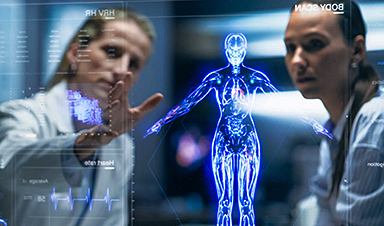
Where do nanoparticles go once they enter the body?
New international best practice guidance, co-written at ANSTO, sets out how to measure where nanoparticles like titanium dioxide end up in the body and how long they remain. The guidance has been shared by [...]
Long-Acting HIV Shots Could Solve a Major Treatment Challenge for Young People
A major African trial suggests that changing how HIV treatment is delivered could significantly improve viral suppression in adolescents. Young people with HIV were more likely to keep the virus suppressed when they received [...]

WHO Factsheets – The top 10 causes of death
In 2023, the 10 leading causes of death accounted for 33 million deaths, or 54% of the total 61 million deaths worldwide. The top global causes of death, in order of total number of lives lost, [...]
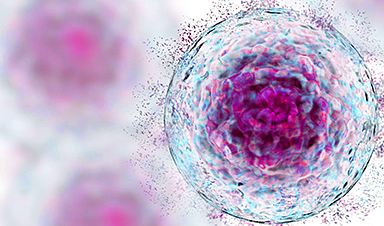
Aging Cells May Be Hiding From the Immune System – Scientists Think They Know How
Your immune system is supposed to clear out damaged cells. Researchers may have found how some of them hide and linger as the body ages. Researchers led by Cedars-Sinai Health Sciences University have identified [...]
Your Voice May Reveal How Fast Your Brain Is Aging
Researchers have developed a machine-learning “speech clock” that estimates age from subtle patterns in how people speak and what they say. It is possible that people’s voices may contain certain signals of aging that [...]
Optogenetics Pioneers Win 2026 Nobel Prize in Physiology or Medicine
The 2026 Nobel Prize in Physiology or Medicine has been awarded to Peter Hegemann, Georg Nagel, and Karl Deisseroth for the development of optogenetics, a revolutionary technology that uses light to control individual neurons [...]
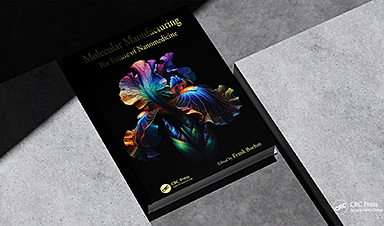
Molecular Manufacturing: The Future of Nanomedicine – From NanoappsMedical Inc.
This book explores the revolutionary potential of atomically precise manufacturing technologies to transform global healthcare, as well as practically every other sector across society. This forward-thinking volume examines how envisaged Factory@Home systems might enable the cost-effective [...]
What is ‘American Covid’ and how bad is it?
Cases of so-called ‘American Covid’ are on the rise in the UK. The strain is officially called XFG, or ‘Stratus’, and is the most common variant in North America, hence the name. It might soon [...]
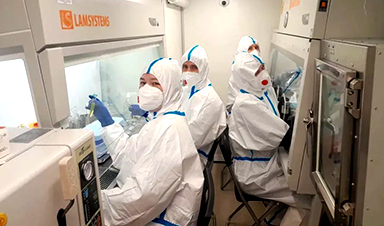
Researcher at Russian plague laboratory dies of ‘unknown’ infection
Russian authorities have imposed "anti-epidemic measures" after a laboratory worker at an institute in Siberia dedicated to studying the plague and other infectious diseases died of a mysterious illness. The researcher, a 28-year-old female [...]
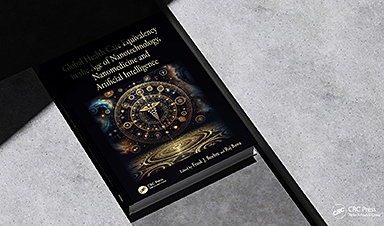
GHCE Concept
From the preface of the book Global Health Care Equivalency in the Age of Nanotechnology, Nanomedicine and Artificial Intelligence, Edited by Frank Boehm: Since the publication of my first book (Nanomedical Device and Systems [...]
A Surprising Brain Signal Could Explain Why Eating Less Protein Extends Lifespan
A new paper suggests that limiting protein intake triggers a coordinated response throughout the body that may help explain how protein restriction affects healthy aging. Animals respond to protein restriction, or reduced protein in [...]

Back and shoulder surgery is often worse than useless
Millions of operations should be scrapped SIX IN TEN Britons have surgery at some point. So do lots of Americans, at a cost of perhaps $500bn a year, a third of all spending on [...]
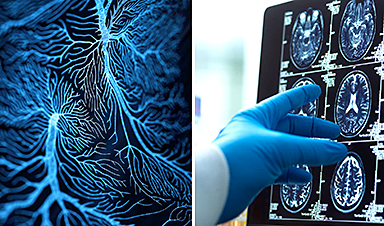
Cocaine plays with mind, hijacks brain circuit, drives increasingly rigid and repetitive behavior
Researchers have found that cocaine hijacks brain circuit, which to drive increasingly rigid and repetitive behavior. The brain circuit that normally participates in selecting natural mouth and face movements, but which becomes disproportionately engaged [...]
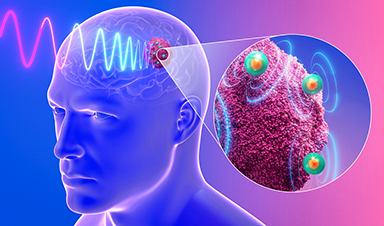
Injectable nanodevices could provide effective treatment for drug-resistant glioblastoma
The brain cancer glioblastoma is one of the most aggressive and treatment-resistant cancers known to medicine, carrying a median survival of just 12-15 months, even with the best available care. Now, researchers at the [...]
New Treatment Cuts “Bad” Cholesterol in Half for a Full Year
A single infusion of an experimental CRISPR-Cas9 therapy was reported to safely lower LDL cholesterol by 52.5% and triglycerides by 47.8%, as measured 12 months after treatment. What if one infusion could keep cholesterol [...]
Too Much RNA Can Drain a Cell’s Energy, Scientists Discover
A virus may cripple a cell’s power supply simply by producing too much of a molecule the cell needs to survive. New research from the Texas A&M College of Veterinary Medicine and Biomedical Sciences [...]