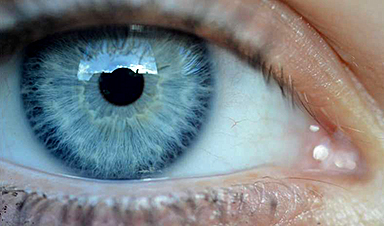
Cornell University researchers have found that the pupil is key to understanding how, and when, the brain forms strong, long-lasting memories.
By studying mice equipped with brain electrodes and tiny eye-tracking cameras, the researchers determined that new memories are being replayed and consolidated when the pupil is contracted during a substage of non-REM sleep. When the pupil is dilated, the process repeats for older memories.
The brain’s ability to separate these two substages of sleep with a previously unknown micro-structure is what prevents “catastrophic forgetting” in which the consolidation of one memory wipes out another one.
The findings could lead to better memory enhancement techniques for humans and may help computer scientists train artificial neural networks to be more efficient. The study, published in Nature, was led by assistant professors Azahara Oliva and Antonio Fernandez-Ruiz.
Over the course of a month, a group of mice was taught a variety of tasks, such as collecting water or cookie rewards in a maze. Then the mice were outfitted with brain electrodes and tiny spy cameras that hung in front of their eyes to track their pupil dynamics. One day, the mice learned a new task and when they fell asleep, the electrodes captured their neural activity and the cameras recorded the changes to their pupils.
“Non-REM sleep is when the actual memory consolidation happens, and these moments are very, very short periods of time undetectable by humans, like 100 milliseconds,” Oliva said. “How does the brain distribute these screenings of memory that are very fast and very short throughout the overall night? And how does that separate the new knowledge coming in, in a way that it doesn’t interfere with old knowledge that we already have in our minds?”
The recordings showed that the temporal structure of sleeping mice is more varied, and more akin to the sleep stages in humans, than previously thought. By interrupting the mice‘s sleep at different moments and later testing how well they recalled their learned tasks, the researchers were able to parse the processes.
When a mouse enters a substage of non-REM sleep, its pupil shrinks, and it’s here the recently learned tasks—i.e., the new memories—are being reactivated and consolidated while previous knowledge is not. Conversely, older memories are replayed and integrated when the pupil is dilated.
“It’s like new learning, old knowledge, new learning, old knowledge, and that is fluctuating slowly throughout the sleep,” Oliva said. “We are proposing that the brain has this intermediate timescale that separates the new learning from the old knowledge.”
More information: Sleep micro-structure organizes memory replay, Nature (2024). DOI: 10.1038/s41586-024-08340-w

News
Largest-Ever Physics Survey Raises New Doubts About Our Model of the Universe
Physicists around the world remain deeply divided on key mysteries of the universe, from dark matter to quantum gravity. The standard cosmological model failed to gain majority support, and no leading theory dominated the [...]

Scientists Just Overturned a 100-Year-Old Belief About Bacteria in the Lungs
New findings raise questions about the role of microbes living in the lungs. More than 35 trillion bacteria live throughout the human body, forming microbiomes in the gut, mouth, lungs, skin, and urogenital tract. [...]
GHCE Concept
From the preface of the book Global Health Care Equivalency in the Age of Nanotechnology, Nanomedicine and Artificial Intelligence, Edited by Frank Boehm: Since the publication of my first book (Nanomedical Device and Systems [...]

Novartis, Ionis drug failure spurs questions
Pelacarsen didn’t protect heart health despite lowering levels of a protein particle, “Lp(a),” in a large clinical trial — a result with important implications for cardiovascular drug research. Dive Brief: An RNA drug from [...]
New injectable treatment helps the brain rebuild after stroke
Biomedical engineers at Duke University have created an injectable biomaterial that may help the brain recover from damage left behind by an ischemic stroke. In experiments with mice, the material transformed the cavity created [...]
Scientists Discover a Hidden “Immune Organ” Inside the Skull
Researchers discovered lymph node-like immune hubs inside skull bone marrow that appear to act as rapid-response centers for the brain. For decades, the brain was thought to operate largely apart from the immune system. [...]

Engineered tRNAs and lipid nanoparticles target nonsense mutation cystic fibrosis
Researchers have developed a potential new approach for treating a form of cystic fibrosis caused by so-called nonsense mutations, combining chemically modified transfer RNAs with lipid nanoparticles designed to deliver the therapy directly to [...]
New pancreatic cancer drug carries a $39,800 monthly list price
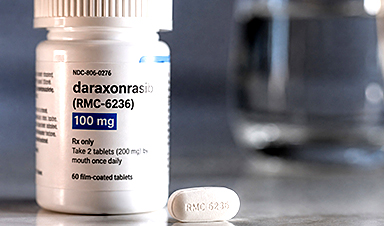
A groundbreaking treatment for one of the most common forms of pancreatic cancer has been approved in pill form by the FDA. Revolution Medicines’ oral tablet daraxonrasib, branded as Rasonque, reduced the risk of [...]
Researchers Have Discovered a New Way To Reduce Chronic Nerve Pain
A cancer-linked protein called BRAF may help drive chronic nerve pain, and existing cancer drugs targeting it reduced pain sensitivity in preclinical models. Chronic nerve pain can persist long after an injury and often [...]

Our books now available worldwide!
Online Sellers other than Amazon, Routledge, and IOPP Indigo Global Health Care Equivalency in the Age of Nanotechnology, Nanomedicine and Artifcial Intelligence Global Health Care Equivalency In The Age Of Nanotechnology, Nanomedicine And Artificial [...]

Quantum-Enabled Regenerative Health: Reimagining Wellness, Precision Health and Longevity Medicine
Introduction Healthcare is approaching a frontier where the quantum portfolio could influence not only how disease is diagnosed and treated, but how health itself is measured, modeled, predicted and preserved. Quantum computing, quantum simulation, [...]

FDA Clears First-of-Its-Kind Nonmedication Treatment for PTSD
The FDA has cleared a system that uses brain activity data to personalize magnetic stimulation for PTSD, adding a new nonmedication treatment option. Every day in the United States, approximately 17.5 veterans die by suicide, [...]

FDA approves breakthrough drug to treat advanced pancreatic cancer
The Food and Drug Administration (FDA) approved on Wednesday a drug that could extend the survival of those with metastatic pancreatic cancer. The drug, called daraxonrasib, will be sold under the brand name Rasonque [...]

AI Decodes a Hidden DNA Signal Linked to Disease-Causing Mutations
Machine learning identifies the likely “initiator” and enables new predictions about DNA mutations that can cause disease. Every human cell depends on tens of thousands of genes being switched on at the right time [...]

Pope Leo Urges Global Response to Congo’s Deadliest Ebola Outbreak
Pope Leo called for international action to address the Ebola outbreak in the Democratic Republic of Congo. The epidemic has claimed over 2,500 lives and is the nation's largest recorded outbreak. The Pope emphasized [...]

Is there a summer COVID-19 surge this year? Yep, it’s ramping up again
Hantavirus. Ebola. West Nile. Measles. And, of course, cyclospora — that stomach parasite making people miserable across the country. Americans have plenty to worry about this summer. But remember COVID-19? It may not be [...]