Using mRNA tailored to each patient’s tumor, the vaccine may have staved off the return of one of the deadliest forms of cancer in half of those who received it.
Five years ago, a small group of cancer scientists meeting at a restaurant in a deconsecrated church hospital in Mainz, Germany, drew up an audacious plan: They would test their novel cancer vaccine against one of the most virulent forms of the disease, a cancer notorious for roaring back even in patients whose tumors had been removed.
The vaccine might not stop those relapses, some of the scientists figured. But patients were desperate. And the speed with which the disease, pancreatic cancer, often recurred could work to the scientists’ advantage: For better or worse, they would find out soon whether the vaccine helped.
On Wednesday, the scientists reported results that defied the long odds. The vaccine provoked an immune response in half of the patients treated, and those people showed no relapse of their cancer during the course of the study, a finding that outside experts described as extremely promising.
The study, published in Nature, was a landmark in the yearslong movement to make cancer vaccines tailored to the tumors of individual patients.
Researchers at Memorial Sloan Kettering Cancer Center in New York, led by Dr. Vinod Balachandran, extracted patients’ tumors and shipped samples of them to Germany. There, scientists at BioNTech, the company that made a highly successful Covid vaccine with Pfizer, analyzed the genetic makeup of certain proteins on the surface of the cancer cells.
“This is the first demonstrable success — and I will call it a success, despite the preliminary nature of the study — of an mRNA vaccine in pancreatic cancer,” said Dr. Anirban Maitra, a specialist in the disease at the University of Texas MD Anderson Cancer Center, who was not involved in the study. “By that standard, it’s a milestone.”
The study was small: Only 16 patients, all of them white, were given the vaccine, part of a treatment regimen that also included chemotherapy and a drug intended to keep tumors from evading people’s immune responses. And the study could not entirely rule out factors other than the vaccine having contributed to better outcomes in some patients.
“It’s relatively early days,” said Dr. Patrick Ott of the Dana-Farber Cancer Institute.
Beyond that, “cost is a major barrier for these types of vaccines to be more broadly utilized,” said Dr. Neeha Zaidi, a pancreatic cancer specialist at the Johns Hopkins University School of Medicine. That could potentially create disparities in access.
Since the beginning of the study, in December 2019, BioNTech has shortened the process to under six weeks, said Dr. Ugur Sahin, a co-founder of the company, who worked on the study. Eventually, the company intends to be able to make cancer vaccines in four weeks.
And since it first began testing the vaccines about a decade ago, BioNTech has lowered the cost from roughly $350,000 per dose to less than $100,000 by automating parts of production, Dr. Sahin said.
A personalized mRNA cancer vaccine developed by Moderna and Merck reduced the risk of relapse in patients who had surgery for melanoma, a type of skin cancer, the companies announced last month. But the latest study set the bar higher by targeting pancreatic cancer, which is thought to have fewer of the genetic changes that would make it ripe for vaccine treatments.
In patients who did not appear to respond to the vaccine, the cancer tended to return around 13 months after surgery. Patients who did respond, though, showed no signs of relapse during the roughly 18 months they were tracked.
Intriguingly, one patient showed evidence of a vaccine-activated immune response in the liver after an unusual growth developed there. The growth later disappeared in imaging tests.
“It’s anecdotal, but it’s nice confirmatory data that the vaccine can get into these other tumor regions,” said Dr. Nina Bhardwaj, who studies cancer vaccines at the Icahn School of Medicine at Mount Sinai.
Scientists have struggled for decades to create cancer vaccines, in part because they trained the immune system on proteins found on tumors and normal cells alike.
Tailoring vaccines to mutated proteins found only on cancer cells, though, potentially helped provoke stronger immune responses and opened new avenues for treating any cancer patient, said Ira Mellman, vice president of cancer immunology at Genentech, which developed the pancreatic cancer vaccine with BioNTech.
“Just establishing the proof of concept that vaccines in cancer can actually do something after, I don’t know, thirty years of failure is probably not a bad thing,” Dr. Mellman said. “We’ll start with that.”

News
Cancer’s Hidden Antioxidant Shield Helps It Escape the Immune System
Blocking an antioxidant protein that tumors use to suppress immune attacks improved cancer immunotherapy responses in mice. Cancer cells can release antioxidants that interfere with the immune cells trying to kill them. Researchers have [...]

Scientists Find a Berry Compound That Helps Muscle Cells Burn Fat
Pterostilbene, a compound found naturally in some foods, affects how skeletal muscles process fats by stabilizing a protein called PPARδ and increasing its signaling activity. Pterostilbene, a natural compound found in blueberries, grapes, and [...]
Two Hidden Forces Help Build the Human Brain Before Birth
Scientists have uncovered two surprising forces that help guide how the human brain forms before birth. Before birth, the human brain is shaped in large part by an unusual class of stem cells known [...]
Researchers Uncover a Hidden Trigger Behind Chronic Inflammation
The findings offer new insights that could help guide the development of future therapies. A protein called human resistin may help flip on one of the immune system’s most powerful inflammatory switches. Researchers at [...]
Scientists Have Uncovered Previously Hidden Microbial Activity on Human Skin
The most abundant microbes on your skin may not be the ones doing most of the work. Human skin supports vast communities of bacteria, fungi, and viruses that can influence its protective barrier, immune [...]
Brazilian Tree Compounds Fight COVID-19 on Multiple Fronts
Scientists found compounds in a Brazilian tree that hit SARS-CoV-2 on multiple fronts, revealing a promising new lead in the search for COVID-19 treatments. Researchers have found that galloylquinic acids extracted from the leaves [...]
Cutting Two Amino Acids Slowed Prostate Cancer in Mice
A newly identified link between amino acid metabolism and cholesterol production may help prostate tumors adapt to hormone therapy. Prostate cancer can find ways around treatments designed to deprive tumors of the hormones they [...]
Largest-Ever Physics Survey Raises New Doubts About Our Model of the Universe
Physicists around the world remain deeply divided on key mysteries of the universe, from dark matter to quantum gravity. The standard cosmological model failed to gain majority support, and no leading theory dominated the [...]
Scientists Just Overturned a 100-Year-Old Belief About Bacteria in the Lungs
New findings raise questions about the role of microbes living in the lungs. More than 35 trillion bacteria live throughout the human body, forming microbiomes in the gut, mouth, lungs, skin, and urogenital tract. [...]

GHCE Concept
From the preface of the book Global Health Care Equivalency in the Age of Nanotechnology, Nanomedicine and Artificial Intelligence, Edited by Frank Boehm: Since the publication of my first book (Nanomedical Device and Systems [...]

Novartis, Ionis drug failure spurs questions
Pelacarsen didn’t protect heart health despite lowering levels of a protein particle, “Lp(a),” in a large clinical trial — a result with important implications for cardiovascular drug research. Dive Brief: An RNA drug from [...]
New injectable treatment helps the brain rebuild after stroke
Biomedical engineers at Duke University have created an injectable biomaterial that may help the brain recover from damage left behind by an ischemic stroke. In experiments with mice, the material transformed the cavity created [...]

Scientists Discover a Hidden “Immune Organ” Inside the Skull
Researchers discovered lymph node-like immune hubs inside skull bone marrow that appear to act as rapid-response centers for the brain. For decades, the brain was thought to operate largely apart from the immune system. [...]
Engineered tRNAs and lipid nanoparticles target nonsense mutation cystic fibrosis
Researchers have developed a potential new approach for treating a form of cystic fibrosis caused by so-called nonsense mutations, combining chemically modified transfer RNAs with lipid nanoparticles designed to deliver the therapy directly to [...]
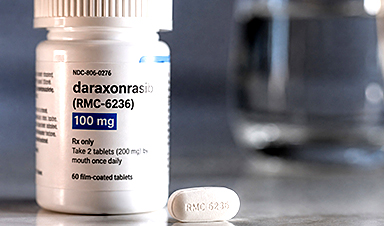
New pancreatic cancer drug carries a $39,800 monthly list price
A groundbreaking treatment for one of the most common forms of pancreatic cancer has been approved in pill form by the FDA. Revolution Medicines’ oral tablet daraxonrasib, branded as Rasonque, reduced the risk of [...]
Researchers Have Discovered a New Way To Reduce Chronic Nerve Pain
A cancer-linked protein called BRAF may help drive chronic nerve pain, and existing cancer drugs targeting it reduced pain sensitivity in preclinical models. Chronic nerve pain can persist long after an injury and often [...]