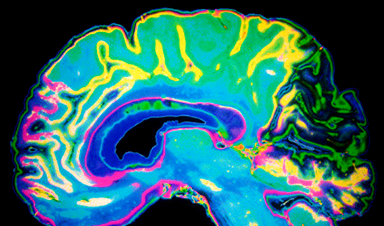
Scientists at the Swiss Light Source SLS have succeeded in mapping a piece of brain tissue in 3D at unprecedented resolution using X-rays, non-destructively. The breakthrough overcomes a long-standing technological barrier that had limited the use of X-rays for such studies.
With the SLS upgrade now complete, the path lies open to imaging much larger samples of brain tissue at high resolution – and to gaining new understanding of its complex architecture. The study, a collaboration between PSI and the Francis Crick Institute in the UK, is published in Nature Methods.
The brain is one of the most complex biological systems in the world.”
Adrian Wanner, Group Leader, Structural Neurobiology Research Group, Paul Scherrer Institute PSI
How neurons are wired together is what his group is trying to unravel – a field known as connectomics.
Let’s talk numbers: in one cubic millimetre of brain tissue there are about 100 000 neurons, connected through about 700 million synapses and 4 kilometres of ‘cabling’.
How these neurons are connected to each other through synapses determines how the brain works. It is linked to diseases such as Alzheimer’s. Yet the complexity of this wiring in three dimensions is extraordinarily difficult to study. “If you take a neural network with 17 neurons, there are more ways to connect them than atoms in the universe, says Wanner. “So you can’t just try to model it. We need to measure it.”
It is on the backdrop of this immense problem that a major technological advance by Wanner and colleagues at the Swiss Light Source SLS – in collaboration with the Francis Crick Institute in the UK – stands.
X-rays peer into the ultrastructure
Currently, the go-to technique for this type of imaging is volume electron microscopy. As electrons penetrate only shallowly, cubic millimetres of brain tissues must be sliced into tens of thousands of ultra-thin sections. These are then imaged individually and computationally reconstructed to map the 3D connectivity of the neurons through the slices – a process that is very error prone and inevitably results in loss of information.
A solution lies with X-rays. These can penetrate millimetres – or even centimetres – and thus could in principle image chunks of brain tissue without sectioning.
At the coherent small-angle X-ray scattering beamline of the SLS, known for short as cSAXS, high-brilliance X-rays have enabled computer chips to be imaged to a resolution of just 4 nanometres – a world record. “But for biological tissues, the problem is contrast,” explains Ana Diaz, scientist at cSAXS. “Computer chips are made of copper wires that naturally have a high contrast to their embedding material. When we have the building blocks of life – proteins, lipids and so on, against a matrix dominated by water, the X-ray interaction is very weak and it’s harder to achieve high resolution.”
To overcome these challenges of contrast, scientists stain the brain tissue using heavy metals. However, these absorb the X-rays, leading to another problem: the sample deforms. Embedding materials can stabilise the sample – but these also possess the same problems that they deform in the presence of X-rays, bubbling and destroying the fine ultrastructure of the brain tissue.
A resin for the aerospace industry
To overcome this problem, Wanner, Diaz and colleagues came up with a new approach. The main development is an epoxy resin that is still able to infiltrate the biological tissue while offering exceptional radiation tolerance – a material usually used in aerospace and nuclear industries and in particle accelerators.
They complement this with a specially designed stage that allows them to image the samples whilst cooled to -178 degrees Celsius with liquid nitrogen. Finally, a reconstruction algorithm compensates for small amounts of deformation that still do occur.
With this approach, the researchers could study pieces of mouse brain tissue up to 10 microns thick, achieving a resolution of 38 nanometres in three dimensions. “We believe this marks a record resolution using X-ray imaging on an extended biological tissue,” says Diaz.
At this resolution, they could reliably identify synapses and other features of the neurons and their connections, such as axons and dendrites. “This is not breakthrough information on the brain: it matches the best results with state-of-the-art volume electron microscopy – the current gold standard,” adds Wanner. “What’s exciting is that this marks the start of what’s to come.”
Coherent X-rays set for a boost with SLS upgrade
Although a 10-micron thick piece of brain tissue may still sound tiny, this is already orders of magnitude thicker than the slivers studied with electron microscopy. Currently a limiting factor on sample size is the acquisition time: taking enough data to reconstruct a high-resolution image can take days. This bottleneck is related to the X-rays.
The researchers are using a technique known as ptychography – a type of imaging that doesn’t use lenses but relies on coherent X-rays. “Coherence is exactly where we are set to gain with the SLS upgrade,” says Diaz.
The SLS has just completed a comprehensive upgrade to become a 4th-generation synchrotron – the most advanced type of synchrotron in the world. The technological improvements mean that, at the cSAXS beamline, ptychography experiments will benefit from up to one hundred times higher flux of coherent X-rays.
“With one hundred times more X-ray photons hitting our sample every second, we will be able to – in principle – either image the sample one hundred times faster or image volumes one hundred times larger,” explains Diaz. “In practice, we will need to learn how to do this in an efficient way. But the potential is there.”
The publication coincides with an important milestone at the beamline: in July 2025, the first X-rays were seen at cSAXS following the upgrade. Now that technical barriers to using X-ray ptychography for biological imaging have been overcome, the way lies open to studying much larger samples of brain tissue in 3D at high resolution.

News

Scientists Discover Aspirin May Slash Dementia Risk by 70% – but Only for Certain People
Aspirin was linked to a sharply lower dementia risk in some older adults, and their genes may hold the clue. A Monash University analysis found that older adults with a particular genetic profile had [...]
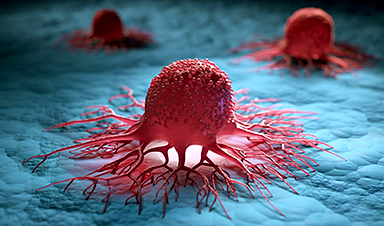
Inflammation May Awaken Dormant Cancer Cells Years After Treatment
The body’s response to inflammation may disturb cancer cells that have been lying silent for years, giving them an opportunity to grow again. Researchers at the Francis Crick Institute have found that gut inflammation [...]

Where do nanoparticles go once they enter the body?
New international best practice guidance, co-written at ANSTO, sets out how to measure where nanoparticles like titanium dioxide end up in the body and how long they remain. The guidance has been shared by [...]

Long-Acting HIV Shots Could Solve a Major Treatment Challenge for Young People
A major African trial suggests that changing how HIV treatment is delivered could significantly improve viral suppression in adolescents. Young people with HIV were more likely to keep the virus suppressed when they received [...]

WHO Factsheets – The top 10 causes of death
In 2023, the 10 leading causes of death accounted for 33 million deaths, or 54% of the total 61 million deaths worldwide. The top global causes of death, in order of total number of lives lost, [...]
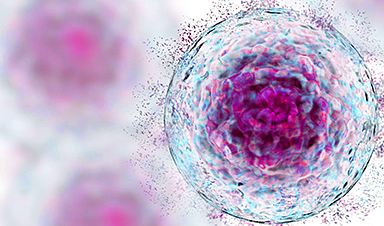
Aging Cells May Be Hiding From the Immune System – Scientists Think They Know How
Your immune system is supposed to clear out damaged cells. Researchers may have found how some of them hide and linger as the body ages. Researchers led by Cedars-Sinai Health Sciences University have identified [...]

Your Voice May Reveal How Fast Your Brain Is Aging
Researchers have developed a machine-learning “speech clock” that estimates age from subtle patterns in how people speak and what they say. It is possible that people’s voices may contain certain signals of aging that [...]

Optogenetics Pioneers Win 2026 Nobel Prize in Physiology or Medicine
The 2026 Nobel Prize in Physiology or Medicine has been awarded to Peter Hegemann, Georg Nagel, and Karl Deisseroth for the development of optogenetics, a revolutionary technology that uses light to control individual neurons [...]

Molecular Manufacturing: The Future of Nanomedicine – From NanoappsMedical Inc.
This book explores the revolutionary potential of atomically precise manufacturing technologies to transform global healthcare, as well as practically every other sector across society. This forward-thinking volume examines how envisaged Factory@Home systems might enable the cost-effective [...]

What is ‘American Covid’ and how bad is it?
Cases of so-called ‘American Covid’ are on the rise in the UK. The strain is officially called XFG, or ‘Stratus’, and is the most common variant in North America, hence the name. It might soon [...]
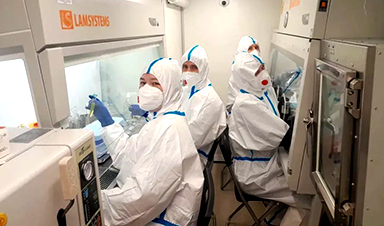
Researcher at Russian plague laboratory dies of ‘unknown’ infection
Russian authorities have imposed "anti-epidemic measures" after a laboratory worker at an institute in Siberia dedicated to studying the plague and other infectious diseases died of a mysterious illness. The researcher, a 28-year-old female [...]

GHCE Concept
From the preface of the book Global Health Care Equivalency in the Age of Nanotechnology, Nanomedicine and Artificial Intelligence, Edited by Frank Boehm: Since the publication of my first book (Nanomedical Device and Systems [...]

A Surprising Brain Signal Could Explain Why Eating Less Protein Extends Lifespan
A new paper suggests that limiting protein intake triggers a coordinated response throughout the body that may help explain how protein restriction affects healthy aging. Animals respond to protein restriction, or reduced protein in [...]

Back and shoulder surgery is often worse than useless
Millions of operations should be scrapped SIX IN TEN Britons have surgery at some point. So do lots of Americans, at a cost of perhaps $500bn a year, a third of all spending on [...]
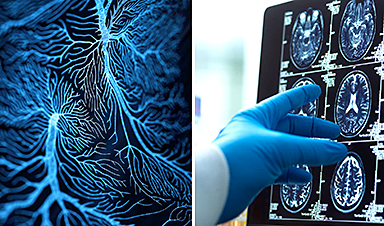
Cocaine plays with mind, hijacks brain circuit, drives increasingly rigid and repetitive behavior
Researchers have found that cocaine hijacks brain circuit, which to drive increasingly rigid and repetitive behavior. The brain circuit that normally participates in selecting natural mouth and face movements, but which becomes disproportionately engaged [...]
Injectable nanodevices could provide effective treatment for drug-resistant glioblastoma
The brain cancer glioblastoma is one of the most aggressive and treatment-resistant cancers known to medicine, carrying a median survival of just 12-15 months, even with the best available care. Now, researchers at the [...]