A study aiming to develop a lipid nanoparticles (LNP) platform for treating oral squamous cell carcinoma (OSCC) utilizing p53 mRNA was presented at the 102nd General Session of the IADR, which was held in conjunction with the 53rd Annual Meeting of the American Association for Dental, Oral, and Craniofacial Research and the 48th Annual Meeting of the Canadian Association for Dental Research, on March 13-16, 2024, in New Orleans, LA, U.S..
The abstract, “mRNA Lipid Nanoparticles for Next-Generation Oral Cancer Tumor Suppressor Therapy” was presented during the “AADOCR Hatton: Post-doctoral” Poster Session that took place on Friday, March 15, 2024 at 3:45 p.m. Central Standard Time (UTC-6).
The study, by Marshall Scott Padilla of University of Pennsylvania, Philadelphia, U.S., formulated a library of LNPs with luciferase mRNA and tested in CAL-27 cells, a model OSCC line. The LNPs were also injected intravenously into C57BL/6 mice to examine their propensity for off-target liver transfection. The LNPs that had high luminescence in CAL-27 cells and low liver transfection progressed to the next round of screening.
Then, the top LNPs were evaluated for transfection after intratumoral administration in a CAL-27 xenograft model. E10i-494 demonstrated the highest tumor luminescence and was picked as the lead candidate. This LNP was then evaluated in an orthotopic CAL-27 murine model. Lastly, the lead LNP was reformulated with p53 mRNA, and the tumor-suppress-mediated toxicity was evaluated in CAL-27 cells.
After two rounds of screening, the LNP E10i-494 demonstrated immense mRNA transfection in vitro and in two murine tumor models. Additionally, the LNP had low levels of liver transfection, showcasing a promising safety profile. In the orthotopic model, the LNP successfully entered and transfected lymph nodes, which is essential for preventing tumor metastasis. E10i-494 also demonstrated potent cell killing after being reformulated with p53 mRNA.
The study concluded that the first LNP for the oral cavity has been optimized and its potential for p53-based OSCC therapy has been demonstrated.
Provided by International Association for Dental, Oral, and Craniofacial Research

News
Two Hidden Forces Help Build the Human Brain Before Birth
Scientists have uncovered two surprising forces that help guide how the human brain forms before birth. Before birth, the human brain is shaped in large part by an unusual class of stem cells known [...]
Researchers Uncover a Hidden Trigger Behind Chronic Inflammation
The findings offer new insights that could help guide the development of future therapies. A protein called human resistin may help flip on one of the immune system’s most powerful inflammatory switches. Researchers at [...]
Scientists Have Uncovered Previously Hidden Microbial Activity on Human Skin
The most abundant microbes on your skin may not be the ones doing most of the work. Human skin supports vast communities of bacteria, fungi, and viruses that can influence its protective barrier, immune [...]
Brazilian Tree Compounds Fight COVID-19 on Multiple Fronts
Scientists found compounds in a Brazilian tree that hit SARS-CoV-2 on multiple fronts, revealing a promising new lead in the search for COVID-19 treatments. Researchers have found that galloylquinic acids extracted from the leaves [...]
Cutting Two Amino Acids Slowed Prostate Cancer in Mice
A newly identified link between amino acid metabolism and cholesterol production may help prostate tumors adapt to hormone therapy. Prostate cancer can find ways around treatments designed to deprive tumors of the hormones they [...]

Largest-Ever Physics Survey Raises New Doubts About Our Model of the Universe
Physicists around the world remain deeply divided on key mysteries of the universe, from dark matter to quantum gravity. The standard cosmological model failed to gain majority support, and no leading theory dominated the [...]

Scientists Just Overturned a 100-Year-Old Belief About Bacteria in the Lungs
New findings raise questions about the role of microbes living in the lungs. More than 35 trillion bacteria live throughout the human body, forming microbiomes in the gut, mouth, lungs, skin, and urogenital tract. [...]

GHCE Concept
From the preface of the book Global Health Care Equivalency in the Age of Nanotechnology, Nanomedicine and Artificial Intelligence, Edited by Frank Boehm: Since the publication of my first book (Nanomedical Device and Systems [...]

Novartis, Ionis drug failure spurs questions
Pelacarsen didn’t protect heart health despite lowering levels of a protein particle, “Lp(a),” in a large clinical trial — a result with important implications for cardiovascular drug research. Dive Brief: An RNA drug from [...]
New injectable treatment helps the brain rebuild after stroke
Biomedical engineers at Duke University have created an injectable biomaterial that may help the brain recover from damage left behind by an ischemic stroke. In experiments with mice, the material transformed the cavity created [...]

Scientists Discover a Hidden “Immune Organ” Inside the Skull
Researchers discovered lymph node-like immune hubs inside skull bone marrow that appear to act as rapid-response centers for the brain. For decades, the brain was thought to operate largely apart from the immune system. [...]

Engineered tRNAs and lipid nanoparticles target nonsense mutation cystic fibrosis
Researchers have developed a potential new approach for treating a form of cystic fibrosis caused by so-called nonsense mutations, combining chemically modified transfer RNAs with lipid nanoparticles designed to deliver the therapy directly to [...]
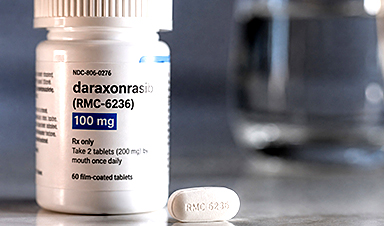
New pancreatic cancer drug carries a $39,800 monthly list price
A groundbreaking treatment for one of the most common forms of pancreatic cancer has been approved in pill form by the FDA. Revolution Medicines’ oral tablet daraxonrasib, branded as Rasonque, reduced the risk of [...]
Researchers Have Discovered a New Way To Reduce Chronic Nerve Pain
A cancer-linked protein called BRAF may help drive chronic nerve pain, and existing cancer drugs targeting it reduced pain sensitivity in preclinical models. Chronic nerve pain can persist long after an injury and often [...]

Our books now available worldwide!
Online Sellers other than Amazon, Routledge, and IOPP Indigo Global Health Care Equivalency in the Age of Nanotechnology, Nanomedicine and Artifcial Intelligence Global Health Care Equivalency In The Age Of Nanotechnology, Nanomedicine And Artificial [...]

Quantum-Enabled Regenerative Health: Reimagining Wellness, Precision Health and Longevity Medicine
Introduction Healthcare is approaching a frontier where the quantum portfolio could influence not only how disease is diagnosed and treated, but how health itself is measured, modeled, predicted and preserved. Quantum computing, quantum simulation, [...]