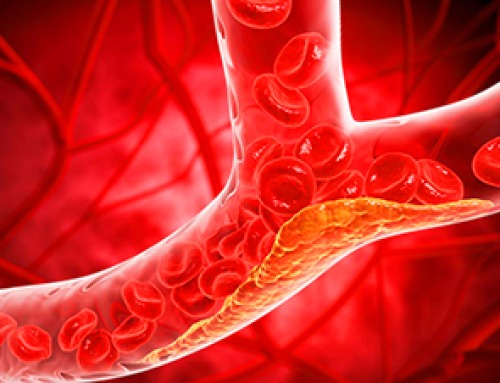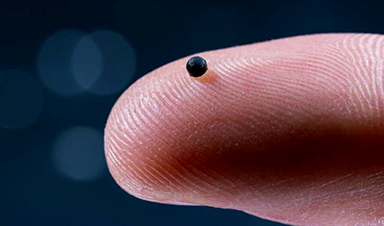
Every year, 12 million people worldwide suffer a stroke; many die or are permanently impaired. Currently, drugs are administered to dissolve the thrombus that blocks the blood vessel. These drugs spread throughout the entire body, meaning a high dose must be administered to ensure that the necessary amount reaches the thrombus. This can cause serious side effects, such as internal bleeding.
Since medicines are often only needed in specific areas of the body, medical research has long been searching for a way to use microrobots to deliver pharmaceuticals to where they need to be: in the case of a stroke, directly to the stroke-related thrombus.
Now, a team of researchers at ETH Zurich has made major breakthroughs on several levels. They have published their findings in Science.
Precision nanoparticles required
The microrobot the researchers use comprises a proprietary spherical capsule made of a soluble gel shell that they can control with magnets and guide through the body to its destination. Iron oxide nanoparticles in the capsule provide the magnetic properties.
“Because the vessels in the human brain are so small, there is a limit to how big the capsule can be. The technical challenge is to ensure that a capsule this small also has sufficient magnetic properties,” explains Fabian Landers, lead author of the paper and a postdoctoral researcher at the Multi-Scale Robotics Lab at ETH Zurich.
The microrobot also needs a contrast agent to enable doctors to track via X-ray how it is moving through the vessels. The researchers focused on tantalum nanoparticles, which are commonly used in medicine but are more challenging to control due to their greater density and weight.
“Combining magnetic functionality, imaging visibility and precise control in a single microrobot required perfect synergy between materials science and robotics engineering, which has taken us many years to successfully achieve,” says ETH Professor Bradley Nelson, who has been researching microrobots for decades.
Professor Salvador Pané, a chemist at the Institute of Robotics and Intelligent Systems, and his team developed precision iron oxide nanoparticles that enable this delicate balancing act.
Special catheter releases drug-loaded capsule
The microrobots also contain the active ingredient they need to deliver. The researchers successfully loaded the microrobots with common drugs for a variety of applications—in this case, a thrombus-dissolving agent, an antibiotic or tumor medication.
These drugs were released by a high-frequency magnetic field that heats the magnetic nanoparticles, dissolving the gel shell and the microrobot.
The researchers used a two-step strategy to bring the microrobot close to its target: first, they injected the microrobot into the blood or cerebrospinal fluid via a catheter. They went on to use an electromagnetic navigation system to guide the magnetic microrobot to the target location.
The catheter’s design is based on a commercially available model with an internal guidewire connected to a flexible polymer gripper. When pushed beyond the external guide, the polymer gripper opens and releases the microrobot.
Swimming against the current—navigating blood vessels
To precisely steer the microrobots, the researchers developed a modular electromagnetic navigation system suitable for use in the operating theater.
“The speed of blood flow in the human arterial system varies a lot depending on location. This makes navigating a microrobot very complex,” explains Nelson. The researchers combined three different magnetic navigation strategies that allowed them to navigate in all regions of the arteries of the head.
This allows them to roll the capsule along the vessel wall using a rotating magnetic field. The capsule can be guided to its target with enormous precision at a speed of 4 millimeters per second.
In a different model, the capsule is moved using a magnetic field gradient: the magnetic field is stronger in one place than in another. This pulls the microrobot in the vessel towards the stronger field. The capsule can even go against the current—and at a considerable flow velocity of over 20 centimeters per second.”It’s remarkable how much blood flows through our vessels and at such high speed. Our navigation system must be able to withstand all of that,” says Landers.
When the microrobot reaches a junction in the vessels that would be difficult to maneuver through, in-flow navigation comes into play. The magnetic gradient is directed against the wall of the vessel in such a way that the capsule is carried along into the correct vessel.
By integrating these three navigation strategies, the researchers gain effective control over the microrobots across various flow conditions and anatomical scenarios. In more than 95% of the cases tested, the capsule successfully delivered the drug to the correct location.
“Magnetic fields and gradients are ideal for minimally invasive procedures because they penetrate deep into the body and—at least at the strengths and frequencies we use—have no detrimental effect on the body,” explains Nelson.
Innovation not stopping at robotics
To test the microrobots and their navigation in a realistic environment, the researchers developed silicone models that accurately replicate the vessels of patients and animals. These vessel models are so realistic that they are now being used in medical training and are being marketed by ETH spin-off Swiss Vascular.
“The models are crucial for us, as we practiced extensively to optimize the strategy and its components. You can’t do that with animals,” explains Pané. In the model, the researchers were able to target and dissolve a blood clot.
After numerous successful trials in the model, the team sought to demonstrate what the microrobot could achieve under real clinical conditions. First, they were able to demonstrate in pigs that all three navigation methods work and that the microrobot remains clearly visible throughout the entire procedure. Second, they navigated microrobots through the cerebral fluid of a sheep.
Landers is particularly pleased. “This complex anatomical environment has enormous potential for further therapeutic interventions, which is why we were so excited that the microrobot was able to find its way in this environment too.”
Applications beyond vascular occlusions
In addition to treating thrombosis, these new microrobots could also be used for localized infections or tumors. At every stage of development, the research team has remained focused on their goal: to ensure that everything they create is ready for use in operating theaters as soon as possible. The next goal is to begin human clinical trials as quickly as possible.
Speaking about what motivates the whole team, Landers says, “Doctors are already doing an incredible job in hospitals. What drives us is the knowledge that we have a technology that enables us to help patients faster and more effectively and to give them new hope through innovative therapies.”
More information: Fabian C. Landers et al, Clinically ready magnetic microrobots for targeted therapies, Science (2025). DOI: 10.1126/science.adx1708. www.science.org/doi/10.1126/science.adx1708
Journal information: Science

News
Cocaine plays with mind, hijacks brain circuit, drives increasingly rigid and repetitive behavior
Researchers have found that cocaine hijacks brain circuit, which to drive increasingly rigid and repetitive behavior. The brain circuit that normally participates in selecting natural mouth and face movements, but which becomes disproportionately engaged [...]
Injectable nanodevices could provide effective treatment for drug-resistant glioblastoma
The brain cancer glioblastoma is one of the most aggressive and treatment-resistant cancers known to medicine, carrying a median survival of just 12-15 months, even with the best available care. Now, researchers at the [...]
New Treatment Cuts “Bad” Cholesterol in Half for a Full Year
A single infusion of an experimental CRISPR-Cas9 therapy was reported to safely lower LDL cholesterol by 52.5% and triglycerides by 47.8%, as measured 12 months after treatment. What if one infusion could keep cholesterol [...]

Too Much RNA Can Drain a Cell’s Energy, Scientists Discover
A virus may cripple a cell’s power supply simply by producing too much of a molecule the cell needs to survive. New research from the Texas A&M College of Veterinary Medicine and Biomedical Sciences [...]

West African scientists warn of weakening health systems and urge stronger outbreak detection
LOME, Togo (AP) — West African laboratory scientists called on governments Friday to strengthen capacity to detect disease outbreaks to avoid another major outbreak, saying health systems across the region are becoming weaker. Participants [...]

A Little-Known Protein Could Point to a New Way To Treat Alzheimer’s
A study suggests that increasing SORLA protein levels could help treat Alzheimer’s disease and other disorders involving tau protein. Increasing SORLA, a protein with a protective role in the brain, helped mice withstand damage [...]
Cancer’s Hidden Antioxidant Shield Helps It Escape the Immune System
Blocking an antioxidant protein that tumors use to suppress immune attacks improved cancer immunotherapy responses in mice. Cancer cells can release antioxidants that interfere with the immune cells trying to kill them. Researchers have [...]

Scientists Find a Berry Compound That Helps Muscle Cells Burn Fat
Pterostilbene, a compound found naturally in some foods, affects how skeletal muscles process fats by stabilizing a protein called PPARδ and increasing its signaling activity. Pterostilbene, a natural compound found in blueberries, grapes, and [...]
Two Hidden Forces Help Build the Human Brain Before Birth
Scientists have uncovered two surprising forces that help guide how the human brain forms before birth. Before birth, the human brain is shaped in large part by an unusual class of stem cells known [...]
Researchers Uncover a Hidden Trigger Behind Chronic Inflammation
The findings offer new insights that could help guide the development of future therapies. A protein called human resistin may help flip on one of the immune system’s most powerful inflammatory switches. Researchers at [...]
Scientists Have Uncovered Previously Hidden Microbial Activity on Human Skin
The most abundant microbes on your skin may not be the ones doing most of the work. Human skin supports vast communities of bacteria, fungi, and viruses that can influence its protective barrier, immune [...]
Brazilian Tree Compounds Fight COVID-19 on Multiple Fronts
Scientists found compounds in a Brazilian tree that hit SARS-CoV-2 on multiple fronts, revealing a promising new lead in the search for COVID-19 treatments. Researchers have found that galloylquinic acids extracted from the leaves [...]
Cutting Two Amino Acids Slowed Prostate Cancer in Mice
A newly identified link between amino acid metabolism and cholesterol production may help prostate tumors adapt to hormone therapy. Prostate cancer can find ways around treatments designed to deprive tumors of the hormones they [...]

Largest-Ever Physics Survey Raises New Doubts About Our Model of the Universe
Physicists around the world remain deeply divided on key mysteries of the universe, from dark matter to quantum gravity. The standard cosmological model failed to gain majority support, and no leading theory dominated the [...]
Scientists Just Overturned a 100-Year-Old Belief About Bacteria in the Lungs
New findings raise questions about the role of microbes living in the lungs. More than 35 trillion bacteria live throughout the human body, forming microbiomes in the gut, mouth, lungs, skin, and urogenital tract. [...]

GHCE Concept
From the preface of the book Global Health Care Equivalency in the Age of Nanotechnology, Nanomedicine and Artificial Intelligence, Edited by Frank Boehm: Since the publication of my first book (Nanomedical Device and Systems [...]