Key Points
- LLMs, akin to GPS in travel, drive intellectual exploration with precision, efficiency, and engagement.
- GPS frames a physical journey, while LLMs foster intellectual growth and empowerment.
- LLMs guide knowledge acquisition, but unstructured creative thought remains essential.
Large Language Models (LLMs) such as ChatGPT, Gemini and Grok have emerged as pivotal tools in the cognitive domain. Much like the Global Positioning System (GPS) revolutionized physical navigation, LLMs are transforming the way we traverse intellectual landscapes. This comparison unveils fascinating insights into how these technologies are not just tools but enablers of a higher order of human endeavor.
The GPS of Thought
GPS, a now-ubiquitous technology, offers accurate, up-to-date directions, helping us avoid traffic jams and find the most efficient routes. Similarly, LLMs like GPT provide intellectual navigation, guiding us through vast information landscapes with accuracy and speed. They help filter the noise, drawing our attention to what is most relevant, much like GPS directs us to the fastest route, avoiding unnecessary detours.
Accuracy, Speed, and Enjoyment
The first point of convergence between LLMs and GPS is in their core offerings: accuracy, speed, and enjoyment. Just as GPS provides accurate and timely directions, LLMs offer precise information and insights, often sifting through mountains of data faster than any human could. This speed in obtaining relevant information is akin to the quick recalculations of a GPS when a wrong turn is taken. Furthermore, both technologies add an element of enjoyment to their respective journeys. GPS allows for a more relaxed driving experience, while LLMs can transform a daunting research task into an engaging exploration.
LLMs offer a unique opportunity to navigate our cognitive processes, optimizing the intellectual journey. They can reveal unexpected paths and uncharted territories in thought, much as a scenic detour recommended by a GPS can lead to delightful discoveries. This aspect of LLMs speaks to the human spirit of exploration and the joy of learning, highlighting how these models are not just functional tools but catalysts for intellectual adventure.
Empowerment and the Hierarchy of Needs
Drawing from Maslow’s hierarchy of needs, both GPS and LLMs provide a level of empowerment that may resonate deeply with human aspirations. GPS technology addresses our need for safety and security in navigation. In parallel, LLMs like GPT satisfy our intellectual needs, providing a foundation for cognitive perspective in the information age. They empower users by enhancing their ability to understand, analyze, and create, fulfilling the human desire for empowerment and perhaps even self-actualization through knowledge.
The Unmapped Human Journey
Despite the parallels, it’s crucial to recognize the unique aspects of the human journey that remain beyond the realm of technology. Sometimes, the most memorable experiences come from turning off the GPS and exploring without a map. Similarly, in the cognitive realm, there’s a distinct pleasure in unguided thought, where creativity and imagination roam free without the guiding hand of an LLM. This unstructured exploration is vital for human creativity and innovation, serving as a reminder that technology is an aid, not a substitute for the richness of the human mind. And sometimes, a less traveled path is worth taking.
Navigating Life with AI and LLMs
In the broader context, AI and LLMs are not just tools for navigating specific tasks or queries; they are becoming integral to navigating life itself. They assist in decision-making, learning, and even understanding complex emotions and social dynamics. They provide accuracy, speed, and enjoyment in intellectual endeavors, empowering users in their pursuit of knowledge and creativity. However, just as with GPS, there is value in sometimes turning off the guidance to explore freely. In the end, the most profound journeys are those where technology and human intuition blend seamlessly, each enhancing the other in the pursuit of discovery and understanding.
In this cognitive age, as we harness the power of LLMs, it’s vital to remember that our human journey is as much about the unexpected paths as it is about the efficiently charted courses. AI and LLMs are our companions in this journey, helping us navigate the complexities of life while reminding us to cherish the unguided adventures that make us inherently human and offer the discover of the unexpected.

News
Scientists Have Uncovered Previously Hidden Microbial Activity on Human Skin
The most abundant microbes on your skin may not be the ones doing most of the work. Human skin supports vast communities of bacteria, fungi, and viruses that can influence its protective barrier, immune [...]
Brazilian Tree Compounds Fight COVID-19 on Multiple Fronts
Scientists found compounds in a Brazilian tree that hit SARS-CoV-2 on multiple fronts, revealing a promising new lead in the search for COVID-19 treatments. Researchers have found that galloylquinic acids extracted from the leaves [...]
Cutting Two Amino Acids Slowed Prostate Cancer in Mice
A newly identified link between amino acid metabolism and cholesterol production may help prostate tumors adapt to hormone therapy. Prostate cancer can find ways around treatments designed to deprive tumors of the hormones they [...]
Largest-Ever Physics Survey Raises New Doubts About Our Model of the Universe
Physicists around the world remain deeply divided on key mysteries of the universe, from dark matter to quantum gravity. The standard cosmological model failed to gain majority support, and no leading theory dominated the [...]

Scientists Just Overturned a 100-Year-Old Belief About Bacteria in the Lungs
New findings raise questions about the role of microbes living in the lungs. More than 35 trillion bacteria live throughout the human body, forming microbiomes in the gut, mouth, lungs, skin, and urogenital tract. [...]
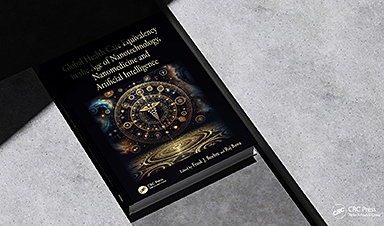
GHCE Concept
From the preface of the book Global Health Care Equivalency in the Age of Nanotechnology, Nanomedicine and Artificial Intelligence, Edited by Frank Boehm: Since the publication of my first book (Nanomedical Device and Systems [...]
Novartis, Ionis drug failure spurs questions
Pelacarsen didn’t protect heart health despite lowering levels of a protein particle, “Lp(a),” in a large clinical trial — a result with important implications for cardiovascular drug research. Dive Brief: An RNA drug from [...]
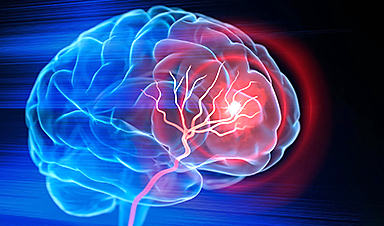
New injectable treatment helps the brain rebuild after stroke
Biomedical engineers at Duke University have created an injectable biomaterial that may help the brain recover from damage left behind by an ischemic stroke. In experiments with mice, the material transformed the cavity created [...]
Scientists Discover a Hidden “Immune Organ” Inside the Skull
Researchers discovered lymph node-like immune hubs inside skull bone marrow that appear to act as rapid-response centers for the brain. For decades, the brain was thought to operate largely apart from the immune system. [...]
Engineered tRNAs and lipid nanoparticles target nonsense mutation cystic fibrosis
Researchers have developed a potential new approach for treating a form of cystic fibrosis caused by so-called nonsense mutations, combining chemically modified transfer RNAs with lipid nanoparticles designed to deliver the therapy directly to [...]

New pancreatic cancer drug carries a $39,800 monthly list price
A groundbreaking treatment for one of the most common forms of pancreatic cancer has been approved in pill form by the FDA. Revolution Medicines’ oral tablet daraxonrasib, branded as Rasonque, reduced the risk of [...]
Researchers Have Discovered a New Way To Reduce Chronic Nerve Pain
A cancer-linked protein called BRAF may help drive chronic nerve pain, and existing cancer drugs targeting it reduced pain sensitivity in preclinical models. Chronic nerve pain can persist long after an injury and often [...]
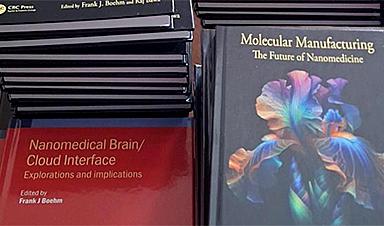
Our books now available worldwide!
Online Sellers other than Amazon, Routledge, and IOPP Indigo Global Health Care Equivalency in the Age of Nanotechnology, Nanomedicine and Artifcial Intelligence Global Health Care Equivalency In The Age Of Nanotechnology, Nanomedicine And Artificial [...]
Quantum-Enabled Regenerative Health: Reimagining Wellness, Precision Health and Longevity Medicine
Introduction Healthcare is approaching a frontier where the quantum portfolio could influence not only how disease is diagnosed and treated, but how health itself is measured, modeled, predicted and preserved. Quantum computing, quantum simulation, [...]

FDA Clears First-of-Its-Kind Nonmedication Treatment for PTSD
The FDA has cleared a system that uses brain activity data to personalize magnetic stimulation for PTSD, adding a new nonmedication treatment option. Every day in the United States, approximately 17.5 veterans die by suicide, [...]

FDA approves breakthrough drug to treat advanced pancreatic cancer
The Food and Drug Administration (FDA) approved on Wednesday a drug that could extend the survival of those with metastatic pancreatic cancer. The drug, called daraxonrasib, will be sold under the brand name Rasonque [...]