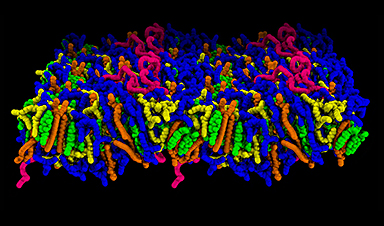
A study from FAU has shown that lipid nanoparticles restructure their membrane significantly after being absorbed into a cell and ending up in an acidic environment. Vaccines and other medicines are often packed in little fat droplets, or lipids. In this form, they are absorbed by cells and release their “cargo” once they are there. The trigger is a change in the pH value in the droplet’s surroundings. Researchers at Friedrich-Alexander-Universität Erlangen-Nürnberg (FAU) have now created a computer simulation of what exactly happens. Their findings may help to optimize the release of the active substances. The results have been published in the journal Small.
Modern vaccines are often based on mRNA. mRNA is very sensitive and can be broken down easily by the body. To protect it, it is packed in little fat droplets, known as lipid nanoparticles, and injected in this form. In the body, the nanoparticles are absorbed by the cells and stored in microscopic sacs known as endosomes. The environment inside them is fairly acidic.
“In response to the rise in acidity, the lipids deposit their cargo inside the cells,” explains Prof. Dr. Rainer Böckmann, Professor of Computational Biology at the Department of Biology at FAU.
Lipid nanoparticles consist of various components. One important component is what is known as amino lipids. In other words, lipids incorporate a nitrogen atom. Amino lipids can absorb hydrogen ions in an acidic environment and become positively charged. They are absorbed at a specific pH value, which varies depending on the specific amino lipid. At this point, also referred to as the pKa value, the lipids change from not having a charge to having a charge.
“This change in their properties is what ultimately causes the nanoparticles to release their content,” explains Böckmann.
When the lipid is absorbed into the endosome, a slightly acidic setting, a chain reaction is triggered: Increasing numbers of amino lipids absorb hydrogen and become positively charged. This gradually destabilizes the nanoparticle until the cargo is delivered.
The doctoral candidate Marius Trollmann and Prof. Böckmann simulated this process on the supercomputers at the Erlangen National High-Performance Computing Center (NHR@FAU). They were able to produce a film showing how the lipid’s membrane gradually re-forms when the surrounding pH value changes.
“We were also able to demonstrate to what extent the pKa value of the amino lipids depends on the surrounding molecules,” explains Böckmann. “Depending on which other compounds are available in their surroundings, it can undergo a shift of up to four units.”
When they are in a watery environment with a pH value of nine, the amino lipids absorb hydrogen ions and become positively charged. The lipid environment surrounding the nanoparticle shifts the transition point to a pH value of five to six, in other words the value that is found within the endosomes.
Findings significant for research into vaccines
The study shows for the first time in detail how acidification in the endosome causes the lipid nanoparticles to release their content. The researchers simulated a lipid droplet with a molecular composition that is already used in practice: Nanoparticles such as these are used as transport vehicles for mRNA vaccines, not only in the fight against COVID, but potentially in future also for treating cancer.
“In order for that to be successful, it is important that the nanoparticles release as large a quantity of their mRNA into the cell as possible,” stresses Böckmann. “Using our simulation, it is possible to continue to optimize the composition of the nanoparticles to make the process even more effective in future.”
Publication details
Marius F.W. Trollmann et al, Decoding pH‐Driven Phase Transition of Lipid Nanoparticles, Small (2026). DOI: 10.1002/smll.202511381
Journal information: Small
Key concepts
Biomolecular & subcellular processesNanostructuresSubcellular structuresSurfactants, micelles & vesiclesMolecular dynamics
Provided by Friedrich–Alexander University Erlangen–Nurnberg

News

Scientists Identify “Good” Bacteria That May Prevent Long COVID
According to the WHO, about 6% of people worldwide who get COVID-19, roughly 400 million people, later develop a long-lasting form of the illness. That shows the condition remains a significant public health challenge. In [...]
New book from Nanoappsmedical Inc. – Global Health Care Equivalency
A new book by Frank Boehm, NanoappsMedical Inc. Founder. This groundbreaking volume explores the vision of a Global Health Care Equivalency (GHCE) system powered by artificial intelligence and quantum computing technologies, operating on secure [...]
RNA Recycling Extends Lifespan
Summary: Researchers discovered a biological “trash disposal” mechanism that directly controls how fast we age. While circular RNA has long been known to accumulate in cells as we get older, this study proves for the [...]
Cancer’s Deadly Paradox: How Tumors Break Their Own DNA To Keep Growing
Cancer’s strongest gene switches push DNA into damaging overdrive, creating repeated breaks and repairs that may fuel tumor evolution while exposing possible therapeutic weak spots. A new study indicates that cancer can harm its own genetic [...]
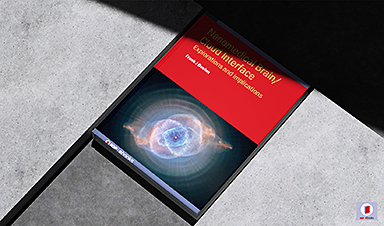
NanoMedical Brain/Cloud Interface – Explorations and Implications. A new book from Frank Boehm
New book from Frank Boehm, NanoappsMedical Inc Founder: This book explores the future hypothetical possibility that the cerebral cortex of the human brain might be seamlessly, safely, and securely connected with the Cloud via [...]
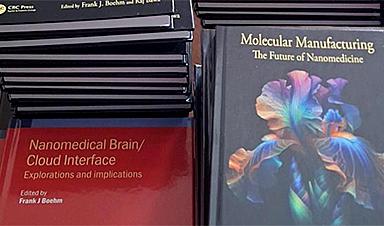
Our books now available worldwide!
Online Sellers other than Amazon, Routledge, and IOPP Indigo Global Health Care Equivalency in the Age of Nanotechnology, Nanomedicine and Artifcial Intelligence Global Health Care Equivalency In The Age Of Nanotechnology, Nanomedicine And Artificial [...]
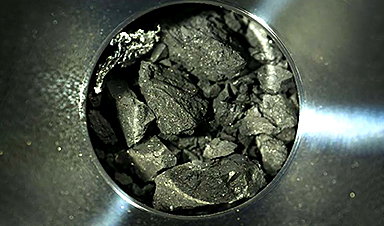
Ryugu asteroid samples contain all DNA and RNA building blocks, bolstering origin-of-life theories
All the essential ingredients to make the DNA and RNA underpinning life on Earth have been discovered in samples collected from the asteroid Ryugu, scientists said Monday. The discovery comes after these building blocks [...]

Is Berberine Really a “Natural Ozempic”?
Often labeled a “natural Ozempic,” berberine is widely discussed as a metabolic aid. Yet research suggests its influence may lie deeper. In recent years, berberine has gained significant attention as a supposed “natural way” [...]
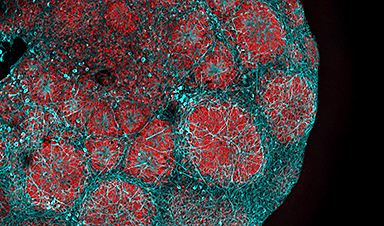
Viagra Ingredient Shows Promise for Rare Childhood Brain Disease in Surprising Study
A rare childhood disease with no approved treatment may have an unexpected new therapeutic candidate. Sildenafil, the active ingredient also sold under the brand name Viagra, may help reduce symptoms in people with Leigh [...]

In a first for China, Neuracle’s implantable brain-computer interface wins approval
In a landmark development, Neuracle Medical Technology has secured the country’s first-ever approval for an implantable brain-computer interface (BCI) system designed to restore hand motor function in patients with spinal cord injuries, in a [...]
A Cambridge Lab Mistake Reveals a Powerful New Way to Modify Drug Molecules
A surprising lab discovery reveals a light-powered way to tweak complex drugs faster, cleaner, and later in development. Researchers at the University of Cambridge have created a new technique for altering complex drug molecules [...]
New book from NanoappsMedical Inc – Molecular Manufacturing: The Future of Nanomedicine
This book explores the revolutionary potential of atomically precise manufacturing technologies to transform global healthcare, as well as practically every other sector across society. This forward-thinking volume examines how envisaged Factory@Home systems might enable the cost-effective [...]
Scientists Discover Simple Saliva Test That Reveals Hidden Diabetes Risk
Researchers have identified a potential new way to assess metabolic health using saliva instead of blood. High insulin levels in the blood, known as hyperinsulinemia, can reveal metabolic problems long before obvious symptoms appear. It is [...]

One Nasal Spray Could Protect Against COVID, Flu, Pneumonia, and More
A single nasal spray vaccine may one day protect against viruses, pneumonia, and even allergies. For decades, scientists have dreamed of creating a universal vaccine capable of protecting against many different pathogens. The idea [...]
New AI Model Predicts Cancer Spread With Incredible Accuracy
Scientists have developed an AI system that analyzes complex gene-expression signatures to estimate the likelihood that a tumor will spread. Why do some tumors spread throughout the body while others remain confined to their [...]

Scientists Discover DNA “Flips” That Supercharge Evolution
In Lake Malawi, hundreds of species of cichlid fish have evolved with astonishing speed, offering scientists a rare opportunity to study how biodiversity arises. Researchers have identified segments of “flipped” DNA that may allow fish to adapt rapidly [...]