
Every time we ask an AI a question, it doesn't just return an answer—it also burns energy and emits carbon dioxide.
German researchers found that some "thinking" AI models, which generate long, step-by-step reasoning before answering, can emit up to 50 times more CO₂ than models that give short, direct responses. These emissions don't always lead to better answers, either.
AI Answers Come at a Hidden Environmental Cost
No matter what you ask an AI, it will always generate an answer. In order to do this, whether the response is accurate or not, the system relies on tokens. These tokens are made up of words or fragments of words that are transformed into numerical data so the AI model can process them.
That process, along with the broader computing involved, results in carbon dioxide (CO2) emissions. Yet most people are unaware that using AI tools comes with a significant carbon footprint. To better understand the impact, researchers in Germany analyzed and compared the emissions of several pre-trained large language models (LLMs) using a consistent set of questions.
"The environmental impact of questioning trained LLMs is strongly determined by their reasoning approach, with explicit reasoning processes significantly driving up energy consumption and carbon emissions," said first author Maximilian Dauner, a researcher at Hochschule München University of Applied Sciences and first author of the Frontiers in Communication study. "We found that reasoning-enabled models produced up to 50 times more CO₂ emissions than concise response models."
Reasoning Models Burn More Carbon, Not Always for Better Answers
The team tested 14 different LLMs, each ranging from seven to 72 billion parameters, using 1,000 standardized questions from a variety of subjects. Parameters determine how a model learns and makes decisions.
On average, models built for reasoning produced 543.5 additional "thinking" tokens per question, compared to just 37.7 tokens from models that give brief answers. These thinking tokens are the extra internal content generated by the model before it settles on a final answer. More tokens always mean higher CO₂ emissions, but that doesn't always translate into better results. Extra detail may not improve the accuracy of the answer, even though it increases the environmental cost.
Accuracy vs. Sustainability: A New AI Trade-Off
The most accurate model was the reasoning-enabled Cogito model with 70 billion parameters, reaching 84.9% accuracy. The model produced three times more CO2 emissions than similar sized models that generated concise answers. "Currently, we see a clear accuracy-sustainability trade-off inherent in LLM technologies," said Dauner. "None of the models that kept emissions below 500 grams of CO₂ equivalent achieved higher than 80% accuracy on answering the 1,000 questions correctly." CO2 equivalent is the unit used to measure the climate impact of various greenhouse gases.
Subject matter also resulted in significantly different levels of CO2 emissions. Questions that required lengthy reasoning processes, for example abstract algebra or philosophy, led to up to six times higher emissions than more straightforward subjects, like high school history.
How to Prompt Smarter (and Greener)
The researchers said they hope their work will cause people to make more informed decisions about their own AI use. "Users can significantly reduce emissions by prompting AI to generate concise answers or limiting the use of high-capacity models to tasks that genuinely require that power," Dauner pointed out.
Choice of model, for instance, can make a significant difference in CO2 emissions. For example, having DeepSeek R1 (70 billion parameters) answer 600,000 questions would create CO2 emissions equal to a round-trip flight from London to New York. Meanwhile, Qwen 2.5 (72 billion parameters) can answer more than three times as many questions (about 1.9 million) with similar accuracy rates while generating the same emissions.
The researchers said that their results may be impacted by the choice of hardware used in the study, an emission factor that may vary regionally depending on local energy grid mixes, and the examined models. These factors may limit the generalizability of the results.
"If users know the exact CO₂ cost of their AI-generated outputs, such as casually turning themselves into an action figure, they might be more selective and thoughtful about when and how they use these technologies," Dauner concluded.
Reference: "Energy costs of communicating with AI" by Maximilian Dauner and Gudrun Socher, 30 April 2025, Frontiers in Communication.
DOI: 10.3389/fcomm.2025.1572947

News

Aging Cells May Be Hiding From the Immune System – Scientists Think They Know How
Your immune system is supposed to clear out damaged cells. Researchers may have found how some of them hide and linger as the body ages. Researchers led by Cedars-Sinai Health Sciences University have identified [...]

Your Voice May Reveal How Fast Your Brain Is Aging
Researchers have developed a machine-learning “speech clock” that estimates age from subtle patterns in how people speak and what they say. It is possible that people’s voices may contain certain signals of aging that [...]

Optogenetics Pioneers Win 2026 Nobel Prize in Physiology or Medicine
The 2026 Nobel Prize in Physiology or Medicine has been awarded to Peter Hegemann, Georg Nagel, and Karl Deisseroth for the development of optogenetics, a revolutionary technology that uses light to control individual neurons [...]

Molecular Manufacturing: The Future of Nanomedicine – From NanoappsMedical Inc.
This book explores the revolutionary potential of atomically precise manufacturing technologies to transform global healthcare, as well as practically every other sector across society. This forward-thinking volume examines how envisaged Factory@Home systems might enable the cost-effective [...]

What is ‘American Covid’ and how bad is it?
Cases of so-called ‘American Covid’ are on the rise in the UK. The strain is officially called XFG, or ‘Stratus’, and is the most common variant in North America, hence the name. It might soon [...]
Researcher at Russian plague laboratory dies of ‘unknown’ infection
Russian authorities have imposed "anti-epidemic measures" after a laboratory worker at an institute in Siberia dedicated to studying the plague and other infectious diseases died of a mysterious illness. The researcher, a 28-year-old female [...]

GHCE Concept
From the preface of the book Global Health Care Equivalency in the Age of Nanotechnology, Nanomedicine and Artificial Intelligence, Edited by Frank Boehm: Since the publication of my first book (Nanomedical Device and Systems [...]

A Surprising Brain Signal Could Explain Why Eating Less Protein Extends Lifespan
A new paper suggests that limiting protein intake triggers a coordinated response throughout the body that may help explain how protein restriction affects healthy aging. Animals respond to protein restriction, or reduced protein in [...]

Back and shoulder surgery is often worse than useless
Millions of operations should be scrapped SIX IN TEN Britons have surgery at some point. So do lots of Americans, at a cost of perhaps $500bn a year, a third of all spending on [...]

Cocaine plays with mind, hijacks brain circuit, drives increasingly rigid and repetitive behavior
Researchers have found that cocaine hijacks brain circuit, which to drive increasingly rigid and repetitive behavior. The brain circuit that normally participates in selecting natural mouth and face movements, but which becomes disproportionately engaged [...]
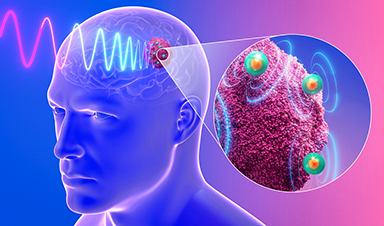
Injectable nanodevices could provide effective treatment for drug-resistant glioblastoma
The brain cancer glioblastoma is one of the most aggressive and treatment-resistant cancers known to medicine, carrying a median survival of just 12-15 months, even with the best available care. Now, researchers at the [...]

New Treatment Cuts “Bad” Cholesterol in Half for a Full Year
A single infusion of an experimental CRISPR-Cas9 therapy was reported to safely lower LDL cholesterol by 52.5% and triglycerides by 47.8%, as measured 12 months after treatment. What if one infusion could keep cholesterol [...]

Too Much RNA Can Drain a Cell’s Energy, Scientists Discover
A virus may cripple a cell’s power supply simply by producing too much of a molecule the cell needs to survive. New research from the Texas A&M College of Veterinary Medicine and Biomedical Sciences [...]

West African scientists warn of weakening health systems and urge stronger outbreak detection
LOME, Togo (AP) — West African laboratory scientists called on governments Friday to strengthen capacity to detect disease outbreaks to avoid another major outbreak, saying health systems across the region are becoming weaker. Participants [...]

A Little-Known Protein Could Point to a New Way To Treat Alzheimer’s
A study suggests that increasing SORLA protein levels could help treat Alzheimer’s disease and other disorders involving tau protein. Increasing SORLA, a protein with a protective role in the brain, helped mice withstand damage [...]

Cancer’s Hidden Antioxidant Shield Helps It Escape the Immune System
Blocking an antioxidant protein that tumors use to suppress immune attacks improved cancer immunotherapy responses in mice. Cancer cells can release antioxidants that interfere with the immune cells trying to kill them. Researchers have [...]