Researchers found that gold "super atoms" can behave like the atoms in top-tier quantum systems—only far easier to scale.
These tiny clusters can be customized at the molecular level, offering a powerful, tunable foundation for the next generation of quantum devices.
Gold Clusters as Scalable Quantum Building Blocks
Quantum computers, sensors, and other advanced technologies depend heavily on the behavior of electrons, especially the way they spin. One of the most precise approaches for high-performance quantum systems uses the spin characteristics of electrons in atoms held within a gas. These gaseous setups offer exceptional accuracy but are extremely difficult to scale into larger quantum devices, including full quantum computers. A research team from Penn State and Colorado State has now shown that a gold cluster can imitate the behavior of these trapped gas-phase atoms, making it possible to access similar spin properties in a format that can be expanded far more easily.
"For the first time, we show that gold nanoclusters have the same key spin properties as the current state-of-the-art methods for quantum information systems," said Ken Knappenberger, department head and professor of chemistry in the Penn State Eberly College of Science and leader of the research team. "Excitingly, we can also manipulate an important property called spin polarization in these clusters, which is usually fixed in a material. These clusters can be easily synthesized in relatively large quantities, making this work a promising proof-of-concept that gold clusters could be used to support a variety of quantum applications."
The work, described in two papers published in ACS Central Science and The Journal of Physical Chemistry Letters, confirms the spin behavior of the gold clusters in detail.
How Electron Spin Shapes Quantum Performance
"An electron's spin not only influences important chemical reactions, but also quantum applications like computation and sensing," said Nate Smith, graduate student in chemistry in the Penn State Eberly College of Science and first author of one of the papers. "The direction an electron spins and its alignment with respect to other electrons in the system can directly impact the accuracy and longevity of quantum information systems."
An electron spins around its axis in a way that can be compared to Earth spinning on its axis, which is tilted relative to the sun. However, electrons can spin either clockwise or counterclockwise. When many electrons in a material spin in the same direction and their tilts match, they become correlated. A material with a strong level of this alignment has high spin polarization.
"Materials with electrons that are highly correlated, with a high degree of spin polarization, can maintain this correlation for a much longer time, and thus remain accurate for much longer," Smith said.
Limitations of Trapped Ions and the Need for New Solutions
The leading method for achieving extremely low error rates in quantum information systems involves trapped atomic ions, which are atoms with an electric charge kept in a gaseous environment. In these setups, electrons can be excited into Rydberg states, which offer long-lasting and precisely defined spin polarizations. These systems also allow electrons to exist in superposition, meaning they can occupy multiple states at the same time until measured. Superposition is fundamental to quantum computing.
"These trapped gaseous ions are by nature dilute, which makes them very difficult to scale up," Knappenberger said. "The condensed phase required for a solid material, by definition, packs atoms together, losing that dilute nature. So, scaling up provides all the right electronic ingredients, but these systems become very sensitive to interference from the environment. The environment basically scrambles all the information that you encoded into the system, so the rate of error becomes very high. In this study, we found that gold clusters can mimic all the best properties of the trapped gaseous ions with the benefit of scalability."
Gold Nanoclusters and Their Quantum Potential
Gold nanostructures have long been studied for applications in optics, sensing, therapeutics and catalysis, but their magnetic and spin-related behaviors have received far less attention. In the new research, the team focused on monolayer-protected clusters. These consist of a gold core surrounded by molecules known as ligands. The structure of these clusters can be precisely adjusted, and they can be produced in relatively large amounts.
"These clusters are referred to as super atoms, because their electronic character is like that of an atom, and now we know their spin properties are also similar," Smith said. "We identified 19 distinguishable and unique Rydberg-like spin-polarized states that mimic the super-positions that we could do in the trapped, gas-phase dilute ions. This means the clusters have the key properties needed to carry out spin-based operations."
Tuning Spin Polarization Through Chemical Design
The scientists measured spin polarization in the gold clusters using an approach similar to techniques used for individual atoms. One type of cluster showed 7 percent spin polarization, while another cluster with a different ligand reached nearly 40 percent. Knappenberger noted that this higher value is comparable to that of some leading two-dimensional quantum materials.
"This tells us that the spin properties of the electron are intimately related to the vibrations of the ligands," Knappenberger said. "Traditionally, quantum materials have a fixed value of spin polarization that cannot be significantly changed, but our results suggest we can modify the ligand of these gold clusters to tune this property widely."
The team now plans to investigate how altering specific features within the ligands affects spin polarization and how these changes might be used to fine tune quantum behavior.
"The quantum field is generally dominated by researchers in physics and materials science, and here we see the opportunity for chemists to use our synthesis skills to design materials with tunable results," Knappenberger said. "This is a new frontier in quantum information science."
References:
"Diverse Superatomic Magnetic and Spin Properties of Au144(SC8H9)60 Clusters" by Juniper Foxley, Marcus Tofanelli, Jane A. Knappenberger, Christopher J. Ackerson and Kenneth L. Knappenberger, Jr., 29 May 2025, ACS Central Science.
DOI: 10.1021/acscentsci.5c00139
"The Influence of Passivating Ligand Identity on Au25(SR)18 Spin-Polarized Emission" by Nathanael L. Smith, Patrick J. Herbert, Marcus A. Tofanelli, Jane A. Knappenberger, Christopher J. Ackerson and Kenneth L. Knappenberger, Jr., 15 May 2025, The Journal of Physical Chemistry Letters.
DOI: 10.1021/acs.jpclett.5c00723
In addition to Smith and Knappenberger, the research team includes Juniper Foxley, graduate student in chemistry at Penn State; Patrick Herbert, who earned a doctoral degree in chemistry at Penn State in 2019; Jane Knappenberger, researcher in the Penn State Eberly College of Science; as well as Marcus Tofanelli and Christopher Ackerson at Colorado State

News

Scientists Discover a Hidden Trigger That Keeps Inflammation Alive
Inflammation persists after proteins detach from immune receptors, revealing a potential target for autoimmune treatments. Since a Nobel Prize-winning discovery in the 1990s identified molecules called Toll-like Receptors as the guardians of the human [...]

A Virus Gives Itself Away the Moment It Attacks
Researchers have found the trigger behind a powerful bacterial defense against viruses. Viruses that prey on bacteria could become an increasingly important tool for treating bacterial infections, particularly as antibiotic resistance makes some infections [...]

Scientists Discover Aspirin May Slash Dementia Risk by 70% – but Only for Certain People
Aspirin was linked to a sharply lower dementia risk in some older adults, and their genes may hold the clue. A Monash University analysis found that older adults with a particular genetic profile had [...]

Inflammation May Awaken Dormant Cancer Cells Years After Treatment
The body’s response to inflammation may disturb cancer cells that have been lying silent for years, giving them an opportunity to grow again. Researchers at the Francis Crick Institute have found that gut inflammation [...]

Where do nanoparticles go once they enter the body?
New international best practice guidance, co-written at ANSTO, sets out how to measure where nanoparticles like titanium dioxide end up in the body and how long they remain. The guidance has been shared by [...]

Long-Acting HIV Shots Could Solve a Major Treatment Challenge for Young People
A major African trial suggests that changing how HIV treatment is delivered could significantly improve viral suppression in adolescents. Young people with HIV were more likely to keep the virus suppressed when they received [...]

WHO Factsheets – The top 10 causes of death
In 2023, the 10 leading causes of death accounted for 33 million deaths, or 54% of the total 61 million deaths worldwide. The top global causes of death, in order of total number of lives lost, [...]

Aging Cells May Be Hiding From the Immune System – Scientists Think They Know How
Your immune system is supposed to clear out damaged cells. Researchers may have found how some of them hide and linger as the body ages. Researchers led by Cedars-Sinai Health Sciences University have identified [...]

Your Voice May Reveal How Fast Your Brain Is Aging
Researchers have developed a machine-learning “speech clock” that estimates age from subtle patterns in how people speak and what they say. It is possible that people’s voices may contain certain signals of aging that [...]
Optogenetics Pioneers Win 2026 Nobel Prize in Physiology or Medicine
The 2026 Nobel Prize in Physiology or Medicine has been awarded to Peter Hegemann, Georg Nagel, and Karl Deisseroth for the development of optogenetics, a revolutionary technology that uses light to control individual neurons [...]

Molecular Manufacturing: The Future of Nanomedicine – From NanoappsMedical Inc.
This book explores the revolutionary potential of atomically precise manufacturing technologies to transform global healthcare, as well as practically every other sector across society. This forward-thinking volume examines how envisaged Factory@Home systems might enable the cost-effective [...]

What is ‘American Covid’ and how bad is it?
Cases of so-called ‘American Covid’ are on the rise in the UK. The strain is officially called XFG, or ‘Stratus’, and is the most common variant in North America, hence the name. It might soon [...]
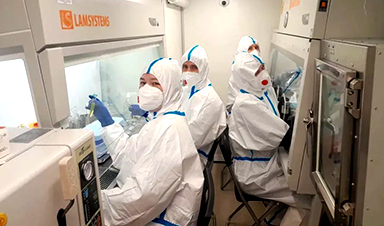
Researcher at Russian plague laboratory dies of ‘unknown’ infection
Russian authorities have imposed "anti-epidemic measures" after a laboratory worker at an institute in Siberia dedicated to studying the plague and other infectious diseases died of a mysterious illness. The researcher, a 28-year-old female [...]
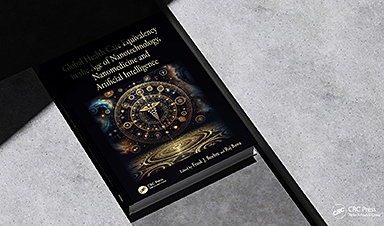
GHCE Concept
From the preface of the book Global Health Care Equivalency in the Age of Nanotechnology, Nanomedicine and Artificial Intelligence, Edited by Frank Boehm: Since the publication of my first book (Nanomedical Device and Systems [...]

A Surprising Brain Signal Could Explain Why Eating Less Protein Extends Lifespan
A new paper suggests that limiting protein intake triggers a coordinated response throughout the body that may help explain how protein restriction affects healthy aging. Animals respond to protein restriction, or reduced protein in [...]

Back and shoulder surgery is often worse than useless
Millions of operations should be scrapped SIX IN TEN Britons have surgery at some point. So do lots of Americans, at a cost of perhaps $500bn a year, a third of all spending on [...]