New research challenges the ease of implanting false memories, highlighting flaws in the influential “Lost in the Mall” study.
By reexamining the data from a previous study, researchers found that many supposed false memories might actually be based on real experiences, casting doubt on the use of such studies in legal contexts.
Reevaluating the “Lost in the Mall” Study
False memories are much harder to implant than previously believed, according to a new study by researchers at UCL and Royal Holloway, University of London.
The 1995 “Lost in the Mall” study has been widely referenced in criminal trials, especially in cases of historical sexual abuse — most notably by Harvey Weinstein’s defense team — to question the reliability of accusers’ memories.
This well-known study suggested that implanting false memories of events that never happened is relatively easy. In the original study, 25% of the 24 participants falsely remembered being lost in a supermarket at the age of five.
In 2023, psychologists from University College Cork and University College Dublin replicated the study using the same methods but with a larger sample of 123 participants. They reported a higher rate of false memories, claiming that 35% of participants recalled the fabricated event.
Scrutiny of Recent Findings
However, a new analysis of the 2023 data, published in Applied Cognitive Psychology, has cast significant doubt on these findings. It revealed that none of the 35% classified as having a false memory fully recalled the fabricated event, and many did not even remember being lost at all.
According to the new analysis, half of those judged to have false memories had actually been lost before and were likely to be reporting on real events (albeit at a different time/place). Meanwhile, others were so unsure about the suggested details in the fake story that their testimony would have been of little value in court.
Implications for Legal Proceedings
Emeritus Professor Chris Brewin (UCL Psychology & Language Sciences) said: “The findings underscore the dangers of applying laboratory research findings to the real world of witnesses in court. People in these studies are cautious in what they claim to remember and seem to be much less likely than the investigators to agree they had a false memory. Experts need to be very careful in how they present research findings so as not to mislead the justice system.”
As part of their analysis, the researchers focused on six core details of the fake event, including: being lost; crying; being helped by an elderly woman; being reunited with their family; the location of the event; the time of the event.
Participant Reliability and Memory
They found that participants who were deemed to have a false memory on average recalled one and a half details with any confidence, and 30% recalled none at all.
This was consistent with previous reports that investigators’ false memory judgments were often not backed up by the views of the participants themselves.
Lead author Emeritus Professor Bernice Andrews (Royal Holloway Department of Psychology) added: “This is the first time that the raw data from a false memory implantation study have been made publicly available and subjected to independent scrutiny.”
Reference: “Lost in the Mall? Interrogating Judgements of False Memory” by Bernice Andrews and Chris R. Brewin, 12 December 2024, Applied Cognitive Psychology.
DOI: 10.1002/acp.70012

News
Too Much RNA Can Drain a Cell’s Energy, Scientists Discover
A virus may cripple a cell’s power supply simply by producing too much of a molecule the cell needs to survive. New research from the Texas A&M College of Veterinary Medicine and Biomedical Sciences [...]
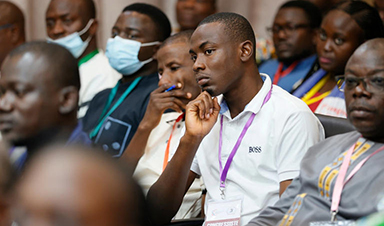
West African scientists warn of weakening health systems and urge stronger outbreak detection
LOME, Togo (AP) — West African laboratory scientists called on governments Friday to strengthen capacity to detect disease outbreaks to avoid another major outbreak, saying health systems across the region are becoming weaker. Participants [...]

A Little-Known Protein Could Point to a New Way To Treat Alzheimer’s
A study suggests that increasing SORLA protein levels could help treat Alzheimer’s disease and other disorders involving tau protein. Increasing SORLA, a protein with a protective role in the brain, helped mice withstand damage [...]
Cancer’s Hidden Antioxidant Shield Helps It Escape the Immune System
Blocking an antioxidant protein that tumors use to suppress immune attacks improved cancer immunotherapy responses in mice. Cancer cells can release antioxidants that interfere with the immune cells trying to kill them. Researchers have [...]

Scientists Find a Berry Compound That Helps Muscle Cells Burn Fat
Pterostilbene, a compound found naturally in some foods, affects how skeletal muscles process fats by stabilizing a protein called PPARδ and increasing its signaling activity. Pterostilbene, a natural compound found in blueberries, grapes, and [...]
Two Hidden Forces Help Build the Human Brain Before Birth
Scientists have uncovered two surprising forces that help guide how the human brain forms before birth. Before birth, the human brain is shaped in large part by an unusual class of stem cells known [...]
Researchers Uncover a Hidden Trigger Behind Chronic Inflammation
The findings offer new insights that could help guide the development of future therapies. A protein called human resistin may help flip on one of the immune system’s most powerful inflammatory switches. Researchers at [...]
Scientists Have Uncovered Previously Hidden Microbial Activity on Human Skin
The most abundant microbes on your skin may not be the ones doing most of the work. Human skin supports vast communities of bacteria, fungi, and viruses that can influence its protective barrier, immune [...]
Brazilian Tree Compounds Fight COVID-19 on Multiple Fronts
Scientists found compounds in a Brazilian tree that hit SARS-CoV-2 on multiple fronts, revealing a promising new lead in the search for COVID-19 treatments. Researchers have found that galloylquinic acids extracted from the leaves [...]
Cutting Two Amino Acids Slowed Prostate Cancer in Mice
A newly identified link between amino acid metabolism and cholesterol production may help prostate tumors adapt to hormone therapy. Prostate cancer can find ways around treatments designed to deprive tumors of the hormones they [...]
Largest-Ever Physics Survey Raises New Doubts About Our Model of the Universe
Physicists around the world remain deeply divided on key mysteries of the universe, from dark matter to quantum gravity. The standard cosmological model failed to gain majority support, and no leading theory dominated the [...]
Scientists Just Overturned a 100-Year-Old Belief About Bacteria in the Lungs
New findings raise questions about the role of microbes living in the lungs. More than 35 trillion bacteria live throughout the human body, forming microbiomes in the gut, mouth, lungs, skin, and urogenital tract. [...]
GHCE Concept
From the preface of the book Global Health Care Equivalency in the Age of Nanotechnology, Nanomedicine and Artificial Intelligence, Edited by Frank Boehm: Since the publication of my first book (Nanomedical Device and Systems [...]
Novartis, Ionis drug failure spurs questions
Pelacarsen didn’t protect heart health despite lowering levels of a protein particle, “Lp(a),” in a large clinical trial — a result with important implications for cardiovascular drug research. Dive Brief: An RNA drug from [...]
New injectable treatment helps the brain rebuild after stroke
Biomedical engineers at Duke University have created an injectable biomaterial that may help the brain recover from damage left behind by an ischemic stroke. In experiments with mice, the material transformed the cavity created [...]
Scientists Discover a Hidden “Immune Organ” Inside the Skull
Researchers discovered lymph node-like immune hubs inside skull bone marrow that appear to act as rapid-response centers for the brain. For decades, the brain was thought to operate largely apart from the immune system. [...]