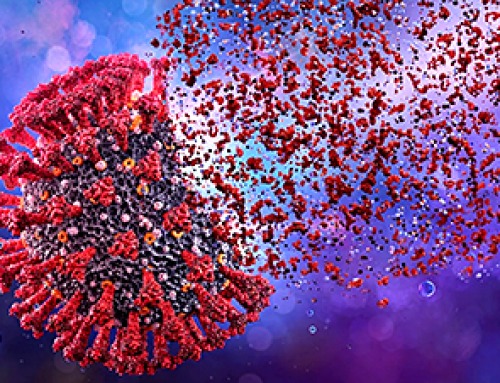
Virus reactivations by SARS-CoV-2 could worsen initial symptoms and increase risk of Long Covid.
Early in the COVID-19 pandemic, scientists noticed that a SARS-CoV-2 infection can “wake up” other, dormant viruses already present in the body. A study out today in Nature extends those and subsequent observations, documenting viral reactivation for a cohort of more than 1000 patients hospitalized with COVID-19 before mid-2021.
The findings provide a detailed picture of the hidden viruses that become active at different points of a SARS-CoV-2 infection, and link reactivation of some of them to more severe COVID-19 and to lingering symptoms, such as fatigue, that are the hallmark of Long Covid.
Although the study can’t prove virus reactivation causes these outcomes, it has impressed some SARS-CoV-2 researchers. “The scale of the endeavor and the range of human viruses they’ve looked at” makes this the most comprehensive data set yet on viral reactivation in COVID-19, says Danny Altmann, an immunologist at Imperial College London who was not involved in the work. The findings, which were partially described in a preprint in late 2024, include data on viruses previously overlooked in COVID-19 patients, he adds.
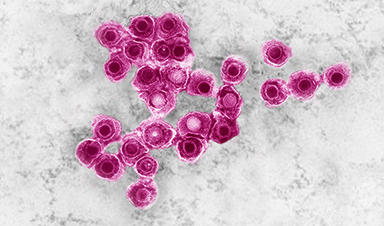
The human body is usually efficient at clearing viruses. But some, such as the Epstein-Barr virus (EBV), a herpesvirus that causes mononucleosis, stick around quietly in pockets of cells called reservoirs, until certain illnesses or other stressors unleash them. In COVID-19 patients, scientists have documented numerous instances of reactivation of EBV and other herpesviruses, including cytomegalovirus (CMV), which causes flulike symptoms in some people.
Whether these reactivated viruses affect the health of people with COVID-19 remains unclear. Prior research has found connections between EBV reactivation and symptoms of Long Covid, leading some scientists to propose that herpesviruses help drive that condition. But most studies have been limited in size—no more than a few hundred participants—or have focused on just one or two viruses, notes Esther Melamed, a neuroimmunologist at the University of Texas at Austin and co-author on the new study.
Melamed’s team tried a broader approach. The researchers took advantage of a study they and other investigators launched in 2020 to collect symptom reports and tissue samples including blood and nasal swabs from 1154 people with severe COVID-19 during the 12 months following their hospitalization. The researchers scanned gene transcript data from these samples to look for signs of active viruses—and found much more than SARS-CoV-2. “Nearly half of people … had a virus that they were already carrying wake up,” Melamed says. “This happens [even] in people whose immune systems are otherwise normal.”
EBV and CMV showed up frequently in the samples, albeit at different points in the course of COVID-19: EBV was often detected at hospitalization, whereas CMV detections spiked a few weeks later. Anelloviruses, a group of extremely widespread, seemingly harmless human viruses, were also common around the time of hospitalization and several weeks afterward. Reactivation of any of these viruses was associated with more severe COVID-19 in those early weeks, the data showed.
The researchers also compared virus reactivation and longer term symptoms such as fatigue or brain fog. Unlike earlier studies, they didn’t detect a link between EBV and these signs of Long Covid. (The discrepancy could be because of differences in how viral presence is measured: Earlier studies often used antibody-based detection rather than gene transcripts, Melamed notes.) But the team did find an association between anellovirus reactivation and fatigue or other physical challenges.
The study couldn’t determine whether anelloviruses help cause these Long Covid symptoms. But Melamed highlights another finding from the study: The presence of reactivated anellovirus in a sample was associated with higher activity in certain white blood cells. That suggests these viruses “may not be entirely passive bystanders, but are actually contributing to immune dysregulation,” she says.
Other researchers caution the study involved unvaccinated people infected with early SARS-CoV-2 strains who ended up hospitalized. The findings’ relevance for everyone else, then and now, is less clear. “These are critically ill people that are sick with a very inflammatory virus,” says Timothy Henrich, an infectious diseases researcher at the University of California San Francisco. It’s not surprising other viruses become reactivated among people in this weakened state, he adds.
He and Melamed agree the only way to demonstrate a role for virus reactivation in Long Covid is to test whether drugs that block reawakening prevent or improve the condition—a question Melamed says her team hopes to address in a clinical trial.
Other research might offer clues in the meantime. Researchers at the Icahn School of Medicine at Mount Sinai are already testing Truvada, an antiviral widely used against HIV that may also inhibit EBV replication, in a small study of Long Covid patients. Expected to wrap up later this year, the trial is “intended to probe a plausible hypothesis” rather than find treatment at this stage, says Yale University immunologist Akiko Iwasaki, who is helping run it. “That would require a much larger study.”
So far, Long Covid has been blamed on everything from autoimmune-like responses to so-called microclots to trace amounts of SARS-CoV-2 that persist beyond initial infection. Altmann says he’s pleased to see the possible role of virus reactivation getting attention amid this complicated debate. “It’s all kind of up in the air at the moment,” he says. “It’s worth revisiting any viable candidates.”
doi: 10.1126/science.z5mhpv4
 Author
Catherine Offord is a science journalist based in Barcelona, Spain

News – Curated by Amanda Scott, Alias Group Creative
Follow her on Bluesky

Scientists Find a Berry Compound That Helps Muscle Cells Burn Fat
Pterostilbene, a compound found naturally in some foods, affects how skeletal muscles process fats by stabilizing a protein called PPARδ and increasing its signaling activity. Pterostilbene, a natural compound found in blueberries, grapes, and [...]
Two Hidden Forces Help Build the Human Brain Before Birth
Scientists have uncovered two surprising forces that help guide how the human brain forms before birth. Before birth, the human brain is shaped in large part by an unusual class of stem cells known [...]
Researchers Uncover a Hidden Trigger Behind Chronic Inflammation
The findings offer new insights that could help guide the development of future therapies. A protein called human resistin may help flip on one of the immune system’s most powerful inflammatory switches. Researchers at [...]
Scientists Have Uncovered Previously Hidden Microbial Activity on Human Skin
The most abundant microbes on your skin may not be the ones doing most of the work. Human skin supports vast communities of bacteria, fungi, and viruses that can influence its protective barrier, immune [...]
Brazilian Tree Compounds Fight COVID-19 on Multiple Fronts
Scientists found compounds in a Brazilian tree that hit SARS-CoV-2 on multiple fronts, revealing a promising new lead in the search for COVID-19 treatments. Researchers have found that galloylquinic acids extracted from the leaves [...]
Cutting Two Amino Acids Slowed Prostate Cancer in Mice
A newly identified link between amino acid metabolism and cholesterol production may help prostate tumors adapt to hormone therapy. Prostate cancer can find ways around treatments designed to deprive tumors of the hormones they [...]
Largest-Ever Physics Survey Raises New Doubts About Our Model of the Universe
Physicists around the world remain deeply divided on key mysteries of the universe, from dark matter to quantum gravity. The standard cosmological model failed to gain majority support, and no leading theory dominated the [...]
Scientists Just Overturned a 100-Year-Old Belief About Bacteria in the Lungs
New findings raise questions about the role of microbes living in the lungs. More than 35 trillion bacteria live throughout the human body, forming microbiomes in the gut, mouth, lungs, skin, and urogenital tract. [...]
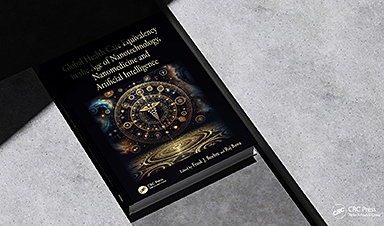
GHCE Concept
From the preface of the book Global Health Care Equivalency in the Age of Nanotechnology, Nanomedicine and Artificial Intelligence, Edited by Frank Boehm: Since the publication of my first book (Nanomedical Device and Systems [...]
Novartis, Ionis drug failure spurs questions
Pelacarsen didn’t protect heart health despite lowering levels of a protein particle, “Lp(a),” in a large clinical trial — a result with important implications for cardiovascular drug research. Dive Brief: An RNA drug from [...]
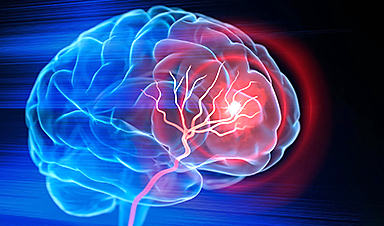
New injectable treatment helps the brain rebuild after stroke
Biomedical engineers at Duke University have created an injectable biomaterial that may help the brain recover from damage left behind by an ischemic stroke. In experiments with mice, the material transformed the cavity created [...]
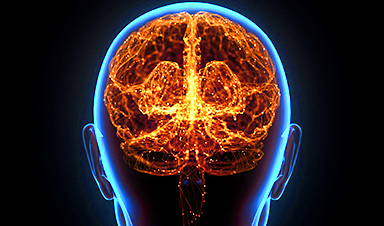
Scientists Discover a Hidden “Immune Organ” Inside the Skull
Researchers discovered lymph node-like immune hubs inside skull bone marrow that appear to act as rapid-response centers for the brain. For decades, the brain was thought to operate largely apart from the immune system. [...]
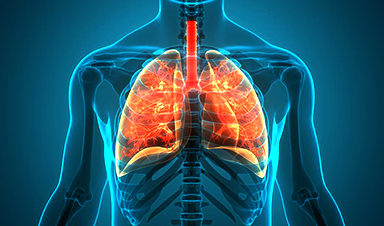
Engineered tRNAs and lipid nanoparticles target nonsense mutation cystic fibrosis
Researchers have developed a potential new approach for treating a form of cystic fibrosis caused by so-called nonsense mutations, combining chemically modified transfer RNAs with lipid nanoparticles designed to deliver the therapy directly to [...]
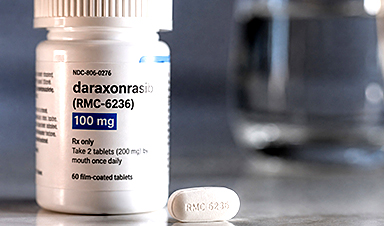
New pancreatic cancer drug carries a $39,800 monthly list price
A groundbreaking treatment for one of the most common forms of pancreatic cancer has been approved in pill form by the FDA. Revolution Medicines’ oral tablet daraxonrasib, branded as Rasonque, reduced the risk of [...]
Researchers Have Discovered a New Way To Reduce Chronic Nerve Pain
A cancer-linked protein called BRAF may help drive chronic nerve pain, and existing cancer drugs targeting it reduced pain sensitivity in preclinical models. Chronic nerve pain can persist long after an injury and often [...]

Our books now available worldwide!
Online Sellers other than Amazon, Routledge, and IOPP Indigo Global Health Care Equivalency in the Age of Nanotechnology, Nanomedicine and Artifcial Intelligence Global Health Care Equivalency In The Age Of Nanotechnology, Nanomedicine And Artificial [...]
[/fusion_text][/fusion_builder_column][/fusion_builder_row][/fusion_builder_container]