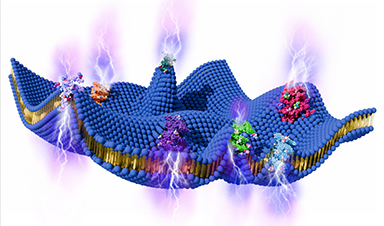
Living cells may generate electricity through the natural motion of their membranes. These fast electrical signals could play a role in how cells communicate and sense their surroundings.
Scientists have proposed a new theoretical explanation for how living cells may generate electrical signals on their own. The idea centers on the cell membrane, the thin, flexible layer that surrounds every cell and separates its interior from the outside environment. Rather than being still, this membrane is constantly in motion due to activity happening inside the cell. The new framework shows that these tiny movements at the molecular level can give rise to real electrical effects.
The work was led by Pradeep Sharma and his colleagues, who developed a mathematical model to connect biological activity with basic physical principles. Their goal was to understand how normal cellular processes could translate into electrical behavior without requiring specialized structures like nerves or electrodes.
Molecular Motion Drives Membrane Fluctuations
Inside living cells, countless processes are always underway. Proteins shift shape as they perform their functions, and chemical reactions release energy that keeps the cell alive. One key process is ATP hydrolysis, which is how cells break down adenosine triphosphate to power biological work. These activities exert forces on the cell membrane, causing it to bend, ripple, and fluctuate.
According to the model, these constant shape changes are not just mechanical. When the membrane bends, it can generate an electrical response through a physical effect known as flexoelectricity. This effect occurs when deformation in a material creates an electrical charge, linking motion directly to voltage.
Voltage Levels Comparable to Neuron Signals
The researchers found that the electrical differences produced across the membrane, known as transmembrane voltages, can be surprisingly strong. In some cases, the voltage may reach up to 90 millivolts. This is similar in size to the voltage changes that occur when neurons send signals in the brain.
The timing of these changes is also striking. The voltage fluctuations can happen over milliseconds, which closely matches the speed and shape of typical action potential curves seen in nerve cells. This suggests that the same underlying physics could help explain how electrical signaling works in biological systems.
Moving Ions Against Their Natural Direction
Beyond generating voltage, the framework predicts another important effect. The electrical signals created by membrane motion could actively move ions. Ions are charged particles that play a central role in cell signaling and maintaining balance inside cells. Normally, ions move along electrochemical gradients, flowing from areas of higher concentration to lower concentration.
The model suggests that active membrane fluctuations could push ions in the opposite direction, effectively working against these gradients. The researchers show that this behavior depends on the membrane’s elastic properties, which describe how easily it bends, and its dielectric properties, which describe how it responds to electric fields. Together, these features determine both the direction and polarity of ion transport.
From Individual Cells to Tissues and Materials
Looking ahead, the authors propose extending this framework beyond single cells. By applying the same principles to groups of cells, scientists could explore how coordinated membrane activity leads to collective electrical behavior at the level of tissues.
The researchers argue that this mechanism offers a physical foundation for understanding sensory perception, neuronal firing, and energy harvesting in living cells. It may also help bridge biological science and engineering by inspiring bio-inspired and physically intelligent materials that mimic the electrical behavior of living systems.
Reference: “Flexoelectricity and the fluctuations of (active) living cells: Implications for energy harvesting, ion transport, and neuronal activity” by Pratik Khandagale, Liping Liu and Pradeep Sharma, 16 December 2025, PNAS Nexus.
DOI: 10.1093/pnasnexus/pgaf362

News

Study finds higher heart disease risk in long COVID patients
People with long COVID are at increased risk of developing cardiovascular disease, according to a new study from Karolinska Institutet published in eClinicalMedicine. The results show that the risk of conditions such as cardiac arrhythmias [...]
The Corona variant Cicada is here – we know that
Online and on social media, reports are piling up about a new Sars-Cov-2 variant that is currently on the rise: BA.3.2, also known as Cicada. That's what it's all about: The Omicron variant BA.3.2, [...]

A Simple Blood Test Could Predict Dementia Risk 25 Years Early
A single blood marker may quietly signal dementia risk decades in advance. Scientists at the University of California, San Diego, have identified a blood signal that could forecast dementia risk decades before symptoms begin. Their [...]

Sperm Get Lost in Space and Scientists Finally Know Why
Having a baby in space may be far more complicated than expected, as new research shows sperm struggle to find their way in microgravity. Starting a family beyond Earth could be more complicated than [...]
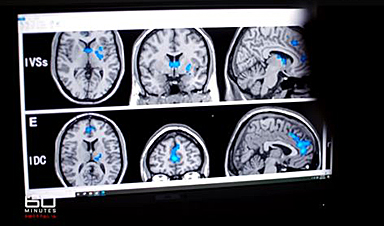
Digital Dementia – Brain fog and disassociation from being chronically online
New medical evidence, featured on 60 Minutes Australia, indicates excessive screen time is causing "digital dementia" in young Australians, with brain scans showing physical shrinkage and damage. Experts warn that high device usage (6-8 hours [...]
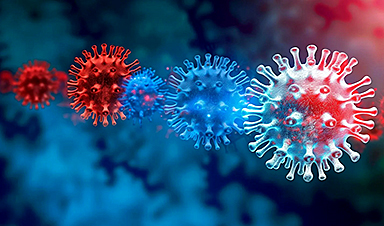
A new, highly mutated COVID variant called ‘Cicada’ is spreading in the US.
BA.3.2, a heavily mutated new COVID-19 variant which may be better able to escape immunity from vaccines or prior infection, is now spreading in the United States. Although COVID cases are currently low nationally, [...]
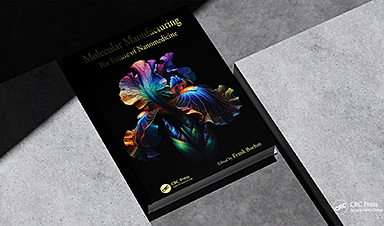
Molecular Manufacturing: The Future of Nanomedicine – New book from NanoappsMedical Inc.
This book explores the revolutionary potential of atomically precise manufacturing technologies to transform global healthcare, as well as practically every other sector across society. This forward-thinking volume examines how envisaged Factory@Home systems might enable the cost-effective [...]

Ancient bacteria strain discovered in ice cave is resistant to some modern antibiotics
In the depths of Scarisoara cave in Romania sits one of the world’s biggest underground glaciers, a monumental slab of ice the size of roughly 40 Olympic swimming pools that began to form around [...]

Scientists Identify “Good” Bacteria That May Prevent Long COVID
According to the WHO, about 6% of people worldwide who get COVID-19, roughly 400 million people, later develop a long-lasting form of the illness. That shows the condition remains a significant public health challenge. In [...]
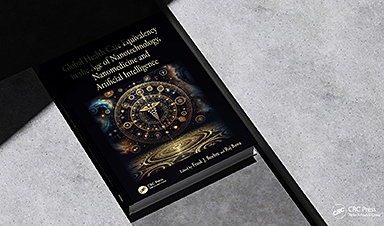
New book from Nanoappsmedical Inc. – Global Health Care Equivalency
A new book by Frank Boehm, NanoappsMedical Inc. Founder. This groundbreaking volume explores the vision of a Global Health Care Equivalency (GHCE) system powered by artificial intelligence and quantum computing technologies, operating on secure [...]
RNA Recycling Extends Lifespan
Summary: Researchers discovered a biological “trash disposal” mechanism that directly controls how fast we age. While circular RNA has long been known to accumulate in cells as we get older, this study proves for the [...]
Cancer’s Deadly Paradox: How Tumors Break Their Own DNA To Keep Growing
Cancer’s strongest gene switches push DNA into damaging overdrive, creating repeated breaks and repairs that may fuel tumor evolution while exposing possible therapeutic weak spots. A new study indicates that cancer can harm its own genetic [...]
NanoMedical Brain/Cloud Interface – Explorations and Implications. A new book from Frank Boehm
New book from Frank Boehm, NanoappsMedical Inc Founder: This book explores the future hypothetical possibility that the cerebral cortex of the human brain might be seamlessly, safely, and securely connected with the Cloud via [...]

Our books now available worldwide!
Online Sellers other than Amazon, Routledge, and IOPP Indigo Global Health Care Equivalency in the Age of Nanotechnology, Nanomedicine and Artifcial Intelligence Global Health Care Equivalency In The Age Of Nanotechnology, Nanomedicine And Artificial [...]
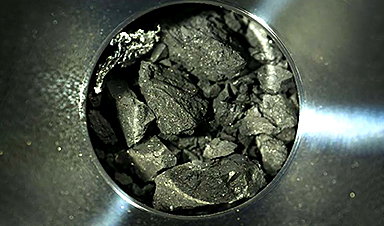
Ryugu asteroid samples contain all DNA and RNA building blocks, bolstering origin-of-life theories
All the essential ingredients to make the DNA and RNA underpinning life on Earth have been discovered in samples collected from the asteroid Ryugu, scientists said Monday. The discovery comes after these building blocks [...]

Is Berberine Really a “Natural Ozempic”?
Often labeled a “natural Ozempic,” berberine is widely discussed as a metabolic aid. Yet research suggests its influence may lie deeper. In recent years, berberine has gained significant attention as a supposed “natural way” [...]