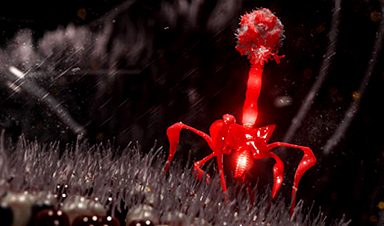
Artificial Intelligence has been used to design brand new viruses that are fully functional and can replicate in the laboratory, say US researchers.
It is the first time whole genomes have been successfully designed by AI.
The resulting 16 novel viruses were created to infect bacteria and pose no threat to people.
AI tools are rapidly advancing and have already been used to design new antibiotics.
But that is relatively simple compared with designing a new viable virus from scratch.
"This is a next step in the complexity that's designable by generative AI, this is the first time generative AI has been used to design a complete genome, it's something that can replicate and have other functions inside cells… this was new territory for us," Brian Hie, assistant professor at Stanford University, told the BBC.
The technology works similarly to large language models, like ChatGPT, which predict sequences of text.
In this instance the AI models, known as Evo1 and Evo2, predict the language of life rather than words.
The AI models were trained on genetic codes from viruses, bacteria, plants and people.
They were then refined to produce a type of virus, known as a bacteriophage, which infect only specific species of bacteria.
The Stanford researchers picked the most promising 302 AI designs and synthesised them in the lab. Of these, 16 proved effective at killing E. coli bacteria.
Samuel King, a PhD student in the lab, said they realised the phage were working in the early hours of the morning.
The phage were placed on petri dishes growing a layer of bacteria on them and the scientists waited for signs their new viruses were enjoying the feast.
Developing new phage could lead to new ways of treating infections that have become resistant to antibiotics.
But the breakthrough also points to the ability of AI to design new biology that goes beyond the natural world – what is known as synthetic biology.
Hie argues this has the potential to "massively improve human health" by developing new drugs and therapies.
But concerns have already been raised that the same technology could be used maliciously to create new diseases.
They said it was no longer a question of "whether generative viral genome design will exist" but whether it can be used without "enabling serious harm".
For example, they said new viruses with the potential to cause disease "should not be pursued".
The researchers themselves took steps to maximise safety. They excluded viruses that could infect complex organisms from the training database, performed the research on phage rather than viruses that infect people and it all took place in a secure laboratory.
Hie argues even existing safeguards go a long way towards "ensuring that the technology is used for good".
From computers bits to atoms
Viruses are not alive and it would take another significant leap for AI to generate living organisms.
The genetic code of the phage is around 5,400 base pairs (letters) long. The smallest genome of a living cell is around 500,000 base pairs. The human genome is three billion base pairs.
Hie says "it would probably be a lot of work, but not impossible" to attempt some simple organisms and they were "definitely interested in working towards" that.
Prof Marc Güell, from the synthetic biology lab at Pompeu Fabra University in Spain, said the study was a "very significant turning point" because for the "first time in history, we are beginning to design biology on a computer".
He said it "allows us to dream of exciting possibilities for tackling humanity's greatest challenges" such as developing phages to tackle disease, enzymes to treat genetic disorders and antibodies that could be used in immunotherapy.
Prof Patrick Cai, chair of synthetic genomics at the Manchester Institute of Biotechnology, said the study was an "important milestone".
"The significance extends far beyond phages – it suggests that genome language models are beginning to learn the design principles encoded by evolution, opening the door to AI-assisted genome writing."

News – Curated by Amanda Scott, Alias Group Creative
Follow her on Bluesky
New Treatment Cuts “Bad” Cholesterol in Half for a Full Year
A single infusion of an experimental CRISPR-Cas9 therapy was reported to safely lower LDL cholesterol by 52.5% and triglycerides by 47.8%, as measured 12 months after treatment. What if one infusion could keep cholesterol [...]
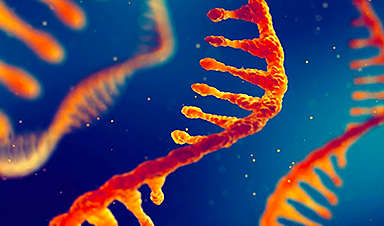
Too Much RNA Can Drain a Cell’s Energy, Scientists Discover
A virus may cripple a cell’s power supply simply by producing too much of a molecule the cell needs to survive. New research from the Texas A&M College of Veterinary Medicine and Biomedical Sciences [...]
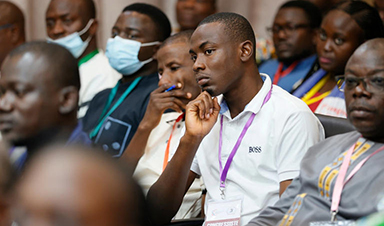
West African scientists warn of weakening health systems and urge stronger outbreak detection
LOME, Togo (AP) — West African laboratory scientists called on governments Friday to strengthen capacity to detect disease outbreaks to avoid another major outbreak, saying health systems across the region are becoming weaker. Participants [...]

A Little-Known Protein Could Point to a New Way To Treat Alzheimer’s
A study suggests that increasing SORLA protein levels could help treat Alzheimer’s disease and other disorders involving tau protein. Increasing SORLA, a protein with a protective role in the brain, helped mice withstand damage [...]
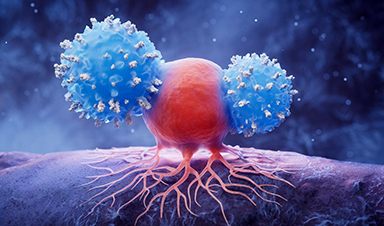
Cancer’s Hidden Antioxidant Shield Helps It Escape the Immune System
Blocking an antioxidant protein that tumors use to suppress immune attacks improved cancer immunotherapy responses in mice. Cancer cells can release antioxidants that interfere with the immune cells trying to kill them. Researchers have [...]

Scientists Find a Berry Compound That Helps Muscle Cells Burn Fat
Pterostilbene, a compound found naturally in some foods, affects how skeletal muscles process fats by stabilizing a protein called PPARδ and increasing its signaling activity. Pterostilbene, a natural compound found in blueberries, grapes, and [...]
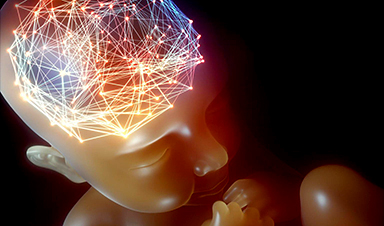
Two Hidden Forces Help Build the Human Brain Before Birth
Scientists have uncovered two surprising forces that help guide how the human brain forms before birth. Before birth, the human brain is shaped in large part by an unusual class of stem cells known [...]
Researchers Uncover a Hidden Trigger Behind Chronic Inflammation
The findings offer new insights that could help guide the development of future therapies. A protein called human resistin may help flip on one of the immune system’s most powerful inflammatory switches. Researchers at [...]
Scientists Have Uncovered Previously Hidden Microbial Activity on Human Skin
The most abundant microbes on your skin may not be the ones doing most of the work. Human skin supports vast communities of bacteria, fungi, and viruses that can influence its protective barrier, immune [...]
Brazilian Tree Compounds Fight COVID-19 on Multiple Fronts
Scientists found compounds in a Brazilian tree that hit SARS-CoV-2 on multiple fronts, revealing a promising new lead in the search for COVID-19 treatments. Researchers have found that galloylquinic acids extracted from the leaves [...]
Cutting Two Amino Acids Slowed Prostate Cancer in Mice
A newly identified link between amino acid metabolism and cholesterol production may help prostate tumors adapt to hormone therapy. Prostate cancer can find ways around treatments designed to deprive tumors of the hormones they [...]

Largest-Ever Physics Survey Raises New Doubts About Our Model of the Universe
Physicists around the world remain deeply divided on key mysteries of the universe, from dark matter to quantum gravity. The standard cosmological model failed to gain majority support, and no leading theory dominated the [...]
Scientists Just Overturned a 100-Year-Old Belief About Bacteria in the Lungs
New findings raise questions about the role of microbes living in the lungs. More than 35 trillion bacteria live throughout the human body, forming microbiomes in the gut, mouth, lungs, skin, and urogenital tract. [...]
GHCE Concept
From the preface of the book Global Health Care Equivalency in the Age of Nanotechnology, Nanomedicine and Artificial Intelligence, Edited by Frank Boehm: Since the publication of my first book (Nanomedical Device and Systems [...]
Novartis, Ionis drug failure spurs questions
Pelacarsen didn’t protect heart health despite lowering levels of a protein particle, “Lp(a),” in a large clinical trial — a result with important implications for cardiovascular drug research. Dive Brief: An RNA drug from [...]
New injectable treatment helps the brain rebuild after stroke
Biomedical engineers at Duke University have created an injectable biomaterial that may help the brain recover from damage left behind by an ischemic stroke. In experiments with mice, the material transformed the cavity created [...]