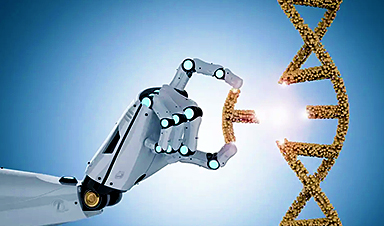
Researchers have developed an artificial intelligence model, TIGER, that predicts the on- and off-target activity of RNA-targeting CRISPR tools. This innovation, detailed in a study published in Nature Biotechnology, can accurately design guide RNAs, modulate gene expression, and is poised to drive advancements in CRISPR-based therapies.
Artificial intelligence can predict on- and off-target activity of CRISPR tools that target RNA instead of DNA, according to new research published today (July 3) in the journal Nature Biotechnology.
The study by researchers at New York University, Columbia Engineering, and the New York Genome Center, combines a deep learning model with CRISPR screens to control the expression of human genes in different ways—such as flicking a light switch to shut them off completely or by using a dimmer knob to partially turn down their activity. These precise gene controls could be used to develop new CRISPR-based therapies.
RNA-targeting CRISPRs can be used in a wide range of applications, including RNA editing, knocking down RNA to block expression of a particular gene, and high-throughput screening to determine promising drug candidates. Researchers at NYU and the New York Genome Center created a platform for RNA-targeting CRISPR screens using Cas13 to better understand RNA regulation and to identify the function of non-coding RNAs. Because RNA is the main genetic material in viruses including SARS-CoV-2 and flu, RNA-targeting CRISPRs also hold promise for developing new methods to prevent or treat viral infections. Also, in human cells, when a gene is expressed, one of the first steps is the creation of RNA from the DNA in the genome.
A key goal of the study is to maximize the activity of RNA-targeting CRISPRs on the intended target RNA and minimize activity on other RNAs which could have detrimental side effects for the cell. Off-target activity includes both mismatches between the guide and target RNA as well as insertion and deletion mutations. Earlier studies of RNA-targeting CRISPRs focused only on on-target activity and mismatches; predicting off-target activity, particularly insertion and deletion mutations, has not been well-studied. In human populations, about one in five mutations are insertions or deletions, so these are important types of potential off-targets to consider for CRISPR design.
"Similar to DNA-targeting CRISPRs such as Cas9, we anticipate that RNA-targeting CRISPRs such as Cas13 will have an outsized impact in molecular biology and biomedical applications in the coming years," said Neville Sanjana, associate professor of biology at NYU, associate professor of neuroscience and physiology at NYU Grossman School of Medicine, a core faculty member at New York Genome Center, and the study's co-senior author. "Accurate guide prediction and off-target identification will be of immense value for this newly developing field and therapeutics."
In their study in Nature Biotechnology, Sanjana and his colleagues performed a series of pooled RNA-targeting CRISPR screens in human cells. They measured the activity of 200,000 guide RNAs targeting essential genes in human cells, including both "perfect match" guide RNAs and off-target mismatches, insertions, and deletions.
Sanjana's lab teamed up with the lab of machine learning expert David Knowles to engineer a deep learning model they named TIGER (Targeted Inhibition of Gene Expression via guide RNA design) that was trained on the data from the CRISPR screens. Comparing the predictions generated by the deep learning model and laboratory tests in human cells, TIGER was able to predict both on-target and off-target activity, outperforming previous models developed for Cas13 on-target guide design and providing the first tool for predicting off-target activity of RNA-targeting CRISPRs.
"Machine learning and deep learning are showing their strength in genomics because they can take advantage of the huge datasets that can now be generated by modern high-throughput experiments. Importantly, we were also able to use "interpretable machine learning" to understand why the model predicts that a specific guide will work well," said Knowles, assistant professor of computer science and systems biology at Columbia Engineering, a core faculty member at New York Genome Center, and the study's co-senior author.
"Our earlier research demonstrated how to design Cas13 guides that can knock down a particular RNA. With TIGER, we can now design Cas13 guides that strike a balance between on-target knockdown and avoiding off-target activity," said Hans-Hermann (Harm) Wessels, the study's co-first author and a senior scientist at the New York Genome Center, who was previously a postdoctoral fellow in Sanjana's laboratory.
The researchers also demonstrated that TIGER's off-target predictions can be used to precisely modulate gene dosage—the amount of a particular gene that is expressed—by enabling partial inhibition of gene expression in cells with mismatch guides. This may be useful for diseases in which there are too many copies of a gene, such as Down syndrome, certain forms of schizophrenia, Charcot-Marie-Tooth disease (a hereditary nerve disorder), or in cancers where aberrant gene expression can lead to uncontrolled tumor growth.
"Our deep learning model can tell us not only how to design a guide RNA that knocks down a transcript completely, but can also 'tune' it—for instance, having it produce only 70% of the transcript of a specific gene," said Andrew Stirn, a PhD student at Columbia Engineering and the New York Genome Center, and the study's co-first author.
By combining artificial intelligence with an RNA-targeting CRISPR screen, the researchers envision that TIGER's predictions will help avoid undesired off-target CRISPR activity and further spur development of a new generation of RNA-targeting therapies.
"As we collect larger datasets from CRISPR screens, the opportunities to apply sophisticated machine learning models are growing rapidly. We are lucky to have David's lab next door to ours to facilitate this wonderful, cross-disciplinary collaboration. And, with TIGER, we can predict off-targets and precisely modulate gene dosage which enables many exciting new applications for RNA-targeting CRISPRs for biomedicine," said Sanjana.
Reference: 3 July 2023, Nature Biotechnology.
DOI: 10.1038/s41587-023-01830-8
Additional study authors include Alejandro Méndez-Mancilla and Sydney K. Hart of NYU and the New York Genome Center, and Eric J. Kim of Columbia University. The research was supported by grants from the National Institutes of Health (DP2HG010099, R01CA218668, R01GM138635), DARPA (D18AP00053), the Cancer Research Institute, and the Simons Foundation for Autism Research Initiative.

News

Scientists Find a Berry Compound That Helps Muscle Cells Burn Fat
Pterostilbene, a compound found naturally in some foods, affects how skeletal muscles process fats by stabilizing a protein called PPARδ and increasing its signaling activity. Pterostilbene, a natural compound found in blueberries, grapes, and [...]
Two Hidden Forces Help Build the Human Brain Before Birth
Scientists have uncovered two surprising forces that help guide how the human brain forms before birth. Before birth, the human brain is shaped in large part by an unusual class of stem cells known [...]
Researchers Uncover a Hidden Trigger Behind Chronic Inflammation
The findings offer new insights that could help guide the development of future therapies. A protein called human resistin may help flip on one of the immune system’s most powerful inflammatory switches. Researchers at [...]
Scientists Have Uncovered Previously Hidden Microbial Activity on Human Skin
The most abundant microbes on your skin may not be the ones doing most of the work. Human skin supports vast communities of bacteria, fungi, and viruses that can influence its protective barrier, immune [...]
Brazilian Tree Compounds Fight COVID-19 on Multiple Fronts
Scientists found compounds in a Brazilian tree that hit SARS-CoV-2 on multiple fronts, revealing a promising new lead in the search for COVID-19 treatments. Researchers have found that galloylquinic acids extracted from the leaves [...]
Cutting Two Amino Acids Slowed Prostate Cancer in Mice
A newly identified link between amino acid metabolism and cholesterol production may help prostate tumors adapt to hormone therapy. Prostate cancer can find ways around treatments designed to deprive tumors of the hormones they [...]
Largest-Ever Physics Survey Raises New Doubts About Our Model of the Universe
Physicists around the world remain deeply divided on key mysteries of the universe, from dark matter to quantum gravity. The standard cosmological model failed to gain majority support, and no leading theory dominated the [...]
Scientists Just Overturned a 100-Year-Old Belief About Bacteria in the Lungs
New findings raise questions about the role of microbes living in the lungs. More than 35 trillion bacteria live throughout the human body, forming microbiomes in the gut, mouth, lungs, skin, and urogenital tract. [...]
GHCE Concept
From the preface of the book Global Health Care Equivalency in the Age of Nanotechnology, Nanomedicine and Artificial Intelligence, Edited by Frank Boehm: Since the publication of my first book (Nanomedical Device and Systems [...]
Novartis, Ionis drug failure spurs questions
Pelacarsen didn’t protect heart health despite lowering levels of a protein particle, “Lp(a),” in a large clinical trial — a result with important implications for cardiovascular drug research. Dive Brief: An RNA drug from [...]
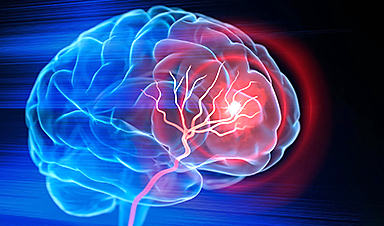
New injectable treatment helps the brain rebuild after stroke
Biomedical engineers at Duke University have created an injectable biomaterial that may help the brain recover from damage left behind by an ischemic stroke. In experiments with mice, the material transformed the cavity created [...]
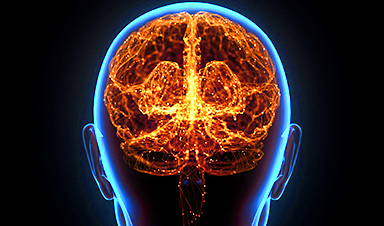
Scientists Discover a Hidden “Immune Organ” Inside the Skull
Researchers discovered lymph node-like immune hubs inside skull bone marrow that appear to act as rapid-response centers for the brain. For decades, the brain was thought to operate largely apart from the immune system. [...]
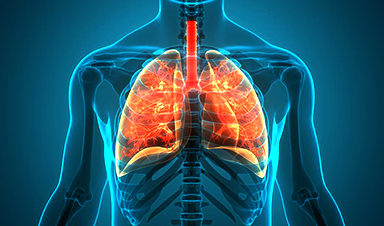
Engineered tRNAs and lipid nanoparticles target nonsense mutation cystic fibrosis
Researchers have developed a potential new approach for treating a form of cystic fibrosis caused by so-called nonsense mutations, combining chemically modified transfer RNAs with lipid nanoparticles designed to deliver the therapy directly to [...]
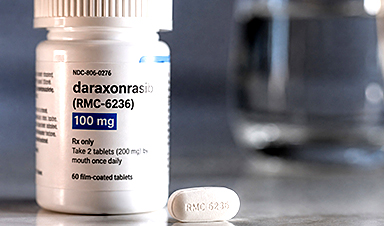
New pancreatic cancer drug carries a $39,800 monthly list price
A groundbreaking treatment for one of the most common forms of pancreatic cancer has been approved in pill form by the FDA. Revolution Medicines’ oral tablet daraxonrasib, branded as Rasonque, reduced the risk of [...]
Researchers Have Discovered a New Way To Reduce Chronic Nerve Pain
A cancer-linked protein called BRAF may help drive chronic nerve pain, and existing cancer drugs targeting it reduced pain sensitivity in preclinical models. Chronic nerve pain can persist long after an injury and often [...]
Our books now available worldwide!
Online Sellers other than Amazon, Routledge, and IOPP Indigo Global Health Care Equivalency in the Age of Nanotechnology, Nanomedicine and Artifcial Intelligence Global Health Care Equivalency In The Age Of Nanotechnology, Nanomedicine And Artificial [...]