Cold plasma penetrates deep into tumors and attacks cancer cells. Short-lived molecules were identified as key drivers.
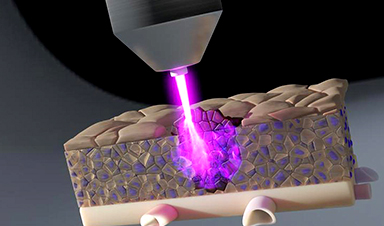
Scientists at the Leibniz Institute for Plasma Science and Technology (INP), working with colleagues from Greifswald University Hospital and University Medical Centre Rostock, have shown that cold plasma can successfully destroy tumor cells even within deeper layers of tissue.
A key achievement of the project was the development of new tissue models, which allowed the team for the first time to study in detail how specific plasma components affect cancer cells.
What is cold plasma?
Plasma is an ionized gas that generates large numbers of chemically reactive molecules, collectively known as reactive oxygen and nitrogen species.
These highly short-lived molecules can strongly influence biological activity, including processes that determine whether tumor cells survive or die.
New tissue models provide important insights
"The effect of plasma in tissue is very complex and little understood. We have therefore developed a 3D model made of hydrogels that mimics real tumor tissue. In this model, we were able to observe exactly how deep the molecules from the plasma penetrate – and which of these molecules are important for the effect on tumor cells," explains Lea Miebach, first author of the study.
Particularly short-lived molecules such as peroxynitrite penetrated several millimeters deep into the tissue. Hydrogen peroxide, which had previously been considered the main active ingredient in laboratory research, showed little effect: even when it was specifically removed, the effect of the plasma remained strong.
Use during surgery is also conceivable
Another model investigated how well plasma could work in the follow-up treatment of tumor surgery. Residual tumor cells at the edge of an artificial surgical wound were specifically treated with plasma.
The result: here too, a strong effect was observed, especially in cells that had already spread into the surrounding tissue. These findings could help to better prevent relapses after surgery.
Important step for plasma medicine
"Our results could significantly improve the medical application of plasma," says Prof. Dr. Sander Bekeschus, head of the Plasma Medicine research program at INP. "The better we understand which molecules are active in the tissue, the more precisely plasma devices can be used for specific types of cancer."
The work was carried out using the medically approved plasma jet "kINPen." In the long term, the method could help make therapies more effective and gentler.
Reference: "Gas plasma technology mediates deep tissue and anticancer events independently of hydrogen peroxide" by Lea Miebach, Marten Hagge, Alice Martinet, Debora Singer, Nadine Gelbrich, Stephan Kersting and Sander Bekeschus, 31 July 2025, Trends in Biotechnology.
DOI: 10.1016/j.tibtech.2025.07.004

News
Cutting Two Amino Acids Slowed Prostate Cancer in Mice
A newly identified link between amino acid metabolism and cholesterol production may help prostate tumors adapt to hormone therapy. Prostate cancer can find ways around treatments designed to deprive tumors of the hormones they [...]

Largest-Ever Physics Survey Raises New Doubts About Our Model of the Universe
Physicists around the world remain deeply divided on key mysteries of the universe, from dark matter to quantum gravity. The standard cosmological model failed to gain majority support, and no leading theory dominated the [...]

Scientists Just Overturned a 100-Year-Old Belief About Bacteria in the Lungs
New findings raise questions about the role of microbes living in the lungs. More than 35 trillion bacteria live throughout the human body, forming microbiomes in the gut, mouth, lungs, skin, and urogenital tract. [...]

GHCE Concept
From the preface of the book Global Health Care Equivalency in the Age of Nanotechnology, Nanomedicine and Artificial Intelligence, Edited by Frank Boehm: Since the publication of my first book (Nanomedical Device and Systems [...]

Novartis, Ionis drug failure spurs questions
Pelacarsen didn’t protect heart health despite lowering levels of a protein particle, “Lp(a),” in a large clinical trial — a result with important implications for cardiovascular drug research. Dive Brief: An RNA drug from [...]

New injectable treatment helps the brain rebuild after stroke
Biomedical engineers at Duke University have created an injectable biomaterial that may help the brain recover from damage left behind by an ischemic stroke. In experiments with mice, the material transformed the cavity created [...]

Scientists Discover a Hidden “Immune Organ” Inside the Skull
Researchers discovered lymph node-like immune hubs inside skull bone marrow that appear to act as rapid-response centers for the brain. For decades, the brain was thought to operate largely apart from the immune system. [...]
Engineered tRNAs and lipid nanoparticles target nonsense mutation cystic fibrosis
Researchers have developed a potential new approach for treating a form of cystic fibrosis caused by so-called nonsense mutations, combining chemically modified transfer RNAs with lipid nanoparticles designed to deliver the therapy directly to [...]
New pancreatic cancer drug carries a $39,800 monthly list price
A groundbreaking treatment for one of the most common forms of pancreatic cancer has been approved in pill form by the FDA. Revolution Medicines’ oral tablet daraxonrasib, branded as Rasonque, reduced the risk of [...]

Researchers Have Discovered a New Way To Reduce Chronic Nerve Pain
A cancer-linked protein called BRAF may help drive chronic nerve pain, and existing cancer drugs targeting it reduced pain sensitivity in preclinical models. Chronic nerve pain can persist long after an injury and often [...]

Our books now available worldwide!
Online Sellers other than Amazon, Routledge, and IOPP Indigo Global Health Care Equivalency in the Age of Nanotechnology, Nanomedicine and Artifcial Intelligence Global Health Care Equivalency In The Age Of Nanotechnology, Nanomedicine And Artificial [...]

Quantum-Enabled Regenerative Health: Reimagining Wellness, Precision Health and Longevity Medicine
Introduction Healthcare is approaching a frontier where the quantum portfolio could influence not only how disease is diagnosed and treated, but how health itself is measured, modeled, predicted and preserved. Quantum computing, quantum simulation, [...]

FDA Clears First-of-Its-Kind Nonmedication Treatment for PTSD
The FDA has cleared a system that uses brain activity data to personalize magnetic stimulation for PTSD, adding a new nonmedication treatment option. Every day in the United States, approximately 17.5 veterans die by suicide, [...]
FDA approves breakthrough drug to treat advanced pancreatic cancer
The Food and Drug Administration (FDA) approved on Wednesday a drug that could extend the survival of those with metastatic pancreatic cancer. The drug, called daraxonrasib, will be sold under the brand name Rasonque [...]

AI Decodes a Hidden DNA Signal Linked to Disease-Causing Mutations
Machine learning identifies the likely “initiator” and enables new predictions about DNA mutations that can cause disease. Every human cell depends on tens of thousands of genes being switched on at the right time [...]

Pope Leo Urges Global Response to Congo’s Deadliest Ebola Outbreak
Pope Leo called for international action to address the Ebola outbreak in the Democratic Republic of Congo. The epidemic has claimed over 2,500 lives and is the nation's largest recorded outbreak. The Pope emphasized [...]