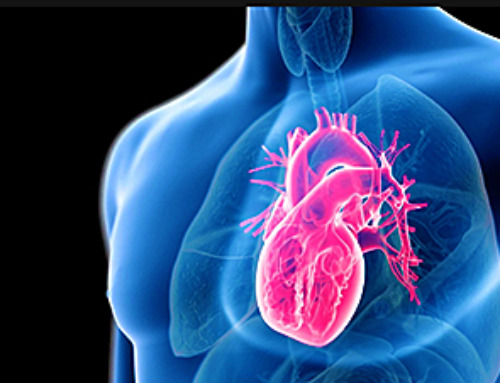
| Blood pressure is a key vital sign that provides insight into our cardiovascular health. But blood pressure is typically measured only a few times per year by a clinician—and these measurements might not always be accurate (maybe, for instance, you’re nervous at the doctor’s office). A wearable device that could monitor blood pressure continuously would provide more informative readings, allowing clinicians to observe trends and detect consequential blood pressure changes, ultimately improving heart health. | |
| Nearly a decade ago, in collaboration with the Indian government, NIBIB spearheaded an international effort to develop a wearable cuffless system. Building on years of research, scientists are now fine-tuning such a device. Made of graphene, one of the thinnest materials in the world, the device is worn on the underside of the wrist and can measure blood pressure with comparable accuracy to a standard blood pressure cuff. While the technology is still in its early stages, the researchers envision that the monitor will be worn 24/7. | |
| The device was recently described in Nature Nanotechnology (“Continuous cuffless monitoring of arterial blood pressure via graphene bioimpedance tattoos”). |
| “The blood pressure monitor was developed in the late 19th century, and the core technology has not seen significant changes,” explained Tiffani Lash, Ph.D., a program director in the Division of Health Informatics Technologies at NIBIB. “Unlike traditional blood pressure cuffs, this device could enable continuous and unobtrusive monitoring, which could pave the way for remote, round-the-clock evaluation of blood pressure. As cardiovascular diseases are the leading cause of mortality worldwide, such a device has the capacity to mitigate potentially preventable deaths.” | |
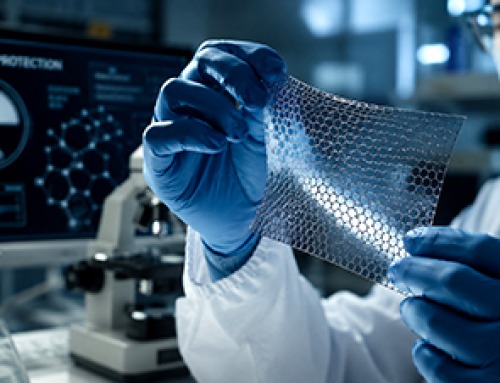
| At first glance, the blood pressure monitor looks like a temporary tattoo—the graphene and the tiny components inside resemble small, transparent stickers, which adhere directly to the skin. The application is even similar: place the device—which is attached to a thin strip of paper—onto the skin, dampen the paper with water, and gently remove the paper, leaving the blood pressure monitor behind. | |
| Similar ‘electronic tattoos’ have been investigated before, but they typically employ metal films that do not conform perfectly to the skin, explained study author Deji Akinwande, Ph.D., a professor at The University of Texas at Austin. “With prior devices, there’s a lot of sliding between the metal film and the skin, leading to motion artifacts that can mask the real signal that we’re trying to capture,” he said. “Because graphene is so thin and flexible, it doesn’t suffer from motion artifacts, and we can capture precise measurements for an extended period of time.” | |
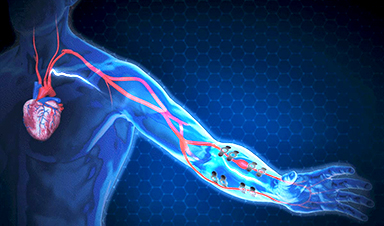
| The tattoos don’t measure blood pressure directly, like traditional monitors do. Instead, the tattoos rely on bioimpedance—a measure of how the body resists an electrical current. The tattoos contain tiny electrodes that apply a small current to an artery in the wrist and then sense how that current is affected by the artery. These bioimpedance measurements can then be converted into blood pressure readings using machine learning. | |
| The researchers evaluated their bioimpedance tattoos in seven healthy individuals. On average, each participant was continuously monitored for about four hours, resulting in roughly 2,000 measurements per participant. Participants performed various exercises to intentionally raise their blood pressure, such as completing hand grip exercises, peddling on a stationary bike, or performing the Valsalva maneuver (when one attempts to forcefully exhale when their mouth is closed and their nose is pinched shut). During these experiments, participants also wore a medical-grade blood pressure monitor to provide reference blood pressure measurements—and the researchers found that their bioimpedance tattoos could determine participants’ blood pressure with high accuracy. | |
| The researchers next evaluated the ability of their system to calculate blood pressure readings for circumstances beyond those assessed in their initial experiments. Participants were then invited to perform additional activities—like walking or engaging in strenuous exercise (such as an extensive, sweat-inducing outdoor walk or pushups). Following these activities, the researchers evaluated blood pressure readings (which are taken when participants are stationary). While the bioimpedance tattoos could withstand exposure to light, heat, water, or sweat, their blood pressure accuracy decreased slightly during post-exercise monitoring. The researchers will continue to incorporate additional data, including higher blood pressure measurements induced by exercise, into their machine learning algorithms—which should enhance their accuracy. | |
| The researchers also envision further optimization of their device so that the blood pressure data could be wirelessly transmitted. As of now, the tattoos require connection to external equipment using thin gold wiring, which enables a blood pressure readout. | |
| “This first-generation device is still in its early stages, but the promise of this technology is that it could literally be worn at all times and provide a wealth of biophysical data,” said study author Roozbeh Jafari, Ph.D., a professor at Texas A&M University and lead author on the NIBIB grant. “Blood pressure and hypertension are tied to serious and life-threatening health conditions, and the ability to monitor this vital sign continuously could inform proactive interventions that could improve public health.” | |
| And as research indicates that blood pressure levels have increased during the pandemic, finding ways to monitor blood pressure continuously, especially among those with hypertension, may become increasingly important. |

News
Scientists Just Found a Surprising Way To Destroy “Forever Chemicals”
Scientists have uncovered a new mechanism that may help break down highly persistent PFAS pollutants. PFAS have earned the nickname “forever chemicals” for a reason. These industrial compounds are so chemically durable that they [...]

Scientists Discover Cheap Material That Kills Deadly Superbugs
A new sulfur-rich antimicrobial polymer shows strong effectiveness against fungal and bacterial pathogens and may offer an affordable solution to antimicrobial resistance. Antimicrobial resistance is creating growing challenges for both healthcare and food production, [...]

What to Know About Cicada, or BA.3.2, the Latest SARS-CoV-2 Variant Under Monitoring
Like periodical cicadas, the insects for which it is nicknamed, SARS-CoV-2 Omicron subvariant BA.3.2 is only just beginning to emerge after lying low for an extended period since it first appeared. Although it was [...]
Scientists Say This Simple Supplement May Actually Reverse Heart Disease
Scientists in Japan say a common supplement may actually help “unclog” certain diseased heart arteries from the inside out. A simple food supplement sold in Japan may have helped reverse a dangerous form of [...]
New breakthrough against radiation: Korean Scientists create revolutionary shield with nanotechnology
Korean Scientists develop new nanotechnology material capable of reducing radiation impacts in space missions, hospitals, and power plants. The search for more efficient protection technologies in extreme environments has just gained an important advance. Korean [...]
Scientists Just Discovered the Hidden Trick That Keeps Your Cells Alive
A strange bead-like motion inside cells may be the secret to keeping their DNA—and health—in balance. Mitochondria are often described as the power plants of the cell because they produce the energy cells need [...]
Scientists Discover Stem Cells That Could Regrow Teeth and Bone
Scientists just uncovered the cellular “blueprint” that could one day let us regrow real teeth. Researchers at Science Tokyo have uncovered two distinct stem cell lineages that play a central role in forming tooth [...]
Scientists Uncover Fatal Weakness in “Zombie Cells” Linked to Cancer
A newly identified weakness in “zombie” cells may open the door to more precise cancer treatments by turning their own survival strategy against them. A new class of drugs takes advantage of a recently [...]

Bowel and Ovarian Cancers Are Dramatically Rising in Young Adults, Scientists Aren’t Sure Why
Cancer incidence is increasing, especially among younger adults, and current risk factors don’t fully account for the trend. Scientists suggest other underlying causes may be contributing. Cancer patterns in England are shifting in a [...]
New Immune Pathway Could Supercharge mRNA Cancer Vaccines
A surprising backup system in the immune response to mRNA vaccines may hold the key to more effective cancer treatments. The arrival of mRNA vaccines against SARS-CoV-2 in 2020 marked a turning point in the COVID-19 pandemic. Today, [...]
Scientists Discover “Molecular Switch” That Fuels Alzheimer’s Brain Inflammation
A newly identified trigger of brain inflammation could offer a fresh target for slowing Alzheimer’s progression. The brain has its own built-in immune system that identifies threats and responds to them. In Alzheimer’s disease, growing evidence [...]
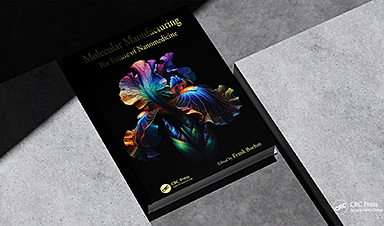
Molecular Manufacturing: The Future of Nanomedicine – New book from NanoappsMedical Inc.
This book explores the revolutionary potential of atomically precise manufacturing technologies to transform global healthcare, as well as practically every other sector across society. This forward-thinking volume examines how envisaged Factory@Home systems might enable the cost-effective [...]
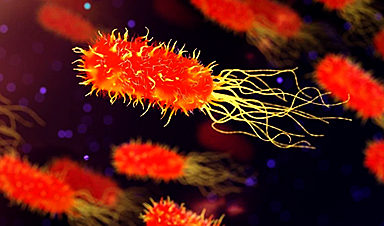
Forgotten Medicinal Plant Shows Promise in Fighting Dangerous Superbugs
A traditional medicinal plant, tormentil, shows promise against antibiotic-resistant bacteria in laboratory tests. Its compounds work by limiting bacterial growth and boosting antibiotic performance. Before the development of modern antibiotics, plant-based remedies were commonly [...]
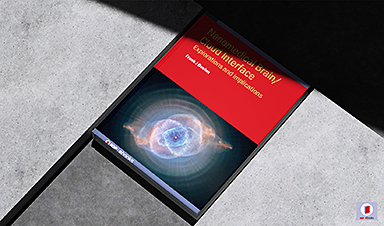
NanoMedical Brain/Cloud Interface – Explorations and Implications. A new book from Frank Boehm
New book from Frank Boehm, NanoappsMedical Inc Founder: This book explores the future hypothetical possibility that the cerebral cortex of the human brain might be seamlessly, safely, and securely connected with the Cloud via [...]

New Research Finds Shocking Link Between Chili Peppers and Cancer
If you love spicy food, you are not alone. But scientists are taking a closer look at whether eating a lot of chili peppers could affect your cancer risk. Could your love of spicy [...]
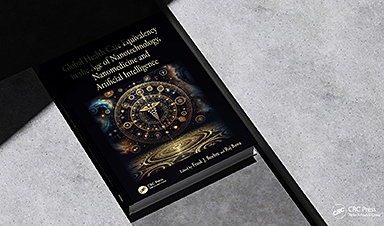
New book from Nanoappsmedical Inc. – Global Health Care Equivalency
A new book by Frank Boehm, NanoappsMedical Inc. Founder. This groundbreaking volume explores the vision of a Global Health Care Equivalency (GHCE) system powered by artificial intelligence and quantum computing technologies, operating on secure [...]