Society has a lot to thank for nanoscience. From improved health monitoring to reducing the size of electronics, scientists’ ability to delve deeper and better understand chemistry at the nanoscale has opened up numerous untold benefits. Today, various nanotechnologies are continuing to shift from the lab to the market, creating what is set to be an overall multi–billion pound sector in the coming decades.
An article published in the journal Nano Letters earlier this year proposed what the next 25 years of nanoscience might look like. Among the big issues that society must grapple with in the coming years, the environment, health and technology issues will undoubtedly have an outsized impact on nanoscience, pushing the field forwards.
Improving health and environment
Nanoparticles cornered a large part of nanotechnology research early on and in recent years for drug delivery vehicles, explains Katsuhiko Ariga at the University of Tokyo, Japan. He says that our bodies can release molecules like neurotransmitters in response to a signal and nanoscience needs to copy this. ‘Intelligent release of drugs – by constructing controlled nanostructures – is the goal going forward’. Such systems may include nanobots and other active materials that respond to stimuli like chemical gradients, magnetic fields or sound waves, and can differentiate between different cell types for targeted drug delivery.
‘[However], there are still significant challenges for nanomedicine, especially related to therapeutics,’ says Teri Odom, at Northwestern University in the US, who led the Nano Letters article. ‘For example, there is still not yet an actively targeted nanoconstruct that has been [US Food and Drug Administration] approved.’
Aside from nanomedicine, nanotechnology can also benefit health monitoring by improving wearable electronics and sensors, such as those currently found in many smartwatches. Creating materials that balance their electronic and mechanical performance is a challenge for the field. But overcoming this issue may lead to materials with enhanced sensing capabilities and improved integration within our bodies.
‘One [other] area that I think will become increasingly important is the impact of nanotechnology on the environment,’ adds Odom. ‘Over the last years, there have been good discussions about the risks of nanoscience but less on how nanoscience can benefit the environment.’
Membranes with angstrom-sized nanochannels, for example, could serve to help desalinate seawater or reclaim precious metals from industrial waste. Nanoscale catalysts could also help convert pollutants into usable products, helping to create a circular synthetic loop of various commodity chemicals. Manufacturing such membranes and catalysts on an industrial scale is challenging, however, as atomic-level precision is needed in macroscale structures.
Next-generation technology
Andrea Ferrari, director of the Cambridge Graphene Centre in the UK, stresses that artificial intelligence (AI) will be both important and influential in nanotechnology in the coming decades. He explains that developing a novel nanomaterial can take a long time, yet with the help of AI and other computational methods, new and unexpected materials may be discovered much more quickly.
‘AI data centres also require a vast amount of energy, so we also need new materials to meet the demands of such centres,’ he says. Strategies to increase energy generation will likely see advancements in perovskite photovoltaic cells and commercially viable fuels made using solar power.
‘Nanomaterials are [also] very much being looked at to expand the capacities of different battery technologies,’ says Douglas Natelson, a nanoscientist at Rice University in the US. Novel nanomaterials for battery electrodes and supercapacitors will result in higher interface surface areas, allowing for better energy storage, necessary to aid the transition to intermittent sources of renewable energy such as wind and solar.
Going quantum
The next generation of computing will likely be driven by quantum technology, which is capable of solving certain classes of problems that would take far too long with conventional computers. Chemists are interested in this type of computing as it lends itself well to chemical modelling and there is interest in using it to solve problems such as the fixation of nitrogen by the nitrogenase enzyme. Arrays of around 1000 quantum bits – qubits – operating at ultralow temperatures are the current limits of quantum computing. Reducing qubits’ size and error rate, and finding a way to integrate them into existing technology, will require developments in all areas of nanoscience.
Ariga thinks that efforts to make materials that exhibit quantum phenomena at the macroscopic level will have to be stepped up, building on the quantum properties of zero–dimensional quantum dots and one–dimensional carbon nanowires.
Connecting the nanoscale world to the macroscopic one is also being made possible by building up layers of 2D materials held together with van der Waals forces, either mechanically or using chemical vapour deposition. These methods allow for precision engineering of electronic structures by varying layer order, twist angles and the type of defect.
‘There’s a lot of fundamental work that still needs to be done on just understanding these 2D materials and growing them at scale,’ says Natelson. Developments in microscopic techniques will offer better resolution on atomic positions below a sub-angstrom scale. Detectors that can capture a range of events – from chemical reactions to quantum effects – on the order of milli to picoseconds (10-12s) using sub-watt power supplies may also unlock real-time monitoring of in-situ experiments. Machine learning and AI may also play their part in aiding data analysis and help automate characterisation of new materials.
Regulating a growing field
Since the start of nanoscience as a field several decades ago, policymakers have developed ethical and safety standards in parallel with the science. ‘The safety recommendations you would make for a block of something is different to the same 1kg of stuff ground up into 10nm particles,’ say Natelson, adding that nanoparticles interact with the environment differently to standard chemicals.
However, it is estimated that fewer than 20% of nanomaterials on the market adhere to current international guidelines on exposure and toxicity testing protocols, limiting their effectiveness at evaluating material’s effect on health and the environment.
Nanomaterials can vary in size, shape and surface chemistry. This variability makes it difficult to standardise safety assessments, even when such materials are made using a standard synthetic procedure.
Natelson believes that ‘one of the real goals is to be able to efficiently and accurately assess concerns – you don’t want it to take 30 years to figure out what the impacts [of a nanomaterial] are’. Developing standardised, high-throughput structure–toxicity assays with shorter turnaround times would increase the proportion of nanomaterials being tested efficiently.
‘There’s no shortage of technical challenges that we face in the world and nanotechnology is not going to solve all of them … but I think that there are certain aspects where nanoscience is certainly going to be important,’ says Natelson.
‘Many important outcomes that have benefitted human health and society – including mRNA vaccines, quantum-dot displays … and advanced battery electrode materials – [are due to nanoscience],’ says Odom. She believes that chemists will continue to play an important role in advancing discoveries,’ but recognises that ‘it will take many disciplines working closely together for the most significant breakthroughs’.
References
W Shim et al, Nano Lett, 2025, 25, 12789 (DOI: 10.1021/acs.nanolett.5c04115)

News

Is Berberine Really a “Natural Ozempic”?
Often labeled a “natural Ozempic,” berberine is widely discussed as a metabolic aid. Yet research suggests its influence may lie deeper. In recent years, berberine has gained significant attention as a supposed “natural way” [...]
Viagra Ingredient Shows Promise for Rare Childhood Brain Disease in Surprising Study
A rare childhood disease with no approved treatment may have an unexpected new therapeutic candidate. Sildenafil, the active ingredient also sold under the brand name Viagra, may help reduce symptoms in people with Leigh [...]

In a first for China, Neuracle’s implantable brain-computer interface wins approval
In a landmark development, Neuracle Medical Technology has secured the country’s first-ever approval for an implantable brain-computer interface (BCI) system designed to restore hand motor function in patients with spinal cord injuries, in a [...]
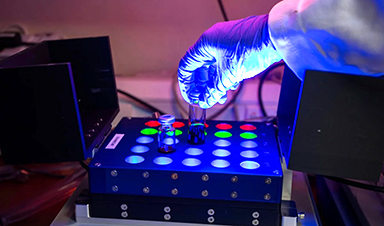
A Cambridge Lab Mistake Reveals a Powerful New Way to Modify Drug Molecules
A surprising lab discovery reveals a light-powered way to tweak complex drugs faster, cleaner, and later in development. Researchers at the University of Cambridge have created a new technique for altering complex drug molecules [...]
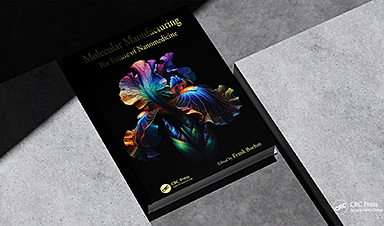
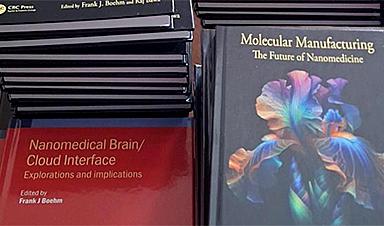
New book from NanoappsMedical Inc – Molecular Manufacturing: The Future of Nanomedicine
This book explores the revolutionary potential of atomically precise manufacturing technologies to transform global healthcare, as well as practically every other sector across society. This forward-thinking volume examines how envisaged Factory@Home systems might enable the cost-effective [...]
Scientists Discover Simple Saliva Test That Reveals Hidden Diabetes Risk
Researchers have identified a potential new way to assess metabolic health using saliva instead of blood. High insulin levels in the blood, known as hyperinsulinemia, can reveal metabolic problems long before obvious symptoms appear. It is [...]

One Nasal Spray Could Protect Against COVID, Flu, Pneumonia, and More
A single nasal spray vaccine may one day protect against viruses, pneumonia, and even allergies. For decades, scientists have dreamed of creating a universal vaccine capable of protecting against many different pathogens. The idea [...]
New AI Model Predicts Cancer Spread With Incredible Accuracy
Scientists have developed an AI system that analyzes complex gene-expression signatures to estimate the likelihood that a tumor will spread. Why do some tumors spread throughout the body while others remain confined to their [...]

Scientists Discover DNA “Flips” That Supercharge Evolution
In Lake Malawi, hundreds of species of cichlid fish have evolved with astonishing speed, offering scientists a rare opportunity to study how biodiversity arises. Researchers have identified segments of “flipped” DNA that may allow fish to adapt rapidly [...]
Our books now available worldwide!
Online Sellers other than Amazon, Routledge, and IOPP Indigo Global Health Care Equivalency in the Age of Nanotechnology, Nanomedicine and Artifcial Intelligence Global Health Care Equivalency In The Age Of Nanotechnology, Nanomedicine And Artificial [...]

Scientists Discover Why Some COVID Survivors Still Can’t Taste Food Years Later
A new study provides the first direct biological evidence explaining why some people continue to experience taste loss long after recovering from COVID-19. Researchers have uncovered specific biological changes in taste buds that could help [...]

Catching COVID significantly raises the risk of developing kidney disease, researchers find
Catching Covid significantly raises the risk of developing deadly kidney disease, research has shown. The virus was found to increase the chances that patients will develop the incurable condition by around 50 per cent. [...]
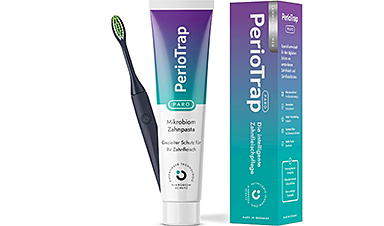
New Toothpaste Stops Gum Disease Without Harming Healthy Bacteria
Researchers have developed a targeted approach to combat periodontitis without disrupting the natural balance of the oral microbiome. The innovation could reshape how gum disease is treated while preserving beneficial bacteria. The human mouth [...]
Plastic Without End: Are We Polluting the Planet for Eternity?
The Kunming Montreal Global Biodiversity Framework calls for the elimination of plastic pollution by 2030. If that goal has been clearly set, why have meaningful measures that create real change still not been implemented? [...]
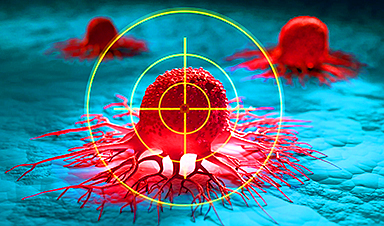
Scientists Rewire Natural Killer Cells To Attack Cancer Faster and Harder
Researchers tested new CAR designs in NK-92 cells and found the modified cells killed tumor cells more effectively, showing stronger anti-cancer activity. Researchers at the Ribeirão Preto Blood Center and the Center for Cell-Based [...]
New “Cellular” Target Could Transform How We Treat Alzheimer’s Disease
A new study from researchers highlights an unexpected player in Alzheimer’s disease: aging astrocytes. Senescent astrocytes have been identified as a major contributor to Alzheimer’s progression. The cells lose protective functions and fuel inflammation, particularly in [...]