Summary: Researchers introduced a highly reproducible three-dimensional human brain tissue model capable of replicating complex neurodegenerative processes in Alzheimer’s disease. Developed over nine years using human stem cells, the self-organizing tissue spheroids integrate functional neurons, astrocytes, and microglial immune cells into micro-architectures the size of half a pinhead.
The engineered tissue model faithfully expresses key Alzheimer’s-relevant genes and proteins, forms functional synaptic networks, and exhibits active microglial surveillance. The team demonstrated the platform’s clinical relevance by inducing characteristic amyloid beta aggregates and subsequently dissolving them using newly approved therapeutic antibodies.
Key Facts
- Tri-Culture Cellular Interplay: Unlike traditional two-dimensional cultures, the 3D spheroid model incorporates neurons forming functional synapses, astrocytes providing metabolic support, and microglial immune cells performing active tissue surveillance.
- Rapid Self-Organization: Driven by a proprietary differentiation cocktail and nutrient medium, differentiated stem cells assemble and self-organize into functional mini-tissue spheroids within one week.
- Transcriptomic & Proteomic Fidelity: Comprehensive testing confirmed that all primary genes and proteins associated with Alzheimer’s pathology and cell-to-cell signaling are fully active within the engineered tissues.
- Validation via Plaque Dissolution: The researchers successfully triggered human amyloid beta aggregate formation within the tissue spheroids and verified that current anti-amyloid Alzheimer’s therapeutics, mediated by active microglia, successfully cleared the pathology.
- Robotic Automation & Industrial Scaling: The laboratory is currently adapting the platform for automated robotic manufacturing to produce thousands of identical, diseased tissue spheroids for large-scale industrial drug testing.
Source: LMU
How can Alzheimer’s research be made faster, better, and more effective? After decades of intensive research worldwide and despite recent therapeutic advances, scientists have not managed to fully arrest the progress of the disease.
“What we are still lacking is three-dimensional models that accurately replicate the complex interactions in human brain tissue with Alzheimer’s disease,” explains Dominik Paquet, Professor of Neurobiology at the Institute for Stroke and Dementia Research at LMU University Hospital.

Alzheimer’s amyloid clearance and supports automated drug screening. Credit: Neuroscience News
This is precisely the area in which his team has now made major progress – with potentially far-reaching consequences for the development of new drugs against Alzheimer’s disease.
The group reported the exciting new results in the journal Nature Neuroscience.
For laypeople, it always seems a bit like magic when researchers take stem cells and grow tissues that resemble the human original. According to Dominik Paquet, however, it takes a mixture of scientific creativity, technical skills, and patience: “It took us nine years,” says the neuroscientist, “to develop our new, three-dimensional model of human brain tissue before it worked at all necessary levels.”
What does he mean by all necessary levels, we might ask? For Alzheimer’s research, the interaction of different cell types and their biochemical functions are the most important thing – much more so than the exact replication of the structure of the brain.
The right recipe for genuine interplay
The starting material for the new 3D tissue model is human stem cells, which can be converted into various brain cell types – in this case, neurons, astrocytes, and microglial cells. To obtain this set, the stem cells have to be treated with a cocktail of different substances “according to a very specific recipe we developed.”
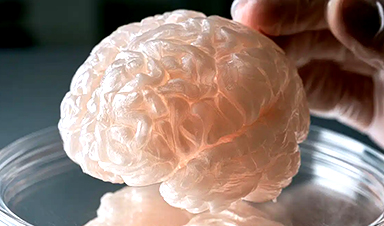
In a special nutrient solution, Paquet continues, the differentiated cells connect and adhere to each other. “Within a week, they form little tissue balls about the size of half a pinhead. These spheroids self-organize and take on key functions of the brain.”
Almost everything just like in a real human brain
Their neurons form extensions and connect with functional synapses. The astrocytes supply their neighbors with nutrients. And the microglial cells – the immune cells of the brain – monitor their environment and ensure that no dead cells or foreign matter that does not belong there can accumulate. “We also tested whether all genes and proteins that are important for the study of Alzheimer’s disease are active in our tissue model,” says the neuroscientist. “And that was indeed the case.
Reproducible, modifiable – and disease-relevant
Another major advantage of the system is its reproducibility. That is to say, if you follow the instructions of the Munich researchers, you will reliably obtain tissue structures with the same composition and the same functions.
“However, we can also modify the generated brain tissue from the outside,” says Dominik Paquet. “For example, we can trigger symptoms of a disease like Alzheimer’s, test potential drugs, and so forth.” In fact, the researchers have successfully induced the formation of the Alzheimer’s-typical amyloid aggregates – and then dissolved them again with new drugs that are already available. The microglia that play a key role in the disease were demonstrably active in the process.
Next step: automation for efficient drug development
“Our system,” says Dominik Paquet, “could help accelerate the development of new drugs.”
With this goal in mind, his team is currently working on automating and scaling the manufacture of the tissue models using robots. This would mean manufacturing hundreds or even thousands of tissues with the same disease symptoms. This is particularly important for applications in industrial-scale medicine – for example, to be able to efficiently test many new substances in a human system for their effectiveness against Alzheimer’s.
Key Questions Answered:
Q: Why are three-dimensional tissue models better than traditional cell cultures for Alzheimer’s research?
A: Traditional 2D cell cultures grow flat on plastic dishes and lack the complex structural interactions, spatial organization, and multi-cell communication found in a living brain. The 3D spheroid model brings neurons, astrocytes, and microglia together in a spatial framework that allows microglial immune cells to actively clear dead cells and pathology just as they would in human brain tissue.
Q: What specific brain cell types are included in the new LMU Munich tissue model?
A: The model uses human stem cells differentiated into three primary cell populations: neurons (which build functional synaptic connections), astrocytes (which support cell metabolism and structure), and microglia (the resident immune cells responsible for monitoring brain health and clearing toxic protein aggregates).
Q: How does this development accelerate the discovery of new Alzheimer’s drugs?
A: Because the system is highly reproducible and being adapted for robotic automation, pharmaceutical companies will be able to manufacture thousands of standardized human brain tissue models exhibiting Alzheimer’s symptoms. This allows researchers to test thousands of potential drug candidates rapidly in a realistic human cellular environment before moving to animal or clinical trials.
Editorial Notes:
- This article was edited by a Neuroscience News editor.
- Journal paper reviewed in full.
- Additional context added by our staff.
About this Alzheimer’s disease research news
Author: Dominic Anders
Source: LMU
Contact: Dominic Anders – LMU
Image: The image is credited to Neuroscience News

News – Curated by Amanda Scott, Alias Group Creative
Follow her on Bluesky
Cancer’s Hidden Antioxidant Shield Helps It Escape the Immune System
Blocking an antioxidant protein that tumors use to suppress immune attacks improved cancer immunotherapy responses in mice. Cancer cells can release antioxidants that interfere with the immune cells trying to kill them. Researchers have [...]

Scientists Find a Berry Compound That Helps Muscle Cells Burn Fat
Pterostilbene, a compound found naturally in some foods, affects how skeletal muscles process fats by stabilizing a protein called PPARδ and increasing its signaling activity. Pterostilbene, a natural compound found in blueberries, grapes, and [...]
Two Hidden Forces Help Build the Human Brain Before Birth
Scientists have uncovered two surprising forces that help guide how the human brain forms before birth. Before birth, the human brain is shaped in large part by an unusual class of stem cells known [...]
Researchers Uncover a Hidden Trigger Behind Chronic Inflammation
The findings offer new insights that could help guide the development of future therapies. A protein called human resistin may help flip on one of the immune system’s most powerful inflammatory switches. Researchers at [...]
Scientists Have Uncovered Previously Hidden Microbial Activity on Human Skin
The most abundant microbes on your skin may not be the ones doing most of the work. Human skin supports vast communities of bacteria, fungi, and viruses that can influence its protective barrier, immune [...]
Brazilian Tree Compounds Fight COVID-19 on Multiple Fronts
Scientists found compounds in a Brazilian tree that hit SARS-CoV-2 on multiple fronts, revealing a promising new lead in the search for COVID-19 treatments. Researchers have found that galloylquinic acids extracted from the leaves [...]
Cutting Two Amino Acids Slowed Prostate Cancer in Mice
A newly identified link between amino acid metabolism and cholesterol production may help prostate tumors adapt to hormone therapy. Prostate cancer can find ways around treatments designed to deprive tumors of the hormones they [...]
Largest-Ever Physics Survey Raises New Doubts About Our Model of the Universe
Physicists around the world remain deeply divided on key mysteries of the universe, from dark matter to quantum gravity. The standard cosmological model failed to gain majority support, and no leading theory dominated the [...]

Scientists Just Overturned a 100-Year-Old Belief About Bacteria in the Lungs
New findings raise questions about the role of microbes living in the lungs. More than 35 trillion bacteria live throughout the human body, forming microbiomes in the gut, mouth, lungs, skin, and urogenital tract. [...]

GHCE Concept
From the preface of the book Global Health Care Equivalency in the Age of Nanotechnology, Nanomedicine and Artificial Intelligence, Edited by Frank Boehm: Since the publication of my first book (Nanomedical Device and Systems [...]

Novartis, Ionis drug failure spurs questions
Pelacarsen didn’t protect heart health despite lowering levels of a protein particle, “Lp(a),” in a large clinical trial — a result with important implications for cardiovascular drug research. Dive Brief: An RNA drug from [...]
New injectable treatment helps the brain rebuild after stroke
Biomedical engineers at Duke University have created an injectable biomaterial that may help the brain recover from damage left behind by an ischemic stroke. In experiments with mice, the material transformed the cavity created [...]
Scientists Discover a Hidden “Immune Organ” Inside the Skull
Researchers discovered lymph node-like immune hubs inside skull bone marrow that appear to act as rapid-response centers for the brain. For decades, the brain was thought to operate largely apart from the immune system. [...]

Engineered tRNAs and lipid nanoparticles target nonsense mutation cystic fibrosis
Researchers have developed a potential new approach for treating a form of cystic fibrosis caused by so-called nonsense mutations, combining chemically modified transfer RNAs with lipid nanoparticles designed to deliver the therapy directly to [...]
New pancreatic cancer drug carries a $39,800 monthly list price
A groundbreaking treatment for one of the most common forms of pancreatic cancer has been approved in pill form by the FDA. Revolution Medicines’ oral tablet daraxonrasib, branded as Rasonque, reduced the risk of [...]
Researchers Have Discovered a New Way To Reduce Chronic Nerve Pain
A cancer-linked protein called BRAF may help drive chronic nerve pain, and existing cancer drugs targeting it reduced pain sensitivity in preclinical models. Chronic nerve pain can persist long after an injury and often [...]