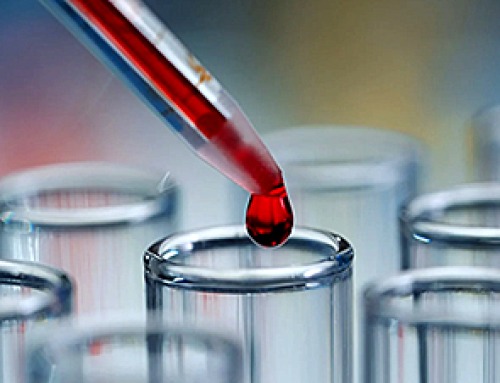
Scientists have backed proposals for Covid boosters in the autumn after blood tests on hundreds of people revealed that protective antibodies can wane substantially within weeks of second vaccine shots being given.
Falls in antibodies after vaccination are expected and do not necessarily mean people are more vulnerable to disease, but the researchers are concerned that if the declines persist the effectiveness of the vaccines may diminish.
The UCL Virus Watch study found that antibodies generated by two doses of the Oxford/AstraZeneca and Pfizer/BioNTech vaccines started to wane as early as six weeks after the second shot, in some cases falling more than 50% over 10 weeks.
The researchers stress that both vaccines are extremely effective against Covid, but say the findings support plans for a booster campaign this autumn, particularly for those who were vaccinated early and with the Oxford/AstraZeneca shot.
“We know levels of antibodies start high and drop substantially,” said Prof Rob Aldridge, an infectious disease epidemiologist at University College London. “We’re concerned that if they carry on dropping at the rate we’ve seen, the protective effects of the vaccines will start to drop too, and the big question is, when is that going to happen?”
Interim advice from the Joint Committee on Vaccination and Immunisation (JCVI) last month encouraged the NHS to prepare for an autumn booster programme, but a final decision on whether to proceed has not been made. It is unclear whether protection from vaccines has weakened enough to warrant boosters and many experts argue the doses are needed more urgently in other countries.
The UCL team analysed blood from 605 vaccinated people mostly in their 50s and 60s. They found that antibody levels varied widely between patients, but a double dose of Pfizer/BioNTech tended to produce far more antibodies against the coronavirus than two shots of the Oxford/AstraZeneca vaccine.
Three to six weeks after full vaccination with Pfizer, antibody levels typically stood at about 7,500 units per millilitre (ml), but more than halved to 3,320 units per ml after 10 weeks. For AstraZeneca, antibody levels peaked at about 1,200 units per ml and typically fell to 190 units per ml after 10 weeks. Since publishing the results in a letter to the Lancet, the researchers have seen the same trend in a further 4,500 participants in the study.
While antibody levels are important for protection, the immune system has other defences that are built up after infection or vaccination. It is normal for antibody levels to wane over time and for the immune system to “remember” the infection with memory B cells. Should the virus invade, these cells rapidly churn out antibodies targeted at the virus. Further protection comes from T cells, which destroy infected cells and limit the severity of disease.
“Antibodies are not the perfect measure of risk; we don’t know if there’s a magic number, as it were, where the risk of infection or hospitalisation becomes important,” said Aldridge. “But we think these data support the JCVI case for boosters, with priority for the clinically vulnerable, the over-70s, and all people living in residential care homes for older adults.”
The findings have been considered by the JCVI but are unlikely to have a major impact on discussions over boosters. A loss of antibodies is a warning sign that vaccines may wear off over time but does not say when that point comes. Public health authorities will not know for sure until people who had their second shots early in the rollout start turning up in hospitals. A decision on the booster programme is expected before that happens.

News

Our books now available worldwide!
Online Sellers other than Amazon, Routledge, and IOPP Indigo Global Health Care Equivalency in the Age of Nanotechnology, Nanomedicine and Artifcial Intelligence Global Health Care Equivalency In The Age Of Nanotechnology, Nanomedicine And Artificial [...]

Study finds higher heart disease risk in long COVID patients
People with long COVID are at increased risk of developing cardiovascular disease, according to a new study from Karolinska Institutet published in eClinicalMedicine. The results show that the risk of conditions such as cardiac arrhythmias [...]
The Corona variant Cicada is here – we know that
Online and on social media, reports are piling up about a new Sars-Cov-2 variant that is currently on the rise: BA.3.2, also known as Cicada. That's what it's all about: The Omicron variant BA.3.2, [...]
A Simple Blood Test Could Predict Dementia Risk 25 Years Early
A single blood marker may quietly signal dementia risk decades in advance. Scientists at the University of California, San Diego, have identified a blood signal that could forecast dementia risk decades before symptoms begin. Their [...]

Sperm Get Lost in Space and Scientists Finally Know Why
Having a baby in space may be far more complicated than expected, as new research shows sperm struggle to find their way in microgravity. Starting a family beyond Earth could be more complicated than [...]
Digital Dementia – Brain fog and disassociation from being chronically online
New medical evidence, featured on 60 Minutes Australia, indicates excessive screen time is causing "digital dementia" in young Australians, with brain scans showing physical shrinkage and damage. Experts warn that high device usage (6-8 hours [...]
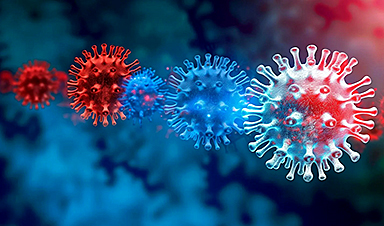
A new, highly mutated COVID variant called ‘Cicada’ is spreading in the US.
BA.3.2, a heavily mutated new COVID-19 variant which may be better able to escape immunity from vaccines or prior infection, is now spreading in the United States. Although COVID cases are currently low nationally, [...]
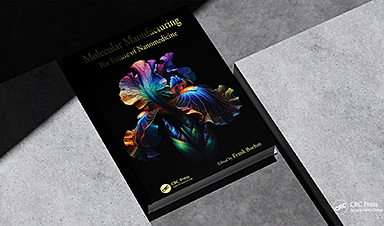
Molecular Manufacturing: The Future of Nanomedicine – New book from NanoappsMedical Inc.
This book explores the revolutionary potential of atomically precise manufacturing technologies to transform global healthcare, as well as practically every other sector across society. This forward-thinking volume examines how envisaged Factory@Home systems might enable the cost-effective [...]

Ancient bacteria strain discovered in ice cave is resistant to some modern antibiotics
In the depths of Scarisoara cave in Romania sits one of the world’s biggest underground glaciers, a monumental slab of ice the size of roughly 40 Olympic swimming pools that began to form around [...]

Scientists Identify “Good” Bacteria That May Prevent Long COVID
According to the WHO, about 6% of people worldwide who get COVID-19, roughly 400 million people, later develop a long-lasting form of the illness. That shows the condition remains a significant public health challenge. In [...]
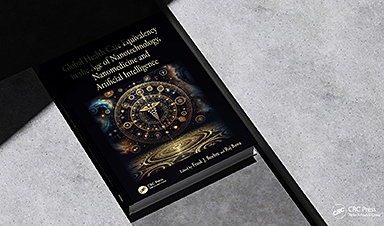
New book from Nanoappsmedical Inc. – Global Health Care Equivalency
A new book by Frank Boehm, NanoappsMedical Inc. Founder. This groundbreaking volume explores the vision of a Global Health Care Equivalency (GHCE) system powered by artificial intelligence and quantum computing technologies, operating on secure [...]
RNA Recycling Extends Lifespan
Summary: Researchers discovered a biological “trash disposal” mechanism that directly controls how fast we age. While circular RNA has long been known to accumulate in cells as we get older, this study proves for the [...]
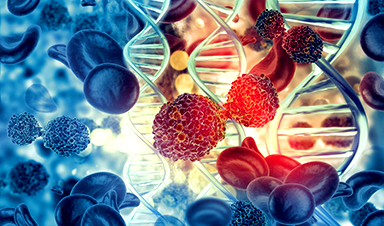
Cancer’s Deadly Paradox: How Tumors Break Their Own DNA To Keep Growing
Cancer’s strongest gene switches push DNA into damaging overdrive, creating repeated breaks and repairs that may fuel tumor evolution while exposing possible therapeutic weak spots. A new study indicates that cancer can harm its own genetic [...]
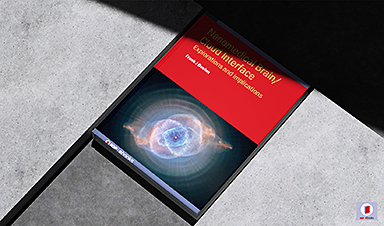
NanoMedical Brain/Cloud Interface – Explorations and Implications. A new book from Frank Boehm
New book from Frank Boehm, NanoappsMedical Inc Founder: This book explores the future hypothetical possibility that the cerebral cortex of the human brain might be seamlessly, safely, and securely connected with the Cloud via [...]
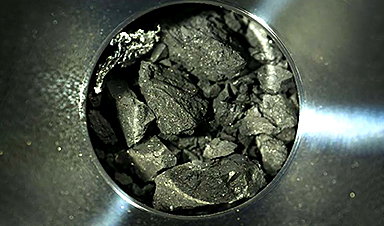
Ryugu asteroid samples contain all DNA and RNA building blocks, bolstering origin-of-life theories
All the essential ingredients to make the DNA and RNA underpinning life on Earth have been discovered in samples collected from the asteroid Ryugu, scientists said Monday. The discovery comes after these building blocks [...]

Is Berberine Really a “Natural Ozempic”?
Often labeled a “natural Ozempic,” berberine is widely discussed as a metabolic aid. Yet research suggests its influence may lie deeper. In recent years, berberine has gained significant attention as a supposed “natural way” [...]