Researchers at the University of Geneva are combing through collections of approved drugs to find new therapies for rare diseases – with some success. This approach is gaining traction around the world, while pharmaceutical companies’ interest in developing drugs is waning.
The GNAO1 gene encodes the G-protein Gαo, one of the brain’s most important signaling regulators. It works like a molecular switch that turns on and off to prevent neurons from becoming either too active or underactive. Mutations in the GNAO1 gene, which affect about 400 people worldwide, lead to seizures, developmental delays and movement disorders.
The first GNAO1 mutations were not identified until 2013. However, Katanaev, a professor of cell physiology and metabolism, had already been researching the Gαo protein for almost 20 years at that time. So when parents of children diagnosed with GNAO1 disease for which there is no approved treatment began looking for professionals, they naturally came across Katanaev’s research.
With around 175,000 Swiss francs ($215,000) in funding from foundations and patient organizations, Katanaev and his team were able to find out how the mutations disrupt the Gαo protein and trigger the disease. Specifically, the team realized that the disease-causing mutations knock a single amino acid called glutamine 205 out of position and thereby disrupt GTPase activity, i.e. the shutdown mechanism.
With these new insights into the protein, Katanaev’s team was looking for a way to restore the function of the defective protein. But for them, as researchers at a university, the idea of developing a new drug was daunting. It is estimated that it costs 1 to 2 billion dollars (810 million to 1.6 billion Swiss francs) to develop and bring a drug to market and takes a decade or more. The lab lacked the means to discover or produce an entirely new molecule and go through all the steps leading up to application to patients.
“Given the very small patient population, it would require too much investment,” says Katanaev. Instead, the team decided to see if they could find an already approved drug that could work.
Using old drugs for new purposes is not a completely new concept. Many of the most well-known drugs, such as GLP-1 preparations for obesity or Viagra for erectile dysfunction, were originally tested or approved for other purposes.
But in the case of rare diseases, the concept is attracting increasing interest. Of the approximately 7000 rare diseases, only 6% have an approved treatment. Although around 300 million people worldwide are living with a rare disease, each of them affects only a small number of them.
“In the case of rare diseases, the usual process of drug development cannot be used because it takes too long and is too expensive,” explains Katanaev. “It only makes sense if the market is big enough.”
Finding another way
Regulatory incentives such as accelerated approval procedures and longer exclusivity periods have prompted large pharmaceutical companies to invest in the development of drugs against rare diseases. But there are signs that these investments are declining.
A Report by data analytics firm Evaluate estimates that the share of drug candidates for rare diseases will fall from 30% in 2027 to 22% in 2032. The authors attribute this to the growing interest of major pharmaceutical companies in widespread diseases such as obesity.
“We need other approaches,” says Katanaev. “Drug repurposing is an abbreviation that can lead to a drug in a relatively short time and with a relatively small investment.”
Major advances in the understanding of genetics make it easier for university laboratories like Katanaev’s to study mutations and understand how they cause disease. Artificial intelligence is also helping some laboratories to evaluate huge amounts of molecular data and create computer models that can be used to test drugs.

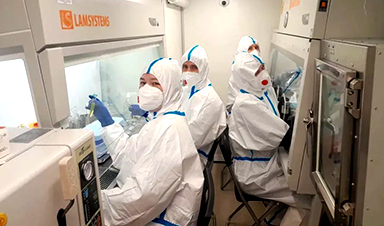
Many laboratories now have facilities for high-throughput screening, which large pharmaceutical companies often use to identify and design new molecules.
Katanaev’s team used this method to search a collection of around 3000 drugs approved in the U.S. and test whether they have an effect on the Gαo protein. Zink stood out. It was shown that zinc was able to partially restore the function of the mutated protein. Katanaev’s team tested this hypothesis in models with flies and mice and found that zinc was safe and effective.
Because zinc therapy is already approved for Wilson’s disease, Katanaev and doctors at the University Hospital of Cologne – based on these promising preclinical results – began the first tests on humans: a three-year-old boy with a GNAO1 mutation. Shortly after starting treatment, the boy had fewer seizures, and his sudden, jerky movements almost completely stopped. One year after the treatment, his condition is stable.
Although it is not a cure, the quality of life of the patient and his family has improved significantly. Thanks to a crowdfunding campaign by the German GNAO1 patient organization, the Cologne team is now testing zinc in a clinical trial on 13 patients with GNAO1 diseases.
Meanwhile, families of sufferers from around the world are turning to Katanaev’s lab to see if the same approach can be used to identify existing drugs that could work against other rare genetic diseases. The lab is currently working with a team of postdocs in Geneva on six genetic diseases.
Growing momentum
In view of the burden on healthcare systems, more and more initiatives and patient groups are committed to advancing the use of already approved active ingredients for new indications, especially in Europe. Some Experts assume that 75% of existing drugs could be used for another disease. Unlike some new drugs, such as gene therapies with prices of $2 million to $3 million per dose, many repurposed drugs are already patent-free generics. This makes them more affordable for patients.
Horizon Europe, the European Union’s seven-year flagship programme for the promotion of research and innovation, invested 23 million euros (22 million Swiss francs) over five years in 2022 to establish a European platform for drug repositioning called REMEDi4ALL. The initiative aims to accelerate the development of and access to repositioned therapies by pooling expertise and fostering collaboration between patients, researchers, clinicians, regulators, and other stakeholders.
However, major challenges remain. With an existing drug, even an old one, approval and reimbursement are anything but easy. While repositioned drugs can often draw on existing safety data and in some cases avoid Phase I trials, they still need to undergo clinical testing to prove efficacy in the new disease and determine the right dosage. Zinc salts, for example, which are available in pharmacies as dietary supplements, are dosed significantly lower than required for Wilson’s disease and GNAO1 diseases.
“There is still no dedicated regulatory pathway for drug repositioning that would streamline and speed up the process,” says Claudia Fuchs, Senior Project Manager at EURORDIS Rare Diseases Europe, a coalition of more than 1000 rare disease patient organisations.
Some Studies estimate that repurposing a drug from the lab to the patient still costs around $300 million and can take 6 to 8 years, compared to 10 to 15 years for a new drug. Katanaev is convinced that his laboratory can reposition drugs in 2 to 3 years and for around $1 million, including clinical trials.
University laboratories often lack the resources, regulatory know-how, and clinical development experience needed to get repositioned drugs through the long and complex development process. Pharmaceutical companies could take on this task, but are usually not interested in testing and marketing old drugs.
“A lot of money is flowing into new approaches,” says Fuchs. “But when it comes to finding new applications for generics, companies lack the incentive.”
Without industry, it is usually patient organizations that have to bear the costs – and make difficult decisions about how and where to use their very limited resources.
Nevertheless, the repositioning of the active ingredient is not a panacea. There is no guarantee that an approved drug will help with a particular disease. And if they do, it is unclear how much the individual patients will benefit.
“If we’re lucky, as in the case of zinc, repositioning can find a drug for a condition that is otherwise untreatable and would remain untreatable forever,” says Katanaev. “At present, conventional drug development is not economically feasible.”
Edited by Virginie Mangin/ts; Translation from English: Michael Heger/cm

News – Curated by Amanda Scott, Alias Group Creative
Follow her on Bluesky

Researchers Discover What Reading for Pleasure May Be Doing to Your Brain
Reading for pleasure may offer surprising benefits for the brain, with research linking the habit to better mental health, stronger cognitive abilities, and a lower risk of dementia. Reading for pleasure may do far [...]
Scientists Discover a Hidden Trigger That Keeps Inflammation Alive
Inflammation persists after proteins detach from immune receptors, revealing a potential target for autoimmune treatments. Since a Nobel Prize-winning discovery in the 1990s identified molecules called Toll-like Receptors as the guardians of the human [...]

A Virus Gives Itself Away the Moment It Attacks
Researchers have found the trigger behind a powerful bacterial defense against viruses. Viruses that prey on bacteria could become an increasingly important tool for treating bacterial infections, particularly as antibiotic resistance makes some infections [...]
Scientists Discover Aspirin May Slash Dementia Risk by 70% – but Only for Certain People
Aspirin was linked to a sharply lower dementia risk in some older adults, and their genes may hold the clue. A Monash University analysis found that older adults with a particular genetic profile had [...]
Inflammation May Awaken Dormant Cancer Cells Years After Treatment
The body’s response to inflammation may disturb cancer cells that have been lying silent for years, giving them an opportunity to grow again. Researchers at the Francis Crick Institute have found that gut inflammation [...]

Where do nanoparticles go once they enter the body?
New international best practice guidance, co-written at ANSTO, sets out how to measure where nanoparticles like titanium dioxide end up in the body and how long they remain. The guidance has been shared by [...]
Long-Acting HIV Shots Could Solve a Major Treatment Challenge for Young People
A major African trial suggests that changing how HIV treatment is delivered could significantly improve viral suppression in adolescents. Young people with HIV were more likely to keep the virus suppressed when they received [...]

WHO Factsheets – The top 10 causes of death
In 2023, the 10 leading causes of death accounted for 33 million deaths, or 54% of the total 61 million deaths worldwide. The top global causes of death, in order of total number of lives lost, [...]

Aging Cells May Be Hiding From the Immune System – Scientists Think They Know How
Your immune system is supposed to clear out damaged cells. Researchers may have found how some of them hide and linger as the body ages. Researchers led by Cedars-Sinai Health Sciences University have identified [...]

Your Voice May Reveal How Fast Your Brain Is Aging
Researchers have developed a machine-learning “speech clock” that estimates age from subtle patterns in how people speak and what they say. It is possible that people’s voices may contain certain signals of aging that [...]

Optogenetics Pioneers Win 2026 Nobel Prize in Physiology or Medicine
The 2026 Nobel Prize in Physiology or Medicine has been awarded to Peter Hegemann, Georg Nagel, and Karl Deisseroth for the development of optogenetics, a revolutionary technology that uses light to control individual neurons [...]

Molecular Manufacturing: The Future of Nanomedicine – From NanoappsMedical Inc.
This book explores the revolutionary potential of atomically precise manufacturing technologies to transform global healthcare, as well as practically every other sector across society. This forward-thinking volume examines how envisaged Factory@Home systems might enable the cost-effective [...]

What is ‘American Covid’ and how bad is it?
Cases of so-called ‘American Covid’ are on the rise in the UK. The strain is officially called XFG, or ‘Stratus’, and is the most common variant in North America, hence the name. It might soon [...]
Researcher at Russian plague laboratory dies of ‘unknown’ infection
Russian authorities have imposed "anti-epidemic measures" after a laboratory worker at an institute in Siberia dedicated to studying the plague and other infectious diseases died of a mysterious illness. The researcher, a 28-year-old female [...]

GHCE Concept
From the preface of the book Global Health Care Equivalency in the Age of Nanotechnology, Nanomedicine and Artificial Intelligence, Edited by Frank Boehm: Since the publication of my first book (Nanomedical Device and Systems [...]

A Surprising Brain Signal Could Explain Why Eating Less Protein Extends Lifespan
A new paper suggests that limiting protein intake triggers a coordinated response throughout the body that may help explain how protein restriction affects healthy aging. Animals respond to protein restriction, or reduced protein in [...]