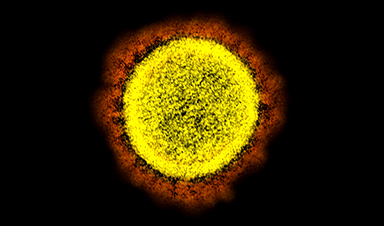
The genome of the SARS-CoV-2 virus encodes 29 proteins, one of which is an ion channel called E. This channel, which transports protons and calcium ions, induces infected cells to launch an inflammatory response that damages tissues and contributes to the symptoms of COVID-19.
“The E channel is an antiviral drug target. If you can stop the channel from sending calcium into the cytoplasm, then you have a way to reduce the cytotoxic effects of the virus,” says Mei Hong, an MIT professor of chemistry and the senior author of the study.
MIT postdoc Joao Medeiros-Silva is the lead author of the study, which appears in Science Advances. MIT postdocs Aurelio Dregni and Pu Duan and graduate student Noah Somberg are also authors of the paper.
Open and closed
Hong has extensive experience in studying the structures of proteins that are embedded in cell membranes, so when the COVID-19 pandemic began in 2020, she turned her attention to the coronavirus E channel.
When SARS-CoV-2 infects cells, the E channel embeds itself inside the membrane that surrounds a cellular organelle called the ER-Golgi intermediate compartment (ERGIC). The ERGIC interior has a high concentration of protons and calcium ions, which the E channel transports out of ERGIC and into the cell cytoplasm. That influx of protons and calcium leads to the formation of multiprotein complexes called inflammasomes, which induce inflammation.
To study membrane-embedded proteins such as ion channels, Hong has developed techniques that use nuclear magnetic resonance (NMR) spectroscopy to reveal the atomic-level structures of those proteins. In previous work, her lab used these techniques to discover the structure of an influenza protein known as the M2 proton channel, which, like the coronavirus E protein, consists of a bundle of several helical proteins.
Early in the pandemic, Hong’s lab used NMR to analyze the structure of the coronavirus E channel at neutral pH. The resulting structure, reported in 2020, consisted of five helices tightly bundled together in what appeared to be the closed state of the channel.
“By 2020, we had matured all the NMR technologies to solve the structure of this kind of alpha-helical bundles in the membrane, so we were able to solve the closed E structure in about six months,” Hong says.
Once they established the closed structure, the researchers set out to determine the structure of the open state of the channel. To induce the channel to take the open conformation, the researchers exposed it to a more acidic environment, along with higher calcium ion levels. They found that under these conditions, the top opening of the channel (the part that would extend into the ERGIC) became wider and coated with water molecules. That coating of water makes the channel more inviting for ions to enter.
That pore opening also contains amino acids with hydrophilic side chains that dangle from the channel and help to attract positively charged ions.
The researchers also found that while the closed channel has a very narrow opening at the top and a broader opening at the bottom, the open state is the opposite: broader at the top and narrower at the bottom. The opening at the bottom also contains hydrophilic amino acids that help draw ions through a narrow “hydrophobic gate” in the middle of the channel, allowing the ions to eventually exit into the cytoplasm.
Near the hydrophobic gate, the researchers also discovered a tight “belt,” which consists of three copies of phenylalanine, an amino acid with an aromatic side chain. Depending on how these phenylalanines are arranged, the side chains can either extend into the channel to block it or swing open to allow ions to pass through.
“We think the side chain conformation of these three regularly spaced phenylalanine residues plays an important role in regulating the closed and open state,” Hong says.
Viral targeting
Previous research has shown that when SARS-CoV-2 viruses are mutated so that they don’t produce the E channel, the viruses generate much less inflammation and cause less damage to host cells.
Working with collaborators at the University of California at San Francisco, Hong is now developing molecules that could bind to the E channel and prevent ions from traveling through it, in hopes of generating antiviral drugs that would reduce the inflammation produced by SARS-CoV-2.
Her lab is also planning to investigate how mutations in subsequent variants of SARS-CoV-2 might affect the structure and function of the E channel. In the omicron variant, one of the hydrophilic, or polar, amino acids found in the pore opening is mutated to a hydrophobic amino acid called isoleucine.
“The E variant in omicron is something we want to study next,” Hong says. “We can make a mutant and see how disruption of that polar network changes the structural and dynamical aspect of this protein.”

News
Scientists Have Uncovered Previously Hidden Microbial Activity on Human Skin
The most abundant microbes on your skin may not be the ones doing most of the work. Human skin supports vast communities of bacteria, fungi, and viruses that can influence its protective barrier, immune [...]
Brazilian Tree Compounds Fight COVID-19 on Multiple Fronts
Scientists found compounds in a Brazilian tree that hit SARS-CoV-2 on multiple fronts, revealing a promising new lead in the search for COVID-19 treatments. Researchers have found that galloylquinic acids extracted from the leaves [...]
Cutting Two Amino Acids Slowed Prostate Cancer in Mice
A newly identified link between amino acid metabolism and cholesterol production may help prostate tumors adapt to hormone therapy. Prostate cancer can find ways around treatments designed to deprive tumors of the hormones they [...]
Largest-Ever Physics Survey Raises New Doubts About Our Model of the Universe
Physicists around the world remain deeply divided on key mysteries of the universe, from dark matter to quantum gravity. The standard cosmological model failed to gain majority support, and no leading theory dominated the [...]

Scientists Just Overturned a 100-Year-Old Belief About Bacteria in the Lungs
New findings raise questions about the role of microbes living in the lungs. More than 35 trillion bacteria live throughout the human body, forming microbiomes in the gut, mouth, lungs, skin, and urogenital tract. [...]

GHCE Concept
From the preface of the book Global Health Care Equivalency in the Age of Nanotechnology, Nanomedicine and Artificial Intelligence, Edited by Frank Boehm: Since the publication of my first book (Nanomedical Device and Systems [...]

Novartis, Ionis drug failure spurs questions
Pelacarsen didn’t protect heart health despite lowering levels of a protein particle, “Lp(a),” in a large clinical trial — a result with important implications for cardiovascular drug research. Dive Brief: An RNA drug from [...]
New injectable treatment helps the brain rebuild after stroke
Biomedical engineers at Duke University have created an injectable biomaterial that may help the brain recover from damage left behind by an ischemic stroke. In experiments with mice, the material transformed the cavity created [...]
Scientists Discover a Hidden “Immune Organ” Inside the Skull
Researchers discovered lymph node-like immune hubs inside skull bone marrow that appear to act as rapid-response centers for the brain. For decades, the brain was thought to operate largely apart from the immune system. [...]
Engineered tRNAs and lipid nanoparticles target nonsense mutation cystic fibrosis
Researchers have developed a potential new approach for treating a form of cystic fibrosis caused by so-called nonsense mutations, combining chemically modified transfer RNAs with lipid nanoparticles designed to deliver the therapy directly to [...]
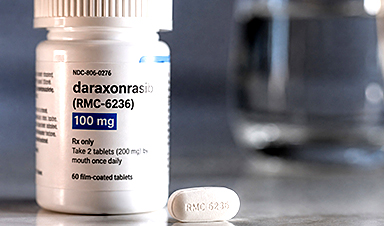
New pancreatic cancer drug carries a $39,800 monthly list price
A groundbreaking treatment for one of the most common forms of pancreatic cancer has been approved in pill form by the FDA. Revolution Medicines’ oral tablet daraxonrasib, branded as Rasonque, reduced the risk of [...]
Researchers Have Discovered a New Way To Reduce Chronic Nerve Pain
A cancer-linked protein called BRAF may help drive chronic nerve pain, and existing cancer drugs targeting it reduced pain sensitivity in preclinical models. Chronic nerve pain can persist long after an injury and often [...]
Our books now available worldwide!
Online Sellers other than Amazon, Routledge, and IOPP Indigo Global Health Care Equivalency in the Age of Nanotechnology, Nanomedicine and Artifcial Intelligence Global Health Care Equivalency In The Age Of Nanotechnology, Nanomedicine And Artificial [...]

Quantum-Enabled Regenerative Health: Reimagining Wellness, Precision Health and Longevity Medicine
Introduction Healthcare is approaching a frontier where the quantum portfolio could influence not only how disease is diagnosed and treated, but how health itself is measured, modeled, predicted and preserved. Quantum computing, quantum simulation, [...]

FDA Clears First-of-Its-Kind Nonmedication Treatment for PTSD
The FDA has cleared a system that uses brain activity data to personalize magnetic stimulation for PTSD, adding a new nonmedication treatment option. Every day in the United States, approximately 17.5 veterans die by suicide, [...]
FDA approves breakthrough drug to treat advanced pancreatic cancer
The Food and Drug Administration (FDA) approved on Wednesday a drug that could extend the survival of those with metastatic pancreatic cancer. The drug, called daraxonrasib, will be sold under the brand name Rasonque [...]