Researchers at the University of Geneva are combing through collections of approved drugs to find new therapies for rare diseases – with some success. This approach is gaining traction around the world, while pharmaceutical companies’ interest in developing drugs is waning.
The GNAO1 gene encodes the G-protein Gαo, one of the brain’s most important signaling regulators. It works like a molecular switch that turns on and off to prevent neurons from becoming either too active or underactive. Mutations in the GNAO1 gene, which affect about 400 people worldwide, lead to seizures, developmental delays and movement disorders.
The first GNAO1 mutations were not identified until 2013. However, Katanaev, a professor of cell physiology and metabolism, had already been researching the Gαo protein for almost 20 years at that time. So when parents of children diagnosed with GNAO1 disease for which there is no approved treatment began looking for professionals, they naturally came across Katanaev’s research.
With around 175,000 Swiss francs ($215,000) in funding from foundations and patient organizations, Katanaev and his team were able to find out how the mutations disrupt the Gαo protein and trigger the disease. Specifically, the team realized that the disease-causing mutations knock a single amino acid called glutamine 205 out of position and thereby disrupt GTPase activity, i.e. the shutdown mechanism.
With these new insights into the protein, Katanaev’s team was looking for a way to restore the function of the defective protein. But for them, as researchers at a university, the idea of developing a new drug was daunting. It is estimated that it costs 1 to 2 billion dollars (810 million to 1.6 billion Swiss francs) to develop and bring a drug to market and takes a decade or more. The lab lacked the means to discover or produce an entirely new molecule and go through all the steps leading up to application to patients.
“Given the very small patient population, it would require too much investment,” says Katanaev. Instead, the team decided to see if they could find an already approved drug that could work.
Using old drugs for new purposes is not a completely new concept. Many of the most well-known drugs, such as GLP-1 preparations for obesity or Viagra for erectile dysfunction, were originally tested or approved for other purposes.
But in the case of rare diseases, the concept is attracting increasing interest. Of the approximately 7000 rare diseases, only 6% have an approved treatment. Although around 300 million people worldwide are living with a rare disease, each of them affects only a small number of them.
“In the case of rare diseases, the usual process of drug development cannot be used because it takes too long and is too expensive,” explains Katanaev. “It only makes sense if the market is big enough.”
Finding another way
Regulatory incentives such as accelerated approval procedures and longer exclusivity periods have prompted large pharmaceutical companies to invest in the development of drugs against rare diseases. But there are signs that these investments are declining.
A Report by data analytics firm Evaluate estimates that the share of drug candidates for rare diseases will fall from 30% in 2027 to 22% in 2032. The authors attribute this to the growing interest of major pharmaceutical companies in widespread diseases such as obesity.
“We need other approaches,” says Katanaev. “Drug repurposing is an abbreviation that can lead to a drug in a relatively short time and with a relatively small investment.”
Major advances in the understanding of genetics make it easier for university laboratories like Katanaev’s to study mutations and understand how they cause disease. Artificial intelligence is also helping some laboratories to evaluate huge amounts of molecular data and create computer models that can be used to test drugs.

Many laboratories now have facilities for high-throughput screening, which large pharmaceutical companies often use to identify and design new molecules.
Katanaev’s team used this method to search a collection of around 3000 drugs approved in the U.S. and test whether they have an effect on the Gαo protein. Zink stood out. It was shown that zinc was able to partially restore the function of the mutated protein. Katanaev’s team tested this hypothesis in models with flies and mice and found that zinc was safe and effective.
Because zinc therapy is already approved for Wilson’s disease, Katanaev and doctors at the University Hospital of Cologne – based on these promising preclinical results – began the first tests on humans: a three-year-old boy with a GNAO1 mutation. Shortly after starting treatment, the boy had fewer seizures, and his sudden, jerky movements almost completely stopped. One year after the treatment, his condition is stable.
Although it is not a cure, the quality of life of the patient and his family has improved significantly. Thanks to a crowdfunding campaign by the German GNAO1 patient organization, the Cologne team is now testing zinc in a clinical trial on 13 patients with GNAO1 diseases.
Meanwhile, families of sufferers from around the world are turning to Katanaev’s lab to see if the same approach can be used to identify existing drugs that could work against other rare genetic diseases. The lab is currently working with a team of postdocs in Geneva on six genetic diseases.
Growing momentum
In view of the burden on healthcare systems, more and more initiatives and patient groups are committed to advancing the use of already approved active ingredients for new indications, especially in Europe. Some Experts assume that 75% of existing drugs could be used for another disease. Unlike some new drugs, such as gene therapies with prices of $2 million to $3 million per dose, many repurposed drugs are already patent-free generics. This makes them more affordable for patients.
Horizon Europe, the European Union’s seven-year flagship programme for the promotion of research and innovation, invested 23 million euros (22 million Swiss francs) over five years in 2022 to establish a European platform for drug repositioning called REMEDi4ALL. The initiative aims to accelerate the development of and access to repositioned therapies by pooling expertise and fostering collaboration between patients, researchers, clinicians, regulators, and other stakeholders.
However, major challenges remain. With an existing drug, even an old one, approval and reimbursement are anything but easy. While repositioned drugs can often draw on existing safety data and in some cases avoid Phase I trials, they still need to undergo clinical testing to prove efficacy in the new disease and determine the right dosage. Zinc salts, for example, which are available in pharmacies as dietary supplements, are dosed significantly lower than required for Wilson’s disease and GNAO1 diseases.
“There is still no dedicated regulatory pathway for drug repositioning that would streamline and speed up the process,” says Claudia Fuchs, Senior Project Manager at EURORDIS Rare Diseases Europe, a coalition of more than 1000 rare disease patient organisations.
Some Studies estimate that repurposing a drug from the lab to the patient still costs around $300 million and can take 6 to 8 years, compared to 10 to 15 years for a new drug. Katanaev is convinced that his laboratory can reposition drugs in 2 to 3 years and for around $1 million, including clinical trials.
University laboratories often lack the resources, regulatory know-how, and clinical development experience needed to get repositioned drugs through the long and complex development process. Pharmaceutical companies could take on this task, but are usually not interested in testing and marketing old drugs.
“A lot of money is flowing into new approaches,” says Fuchs. “But when it comes to finding new applications for generics, companies lack the incentive.”
Without industry, it is usually patient organizations that have to bear the costs – and make difficult decisions about how and where to use their very limited resources.
Nevertheless, the repositioning of the active ingredient is not a panacea. There is no guarantee that an approved drug will help with a particular disease. And if they do, it is unclear how much the individual patients will benefit.
“If we’re lucky, as in the case of zinc, repositioning can find a drug for a condition that is otherwise untreatable and would remain untreatable forever,” says Katanaev. “At present, conventional drug development is not economically feasible.”
Edited by Virginie Mangin/ts; Translation from English: Michael Heger/cm

News – Curated by Amanda Scott, Alias Group Creative
Follow her on Bluesky
COVID-19 can wake up dormant viruses in the body, large study confirms
Virus reactivations by SARS-CoV-2 could worsen initial symptoms and increase risk of Long Covid. Early in the COVID-19 pandemic, scientists noticed that a SARS-CoV-2 infection can “wake up” other, dormant viruses already present in [...]

Scientists Discover the Brain May Enter a New Biological Phase Between 50 and 75
A single-cell study reveals major changes in immune cells, genome organization, and gene regulation within the aging human hippocampus, offering important insights into brain aging and dementias associated with age. Between roughly ages 50 [...]
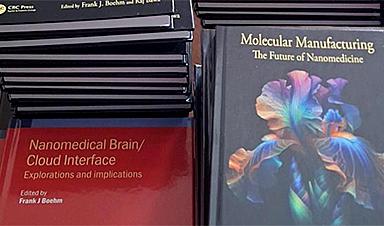
Our books now available worldwide!
Online Sellers other than Amazon, Routledge, and IOPP Indigo Global Health Care Equivalency in the Age of Nanotechnology, Nanomedicine and Artifcial Intelligence Global Health Care Equivalency In The Age Of Nanotechnology, Nanomedicine And Artificial [...]

Unzipping the Code of Life: Scientists Pinpoint Where DNA First Opens
Researchers mapped where DNA first opens and how a helicase gate may release one strand as genome copying begins. Before a cell can divide, it must open its tightly wound DNA and begin copying the entire [...]

Scientists Tested an 8-Hour Eating Window and Found a Surprising Brain Benefit
Limiting the daily eating window may provide brain benefits beyond those associated with weight loss. Eating within a shorter daily window may provide cognitive benefits beyond those associated with weight loss alone, according to [...]

Focused Ultrasound Opens Blood-Brain Barrier to Treat Brain Cancer
Summary: A new study demonstrates that primary brain tumors (gliomas) are particularly receptive to targeted drug delivery using focused ultrasound (FUS) combined with microbubbles. The team developed a high-resolution MRI protocol to track blood-brain barrier [...]

AI’s promise and practical limits in drug discovery
AI tools are becoming increasingly common in early drug discovery, allowing scientists to analyse data and navigate large volumes of research. However, according to Dr Raminderpal Singh, turning that potential into consistent scientific workflows [...]

GHCE Concept
From the preface of the book Global Health Care Equivalency in the Age of Nanotechnology, Nanomedicine and Artificial Intelligence, Edited by Frank Boehm: Since the publication of my first book (Nanomedical Device and Systems [...]

Healthcare Headlines: Challenges and Advances in 2026
Health-related updates reveal financial adjustments by Universal Health Services due to Medicaid reimbursement uncertainties, significant pollution-linked health concerns from French-British oil firm Perenco in Congo, drug trial setbacks, potential restructuring at major medical firms, [...]

Scientists Discover the Brain Protein That Helps Alzheimer’s Spread Through the Brain
Scientists have identified a brain protein that may help Alzheimer’s spread, revealing a potential new target for slowing the disease’s progression. Alzheimer’s disease is closely linked to the accumulation of a toxic form of the protein [...]

How Immune Dysregulation Contributes to Psychiatric Disorders
Introduction Growing evidence suggests that disruptions in immune function may play an important role in the development and progression of psychiatric disorders. However, immune mechanisms probably contribute more strongly in some patients than others, [...]

Electrostatic Discharge Boosts Triboelectric Nanogenerator Current and Enables DC Output
Controlled electrical discharges could enable triboelectric nanogenerators to achieve higher peak currents, extending nano-enabled energy harvesting into chemical processing and self-powered sensing. Paper: Electrostatic discharge as a breakthrough strategy for triboelectric nanogenerators. A new review [...]
Swiss laboratory uses old drugs against rare diseases
Researchers at the University of Geneva are combing through collections of approved drugs to find new therapies for rare diseases – with some success. This approach is gaining traction around the world, while pharmaceutical [...]
Nanozyme Aptasensors Show Promise for Faster Food, Health, and Environmental Testing
By pairing robust artificial enzymes with highly selective aptamers, nanozyme aptasensors could help detect disease biomarkers, pathogens, and contaminants faster, but the review shows that real-world deployment still depends on overcoming matrix interference, biofouling, [...]
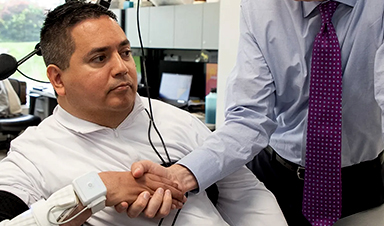
Paralyzed Man Feels Sensation Again With Brain Stimulation Device
Aneuroprosthetic system has allowed a man with paralysis to grasp and lift objects and feel touch again. The device helped 42-year-old Keith Thomas of Massapequa, New York, who was paralyzed from the chest down [...]
Global Cancer Cases Could Surge 67% by 2050, New Report Warns
New data reveal major geographic disparities and highlight the urgent need for global action on prevention, early detection, and equitable access to treatment. For roughly one in five people worldwide, cancer will become part [...]