Plastic waste and pollution in the sea have been among the most serious environmental problems for decades, causing immense damage to marine life and ecosystems. However, a breakthrough discovery may offer a game-changing solution.
Researchers at Japan's RIKEN Center for Emergent Matter Science have developed a revolutionary biodegradable plastic that dissolves in seawater. This plastic is not only strong but also versatile, making it suitable for various applications, from packaging materials to medical devices.
The key feature of this plastic lies in its structure, which includes food-safe ingredients. This means the materials used in its production are non-toxic and safe for various industries. Unlike traditional plastics, which persist in the environment for centuries, this biodegradable alternative decomposes quickly, addressing one of the biggest challenges of plastic pollution.
How Is It Different From Traditional Plastics?
Traditional plastics take centuries to decompose, littering oceans and ecosystems, endangering wildlife, and contributing to pollution. In contrast, the RIKEN team's biodegradable plastic dissolves in seawater within just a few hours, significantly reducing long-term environmental damage.
Breaks Down In Soil In Just 10 Days
In soil, this plastic decomposes within 10 days while simultaneously enriching the soil's fertility. As it breaks down, it transforms into organic matter, restoring essential nutrients and enhancing carbon content. With its dual benefits, quick biodegradation and improved soil fertility, this material offers a sustainable alternative for waste management.
Does This Plastic Cause Pollution While Decomposing?
A major advantage of this biodegradable plastic is that it does not release carbon dioxide during decomposition. In contrast, most plastics emit greenhouse gases when they degrade, contributing to climate change. By avoiding carbon emissions, this new material helps reduce global carbon footprints and combat climate change. Moreover, it can be easily recycled, minimising the need for new plastic production.

News

Molecular Manufacturing: The Future of Nanomedicine – New book from NanoappsMedical Inc.
This book explores the revolutionary potential of atomically precise manufacturing technologies to transform global healthcare, as well as practically every other sector across society. This forward-thinking volume examines how envisaged Factory@Home systems might enable the cost-effective [...]

Moderna kicks off Phase I Ebola trial as Africa readies itself for research
If the Phase I trial is successful, Moderna plans to quickly initiate Phase II and Phase III trials of its Ebola vaccine. Moderna has initiated a Phase I trial of its mRNA Ebola vaccine [...]
3D Human Brain Tissue Model Replicates Alzheimer’s Pathology
Summary: Researchers introduced a highly reproducible three-dimensional human brain tissue model capable of replicating complex neurodegenerative processes in Alzheimer’s disease. Developed over nine years using human stem cells, the self-organizing tissue spheroids integrate functional neurons, [...]
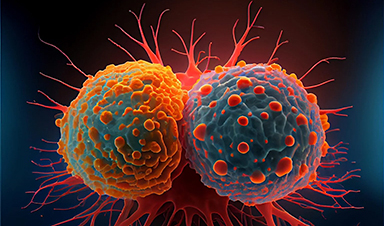
A Common Sugar May Loosen Cancer Cells and Help Them Spread
Chemotherapy may kill most ovarian cancer cells, but the few that survive can turn dangerously active. By releasing fructose, they may help nearby tumor cells break free and spread. Researchers at The Wistar Institute [...]

COVID-19 can wake up dormant viruses in the body, large study confirms
Virus reactivations by SARS-CoV-2 could worsen initial symptoms and increase risk of Long Covid. Early in the COVID-19 pandemic, scientists noticed that a SARS-CoV-2 infection can “wake up” other, dormant viruses already present in [...]

Scientists Discover the Brain May Enter a New Biological Phase Between 50 and 75
A single-cell study reveals major changes in immune cells, genome organization, and gene regulation within the aging human hippocampus, offering important insights into brain aging and dementias associated with age. Between roughly ages 50 [...]
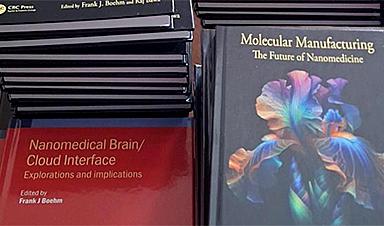
Our books now available worldwide!
Online Sellers other than Amazon, Routledge, and IOPP Indigo Global Health Care Equivalency in the Age of Nanotechnology, Nanomedicine and Artifcial Intelligence Global Health Care Equivalency In The Age Of Nanotechnology, Nanomedicine And Artificial [...]

Unzipping the Code of Life: Scientists Pinpoint Where DNA First Opens
Researchers mapped where DNA first opens and how a helicase gate may release one strand as genome copying begins. Before a cell can divide, it must open its tightly wound DNA and begin copying the entire [...]

Scientists Tested an 8-Hour Eating Window and Found a Surprising Brain Benefit
Limiting the daily eating window may provide brain benefits beyond those associated with weight loss. Eating within a shorter daily window may provide cognitive benefits beyond those associated with weight loss alone, according to [...]

Focused Ultrasound Opens Blood-Brain Barrier to Treat Brain Cancer
Summary: A new study demonstrates that primary brain tumors (gliomas) are particularly receptive to targeted drug delivery using focused ultrasound (FUS) combined with microbubbles. The team developed a high-resolution MRI protocol to track blood-brain barrier [...]

AI’s promise and practical limits in drug discovery
AI tools are becoming increasingly common in early drug discovery, allowing scientists to analyse data and navigate large volumes of research. However, according to Dr Raminderpal Singh, turning that potential into consistent scientific workflows [...]

GHCE Concept
From the preface of the book Global Health Care Equivalency in the Age of Nanotechnology, Nanomedicine and Artificial Intelligence, Edited by Frank Boehm: Since the publication of my first book (Nanomedical Device and Systems [...]

Healthcare Headlines: Challenges and Advances in 2026
Health-related updates reveal financial adjustments by Universal Health Services due to Medicaid reimbursement uncertainties, significant pollution-linked health concerns from French-British oil firm Perenco in Congo, drug trial setbacks, potential restructuring at major medical firms, [...]
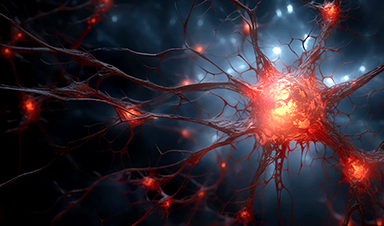
Scientists Discover the Brain Protein That Helps Alzheimer’s Spread Through the Brain
Scientists have identified a brain protein that may help Alzheimer’s spread, revealing a potential new target for slowing the disease’s progression. Alzheimer’s disease is closely linked to the accumulation of a toxic form of the protein [...]

How Immune Dysregulation Contributes to Psychiatric Disorders
Introduction Growing evidence suggests that disruptions in immune function may play an important role in the development and progression of psychiatric disorders. However, immune mechanisms probably contribute more strongly in some patients than others, [...]

Electrostatic Discharge Boosts Triboelectric Nanogenerator Current and Enables DC Output
Controlled electrical discharges could enable triboelectric nanogenerators to achieve higher peak currents, extending nano-enabled energy harvesting into chemical processing and self-powered sensing. Paper: Electrostatic discharge as a breakthrough strategy for triboelectric nanogenerators. A new review [...]