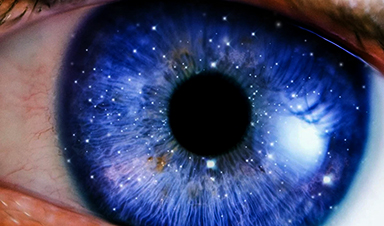
Summary: Researchers at Ruhr University Bochum explore why consciousness evolved and why different species developed it in distinct ways. By comparing humans with birds, they show that complex awareness may arise through different neural architectures yet serve similar purposes.
New research examines why consciousness evolved by comparing humans with birds.
What evolutionary purpose does consciousness serve, and what insights can birds offer about its origins? These questions are at the heart of two new studies from researchers at Ruhr University Bochum.
Over the past twenty years, interest in the science of consciousness has grown rapidly, yet a key issue remains unresolved: What is consciousness actually for? Why did it appear in the first place? Finding answers is essential for understanding why certain species (such as our own) developed conscious awareness, while others (such as oak trees) did not. Research on bird brains adds another important perspective, showing that evolution can produce similar functional outcomes for consciousness even when the underlying brain structures differ. The teams led by Professors Albert Newen and Onur Güntürkün at Ruhr University Bochum, Germany recently published their findings in the journal Philosophical Transactions of the Royal Society B.

Purposes of pleasure and pain?
Our conscious experience shapes every part of our lives through moments of enjoyment as well as discomfort. We might notice the warmth of sunlight on our skin or listen to birdsong and feel a sense of ease.
At other times, we become aware of pain, such as a knee that aches after a fall, or we struggle with persistent feelings of pessimism. This raises a fundamental question: why would living beings evolve a capacity that includes both pleasurable sensations and experiences that can be deeply unpleasant or even overwhelming?
Albert Newen and Carlos Montemayor describe consciousness as consisting of three forms, each serving a distinct purpose: 1. basic arousal, 2. general alertness, and 3. reflexive (self-)consciousness.
Stage One: Basic Arousal
"Evolutionarily, basic arousal developed first, with the base function of putting the body in a state of ALARM in life-threatening situations so that the organism can stay alive," explains Newen. "Pain is an extremely efficient means for perceiving damage to the body and to indicate the associated threat to its continued life. This often triggers a survival response, such as fleeing or freezing."
Stage Two: General Alertness
A second step in evolution is the development of general alertness. This allows us to focus on one item in a simultaneous flow of different information. When we see smoke while someone is speaking to us, we can only focus on the smoke and search for its source.
"This makes it possible to learn about new correlations: first the simple, causal correlation that smoke comes from fire and shows where a fire is located. But targeted alertness also lets us identify complex, scientific correlations," says Carlos Montemayor.
Stage Three: Reflexive (Self-)Consciousness
Humans and some animals then develop a reflexive (self-)consciousness. In its complex form, it means that we are able to reflect on ourselves as well as our past and future. We can form an image of ourselves and incorporate it into our actions and plans.
"Reflexive consciousness, in its simple forms, developed parallel to the two basic forms of consciousness," explains Newen. "In such cases, conscious experience focuses not on perceiving the environment, but rather on the conscious registration of aspects of oneself."
This includes the state of one's own body, as well as one's perception, sensations, thoughts, and actions. To use one simple example, recognizing oneself in the mirror is a form of reflexive consciousness. Children develop this skill at 18 months, and some animals have been shown to do this as well, such as chimpanzees, dolphins, and magpies. Reflexive conscious experiences – as its core function – makes it possible for us to better integrate into society and coordinate with others.
What Birds Perceive
Gianmarco Maldarelli and Onur Güntürkün show in their article that birds may possess fundamental forms of conscious perception. The researchers highlight three central areas in which birds show remarkable parallels to conscious experience in mammals: sensory consciousness, neurobiological foundations, and accounts of self-consciousness.
Firstly, studies of sensory consciousness indicate that birds not only automatically process stimuli, but subjectively experience them. When pigeons are presented with ambiguous visual stimuli, they shift between various interpretations, similar to humans. Crows have also been shown to possess nerve signals that do not reflect the physical presence of a stimulus, but rather the animal's subjective perception. When a crow sometimes consciously perceives a stimulus and does not at other times, certain nerve cells react precisely according to this internal experience.
Secondly, birds' brains contain functional structures that meet the theoretical requirements of conscious processing, despite their different brain structure. "The avian equivalent to the prefrontal cortex, the NCL, is immensely connected and allows the brain to integrate and flexibly process information," says Güntürkün. "The connectome of the avian forebrain, which presents the entirety of the flows of information between the regions of the brain, shares many similarities with mammals. Birds thus meet many criteria of established theories of consciousness, such as the Global Neuronal Workspace theory."
Thirdly, more recent experiments show that birds may have different types of self-perception. Even though some species of corvids pass the traditional mirror test, other ecologically significant versions of the tests have shown further types of self-consciousness in other bird species. "Experiments indicate that pigeons and chickens differentiate between their reflection in a mirror and a real fellow member of their species, and react to these according to context. This is a sign of situational, basic self-consciousness," says Güntürkün.
The findings suggest that consciousness is an older and more widespread evolutionary phenomenon than had previously been assumed. Birds demonstrate that conscious processing is also possible without a cerebral cortex and that different brain structures can achieve similar functional solutions.
References: "Three types of phenomenal consciousness and their functional roles: unfolding the ALARM theory of consciousness" by Albert Newen and Carlos Montemayor, 12 November 2025, Philosophical Transactions B.
DOI: 10.1098/rstb.2024.0314
"Conscious birds" by Gianmarco Maldarelli and Onur Güntürkün, 12 November 2025, Philosophical Transactions B.
DOI: 10.1098/rstb.2024.0308

News

WHO Factsheets – The top 10 causes of death
In 2023, the 10 leading causes of death accounted for 33 million deaths, or 54% of the total 61 million deaths worldwide. The top global causes of death, in order of total number of lives lost, [...]

Aging Cells May Be Hiding From the Immune System – Scientists Think They Know How
Your immune system is supposed to clear out damaged cells. Researchers may have found how some of them hide and linger as the body ages. Researchers led by Cedars-Sinai Health Sciences University have identified [...]

Your Voice May Reveal How Fast Your Brain Is Aging
Researchers have developed a machine-learning “speech clock” that estimates age from subtle patterns in how people speak and what they say. It is possible that people’s voices may contain certain signals of aging that [...]
Optogenetics Pioneers Win 2026 Nobel Prize in Physiology or Medicine
The 2026 Nobel Prize in Physiology or Medicine has been awarded to Peter Hegemann, Georg Nagel, and Karl Deisseroth for the development of optogenetics, a revolutionary technology that uses light to control individual neurons [...]
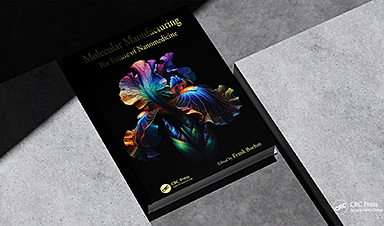
Molecular Manufacturing: The Future of Nanomedicine – From NanoappsMedical Inc.
This book explores the revolutionary potential of atomically precise manufacturing technologies to transform global healthcare, as well as practically every other sector across society. This forward-thinking volume examines how envisaged Factory@Home systems might enable the cost-effective [...]

What is ‘American Covid’ and how bad is it?
Cases of so-called ‘American Covid’ are on the rise in the UK. The strain is officially called XFG, or ‘Stratus’, and is the most common variant in North America, hence the name. It might soon [...]

Researcher at Russian plague laboratory dies of ‘unknown’ infection
Russian authorities have imposed "anti-epidemic measures" after a laboratory worker at an institute in Siberia dedicated to studying the plague and other infectious diseases died of a mysterious illness. The researcher, a 28-year-old female [...]
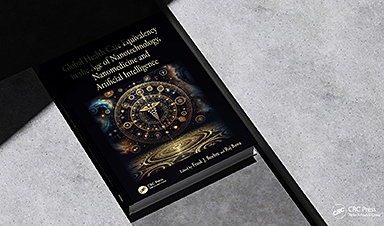
GHCE Concept
From the preface of the book Global Health Care Equivalency in the Age of Nanotechnology, Nanomedicine and Artificial Intelligence, Edited by Frank Boehm: Since the publication of my first book (Nanomedical Device and Systems [...]

A Surprising Brain Signal Could Explain Why Eating Less Protein Extends Lifespan
A new paper suggests that limiting protein intake triggers a coordinated response throughout the body that may help explain how protein restriction affects healthy aging. Animals respond to protein restriction, or reduced protein in [...]

Back and shoulder surgery is often worse than useless
Millions of operations should be scrapped SIX IN TEN Britons have surgery at some point. So do lots of Americans, at a cost of perhaps $500bn a year, a third of all spending on [...]
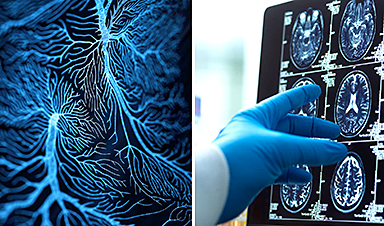
Cocaine plays with mind, hijacks brain circuit, drives increasingly rigid and repetitive behavior
Researchers have found that cocaine hijacks brain circuit, which to drive increasingly rigid and repetitive behavior. The brain circuit that normally participates in selecting natural mouth and face movements, but which becomes disproportionately engaged [...]
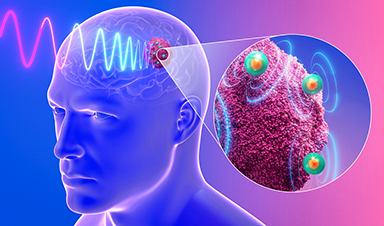
Injectable nanodevices could provide effective treatment for drug-resistant glioblastoma
The brain cancer glioblastoma is one of the most aggressive and treatment-resistant cancers known to medicine, carrying a median survival of just 12-15 months, even with the best available care. Now, researchers at the [...]
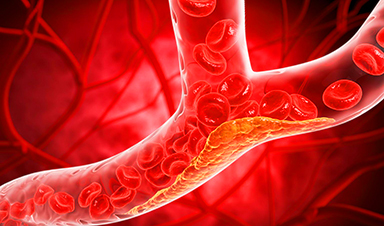
New Treatment Cuts “Bad” Cholesterol in Half for a Full Year
A single infusion of an experimental CRISPR-Cas9 therapy was reported to safely lower LDL cholesterol by 52.5% and triglycerides by 47.8%, as measured 12 months after treatment. What if one infusion could keep cholesterol [...]

Too Much RNA Can Drain a Cell’s Energy, Scientists Discover
A virus may cripple a cell’s power supply simply by producing too much of a molecule the cell needs to survive. New research from the Texas A&M College of Veterinary Medicine and Biomedical Sciences [...]

West African scientists warn of weakening health systems and urge stronger outbreak detection
LOME, Togo (AP) — West African laboratory scientists called on governments Friday to strengthen capacity to detect disease outbreaks to avoid another major outbreak, saying health systems across the region are becoming weaker. Participants [...]

A Little-Known Protein Could Point to a New Way To Treat Alzheimer’s
A study suggests that increasing SORLA protein levels could help treat Alzheimer’s disease and other disorders involving tau protein. Increasing SORLA, a protein with a protective role in the brain, helped mice withstand damage [...]