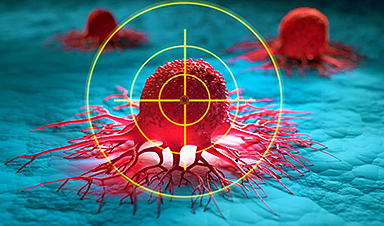
A new cancer therapy wakes up immune cells inside tumors and turns them against cancer.
Tumors contain immune cells called macrophages that are naturally capable of attacking cancer. However, the tumor environment blocks these cells from functioning properly, preventing them from mounting an effective defense. Researchers at the Korea Advanced Institute of Science and Technology (KAIST) have now developed a new therapeutic strategy that overcomes this problem by transforming immune cells already inside tumors into active anticancer treatments.
KAIST Develops an In-Tumor Immune Cell Therapy
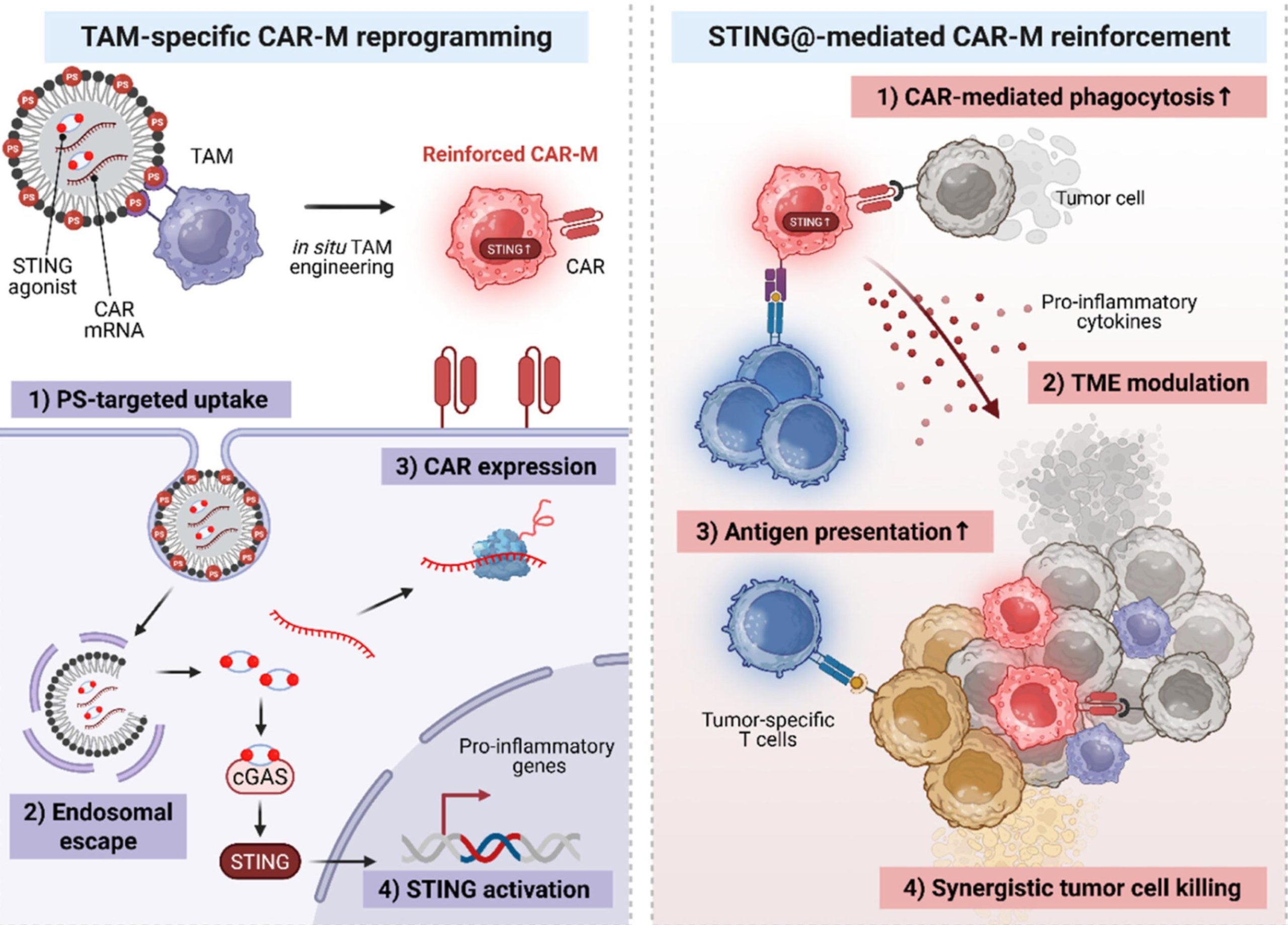
KAIST (President Kwang Hyung Lee) announced that a research team led by Professor Ji-Ho Park of the Department of Bio and Brain Engineering has created a new therapy that works directly at the tumor site. When the drug is injected into a tumor, macrophages already present in the body absorb it and begin producing CAR (a cancer-recognizing device) proteins on their own. This process converts them into anticancer immune cells known as "CAR-macrophages."
Why Solid Tumors Resist Immune Treatments
Solid tumors — such as gastric, lung, and liver cancers — form dense structures that prevent immune cells from easily entering or maintaining their activity. Because immune cells struggle to reach and survive within these tumors, many existing immune-based cancer treatments have shown limited success.
The Unique Advantages of CAR-Macrophages
CAR-macrophages have recently gained attention as a next-generation immunotherapy. These cells can directly engulf cancer cells and also stimulate nearby immune cells, helping to strengthen and expand the body's overall anticancer response.
Despite their promise, traditional CAR-macrophage therapies rely on extracting immune cells from a patient's blood, growing them in the laboratory, and genetically modifying them before returning them to the body. This process is expensive, time-consuming, and difficult to apply widely in real-world clinical settings.
To overcome these challenges, the research team focused on "tumor-associated macrophages" that naturally accumulate around tumors. Instead of removing these cells, the scientists aimed to reprogram them directly within the body.
Lipid Nanoparticles Enable In-Body Reprogramming
The team developed a method that uses lipid nanoparticles — designed to be easily absorbed by macrophages — to deliver both mRNA containing cancer-recognition instructions and an immunostimulant that activates immune responses.
In this study, CAR-macrophages were generated by "directly converting the body's own macrophages into anticancer cell therapies inside the body."
Strong Anticancer Effects Observed in Tumors
After the therapeutic agent was injected into tumors, macrophages quickly took it up and began producing proteins that recognize cancer cells. At the same time, immune signaling pathways were activated. The resulting "enhanced CAR-macrophages" demonstrated significantly improved cancer cell-killing ability and stimulated surrounding immune cells, leading to a strong anticancer effect.
In animal models of melanoma (the most dangerous form of skin cancer), tumor growth was significantly reduced. The findings also suggested that the immune response could extend beyond the treated tumor, indicating the potential to trigger broader, body-wide immune protection.
A New Concept for Cancer Immunotherapy
Professor Ji-Ho Park said, "This study presents a new concept of immune cell therapy that generates anticancer immune cells directly inside the patient's body," adding that "it is particularly meaningful in that it simultaneously overcomes the key limitations of existing CAR-macrophage therapies — delivery efficiency and the immunosuppressive tumor environment."
Reference: "In Situ Chimeric Antigen Receptor Macrophage Therapy via Co-Delivery of mRNA and Immunostimulant" by Jun-Hee Han, Erinn Fagan, Kyunghwan Yeom and Ji-Ho Park, 25 November 2025, ACS Nano.
DOI: 10.1021/acsnano.5c09138
The study was led by Jun-Hee Han, Ph.D., of the Department of Bio and Brain Engineering at KAIST as the first author. The research was published in ACS Nano, an international journal specializing in nanotechnology.
The work was supported by the Mid-Career Researcher Program of the National Research Foundation of Korea.

News
Scientists Find Way to Turn Tumor-Protecting Cells Into Cancer Killers
A new cancer therapy wakes up immune cells inside tumors and turns them against cancer. Tumors contain immune cells called macrophages that are naturally capable of attacking cancer. However, the tumor environment blocks these [...]
Analyzing Darwin’s specimens without opening 200-year-old jars
Scientists have successfully analyzed Charles Darwin's original specimens from his HMS Beagle voyage (1831 to 1836) to the Galapagos Islands. Remarkably, the specimens have been analyzed without opening their 200-year-old preservation jars. Examining 46 [...]

Scientists discover natural ‘brake’ that could stop harmful inflammation
Researchers at University College London (UCL) have uncovered a key mechanism that helps the body switch off inflammation—a breakthrough that could lead to new treatments for chronic diseases affecting millions worldwide. Inflammation is the [...]
A Forgotten Molecule Could Revive Failing Antifungal Drugs and Save Millions of Lives
Scientists have uncovered a way to make existing antifungal drugs work again against deadly, drug-resistant fungi. Fungal infections claim millions of lives worldwide each year, and current medical treatments are failing to keep pace. [...]
Scientists Trap Thyme’s Healing Power in Tiny Capsules
A new micro-encapsulation breakthrough could turn thyme’s powerful health benefits into safer, smarter nanodoses. Thyme extract is often praised for its wide range of health benefits, giving it a reputation as a natural medicinal [...]

Scientists Develop Spray-On Powder That Instantly Seals Life-Threatening Wounds
KAIST scientists have created a fast-acting, stable powder hemostat that stops bleeding in one second and could significantly improve survival in combat and emergency medicine. Severe blood loss remains the primary cause of death from [...]
Oceans Are Struggling To Absorb Carbon As Microplastics Flood Their Waters
New research points to an unexpected way plastic pollution may be influencing Earth’s climate system. A recent study suggests that microscopic plastic pollution is reducing the ocean’s capacity to take in carbon dioxide, a [...]
Molecular Manufacturing: The Future of Nanomedicine – New book from Frank Boehm
This book explores the revolutionary potential of atomically precise manufacturing technologies to transform global healthcare, as well as practically every other sector across society. This forward-thinking volume examines how envisaged Factory@Home systems might enable the cost-effective [...]
New Book! NanoMedical Brain/Cloud Interface – Explorations and Implications
New book from Frank Boehm, NanoappsMedical Inc Founder: This book explores the future hypothetical possibility that the cerebral cortex of the human brain might be seamlessly, safely, and securely connected with the Cloud via [...]
Global Health Care Equivalency in the Age of Nanotechnology, Nanomedicine and Artificial Intelligence
A new book by Frank Boehm, NanoappsMedical Inc. Founder. This groundbreaking volume explores the vision of a Global Health Care Equivalency (GHCE) system powered by artificial intelligence and quantum computing technologies, operating on secure [...]
Miller School Researchers Pioneer Nanovanilloid-Based Brain Cooling for Traumatic Injury
A multidisciplinary team at the University of Miami Miller School of Medicine has developed a breakthrough nanodrug platform that may prove beneficial for rapid, targeted therapeutic hypothermia after traumatic brain injury (TBI). Their work, published in ACS [...]
COVID-19 still claims more than 100,000 US lives each year
Centers for Disease Control and Prevention researchers report national estimates of 43.6 million COVID-19-associated illnesses and 101,300 deaths in the US during October 2022 to September 2023, plus 33.0 million illnesses and 100,800 deaths [...]

Nanomedicine in 2026: Experts Predict the Year Ahead
Progress in nanomedicine is almost as fast as the science is small. Over the last year, we've seen an abundance of headlines covering medical R&D at the nanoscale: polymer-coated nanoparticles targeting ovarian cancer, Albumin recruiting nanoparticles for [...]
Lipid nanoparticles could unlock access for millions of autoimmune patients
Capstan Therapeutics scientists demonstrate that lipid nanoparticles can engineer CAR T cells within the body without laboratory cell manufacturing and ex vivo expansion. The method using targeted lipid nanoparticles (tLNPs) is designed to deliver [...]
The Brain’s Strange Way of Computing Could Explain Consciousness
Consciousness may emerge not from code, but from the way living brains physically compute. Discussions about consciousness often stall between two deeply rooted viewpoints. One is computational functionalism, which holds that cognition can be [...]
First breathing ‘lung-on-chip’ developed using genetically identical cells
Researchers at the Francis Crick Institute and AlveoliX have developed the first human lung-on-chip model using stem cells taken from only one person. These chips simulate breathing motions and lung disease in an individual, [...]